

SIR 2.0 to roll out in 12 states, including Kerala, on Tuesday: CEC
Mail This Article
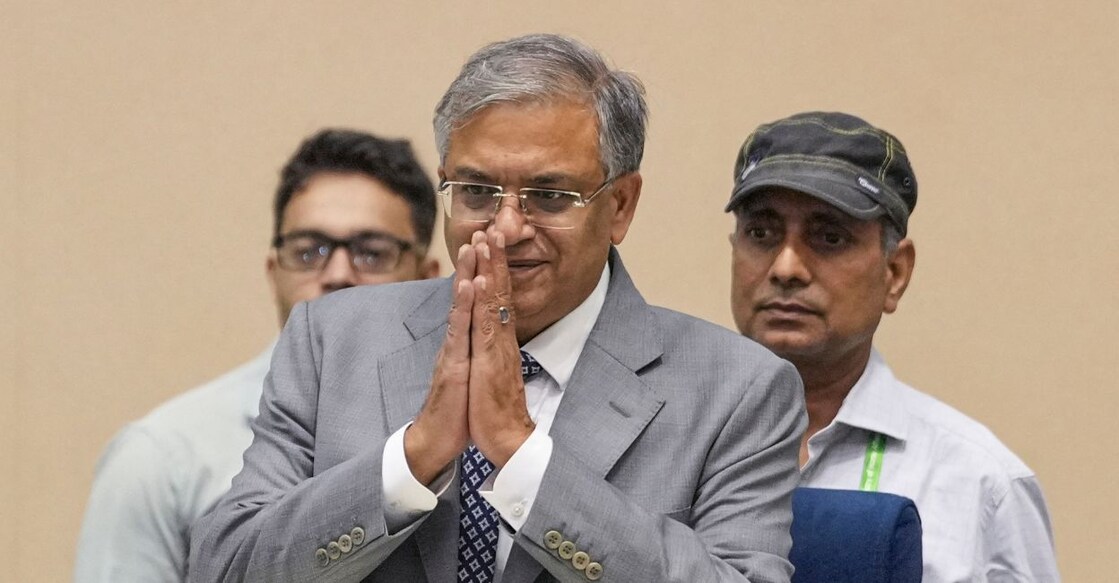
New Delhi: The voters’ list of 12 states and Union Territories undergoing the Special Intensive Revision (SIR) exercise will freeze tonight, Chief Election Commissioner (CEC) Gyanesh Kumar announced on Monday. According to the ECI, the second phase of the SIR exercise will be held in Andaman and Nicobar Islands, Chhattisgarh, Goa, Gujarat, Kerala, Lakshadweep, Madhya Pradesh, Puducherry, Rajasthan, Tamil Nadu, Uttar Pradesh, and West Bengal. The Kerala Assembly had unanimously passed a resolution urging the ECI to withdraw its decision to implement the SIR.
Like in Bihar, Aadhaar numbers will be accepted during Phase 2 of the exercise, the CEC said. The announcement came during a press conference convened by the Election Commission of India (ECI) at its headquarters in New Delhi, where the CEC also declared the rollout of the second phase of the SIR.
Gyanesh Kumar noted that the SIR is being revived after more than two decades. “The SIR has already been done eight times from 1951 till 2004. The last SIR was conducted more than 21 years ago, during 2002–2004,” he said.
He added that the need for the revision arose due to frequent migration and multiple entries in electoral rolls, leading to issues such as voters being registered in more than one location, non-removal of deleted names, and wrongful inclusion of ineligible or foreign entries.
New polling stations, BLO responsibilities
The CEC also announced that new polling stations will be opened as part of the second phase of the SIR exercise, including some in high-rise buildings. Training of polling officials for Phase 2 will begin on Tuesday, he added.
As part of the SIR process, Booth-Level Officers (BLOs) will:
- Collect Form 6 and the declaration form for inclusion of new electors and assist in Aadhaar matching/linking.
- Help voters fill out the Enumeration Form (EF), collect it, and submit it to the Electoral Registration Officer (ERO) or Assistant Electoral Registration Officer (AERO).
- Visit each elector’s house at least three times.
- Allow electors, especially urban voters and temporary migrants, to fill out the EF online.
- Identify deceased voters, permanently shifted voters, and those registered in multiple places.
- The Election Commission clarified that no other documents need to be collected along with the EF during the enumeration phase.
Structure of electoral administration
The ECI explained that each polling station typically covers around 1,000 electors, with one BLO assigned per station. Each Assembly constituency consists of multiple polling stations and is overseen by an Electoral Registration Officer (ERO), generally an officer of the Sub-Divisional Magistrate (SDM) rank.
The ERO is legally responsible for:
- Preparing the draft electoral rolls,
- Receiving and deciding on claims and objections, and
- Preparing and publishing the final rolls.
Each tehsil has an Assistant Electoral Registration Officer (AERO), while the District Magistrate hears the first appeal against an ERO’s decision. The Chief Electoral Officer (CEO) of the state or Union Territory hears the second appeal against the District Magistrate’s order.
Although the SIR is a national exercise, the immediate phase focuses on states heading for Assembly elections next year. Hence, it includes West Bengal, Kerala, Tamil Nadu, and Assam, along with Puducherry, where elections are due in 2026. The SIR has already been completed in Bihar, which is set to hold its Assembly polls next month.
The Kerala Legislative Assembly had unanimously passed a resolution urging the Election Commission of India to withdraw its decision to implement the SIR of electoral rolls across the country, becoming the first state assembly to do so. Moved by Chief Minister Pinarayi Vijayan under Rule 118, the resolution warned that the SIR could be used as an indirect tool to introduce the National Register of Citizens (NRC) and undermine democratic rights. Both the ruling LDF and Opposition UDF backed the move, expressing concern that using the 2002 rolls as the base could result in large-scale deletion of eligible voters. The resolution also questioned the timing of the exercise in poll-bound states, calling the hurried rollout a threat to fair elections.
In West Bengal, the exercise has been politically contentious. The ruling Trinamool Congress has opposed it, calling the SIR an indirect attempt by the Union government and the BJP to implement the National Register of Citizens (NRC) in the state. The BJP, however, argues that the Trinamool’s resistance stems from fears that names of illegal Bangladeshi and Rohingya infiltrators may be struck off the rolls.
The CPM-led Left Front has supported the revision in principle but cautioned that it must not result in the deletion of genuine voters. The state has also witnessed disputes over the appointment of Booth-Level Officers (BLOs) and Electoral Registration Officers (EROs).
The last Special Intensive Revision in West Bengal was conducted in 2002.
|(With inputs from IANS)
 Add as a preferred source on Google