

Mamata wants SC to intervene in SIR and 'save democracy'
Mail This Article


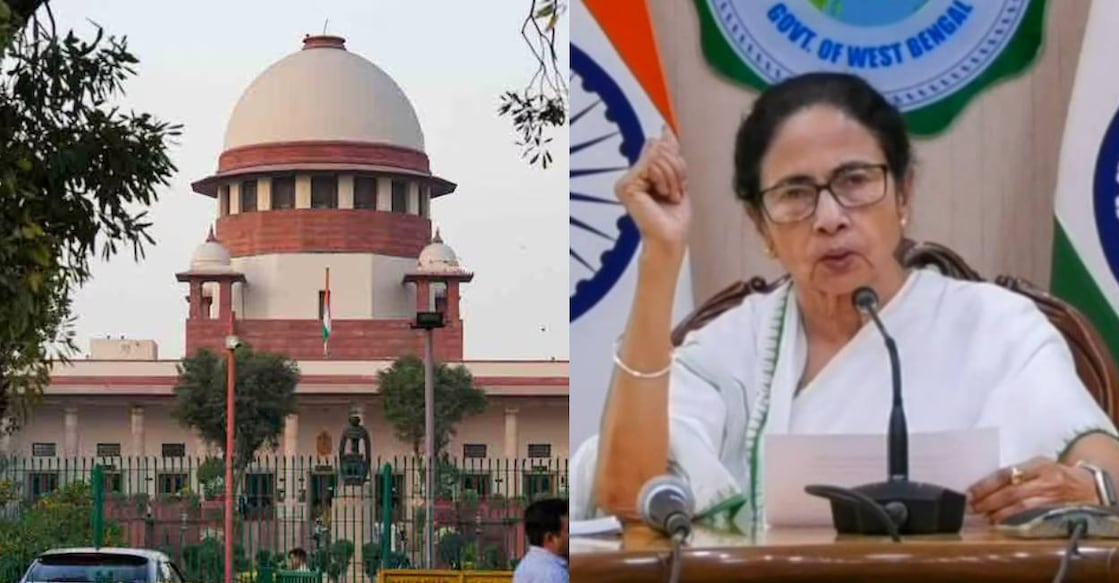
New Delhi: West Bengal Chief Minister Mamata Banerjee on Wednesday strongly urged the Supreme Court to intervene in the ongoing Special Intensive Revision (SIR) of electoral rolls to "save democracy," claiming that the state is being targeted and its people are being oppressed.
The Supreme Court acknowledged Banerjee's petition, noting that it was unusual for a sitting chief minister to present such arguments before them. The court emphasised that "genuine persons must remain on the electoral roll."
A bench consisting of Chief Justice Surya Kant and Justices Joymalya Bagchi and Vipul M Pancholi issued notices and requested responses from the Election Commission and the Chief Electoral Officer of West Bengal by February 9 regarding her petition.
Banerjee told the apex court that West Bengal was being targeted, questioning why similar criteria were not applied in Assam. She asserted that the aim is to "bulldoze" the people of West Bengal. The Chief Minister, who was allowed to supplement the submissions of her lawyer, senior advocate Shyam Divan, expressed her grievances, saying, "We are not getting justice anywhere. I have written six letters to the Election Commission," as she sought justice from the bench.
As the hearing concluded, Banerjee thanked the bench for the opportunity to present her case and urged them to "save democracy." She has formally challenged the SIR of the electoral rolls in the state.
Divan, representing Banerjee, pointed out the large number of unmapped voters and noted that there was little time left for remedial measures since the process is set to conclude on February 14. He mentioned that the Election Commission is required to provide reasons for including names on the "logical discrepancy" list. Currently, around 1.36 crore individuals have received notices for violating logical discrepancies.
Logical discrepancies in progeny links with the 2002 voter list include mismatches in a parent's name or age differences between a voter and their parent of less than 15 years or greater than 50 years. Divan noted that in many instances, the names of individuals issued notices for logical discrepancies were misspelt and could be easily corrected. The Chief Justice remarked that dialects can sometimes cause misspellings.
The bench acknowledged that the electoral roll revision might also address migration, but emphasised that genuine individuals must remain on the voter list. "Every problem has a solution, and we must ensure that no innocent person is removed," the Chief Justice stated.
Banerjee accused the Election Commission of not allowing the use of Aadhaar and demanding other documents from voters for the electoral roll revision. She claimed that many living individuals were mistakenly declared dead by the Commission during this process.
Senior advocate Rakesh Dwivedi, representing the Election Commission, countered Banerjee's accusations, alleging that the state government has only provided the services of 80 grade-two officers, such as Sub-Divisional Magistrates (SDMs), to oversee the SIR process. He claimed that only lower-ranked government employees, like Anganwadi workers, were provided by the West Bengal government for this work.

Banerjee refuted the Election Commission's claims, insisting that the state has supplied everything the poll panel requested. On January 19, the Supreme Court issued several directives, stating that the SIR process in West Bengal should be transparent and not cause inconvenience. The court ordered the Election Commission to publicly display the names of those on the "logical discrepancies" list at gram panchayat bhavans and block offices, where documents and objections can also be submitted.
Previously, Banerjee had written to the Chief Election Commissioner (CEC) calling for an immediate halt to what she described as the "arbitrary and flawed" SIR in the election-bound state. She intensified her criticism of the Election Commission by warning that continuing the SIR in its current form could lead to "mass disenfranchisement" and undermine the foundations of democracy.
In a strongly worded letter dated January 3 to CEC Gyanesh Kumar, she accused the Commission of overseeing an "unplanned, ill-prepared, and ad hoc" process marked by "serious irregularities, procedural violations, and administrative lapses."
(With PTI Inputs)
 Add as a preferred source on Google