

Ridiculed for looks & skin colour, Idukki tribal woman moves on from midwifery to modelling

Mail This Article


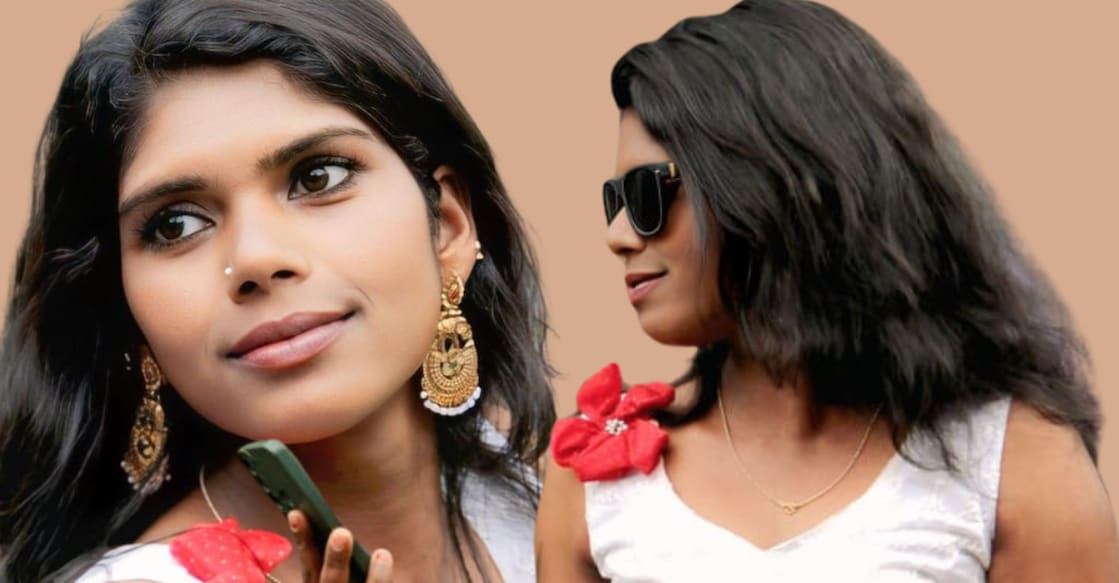
Six months ago, Sudhalakshmi, a woman from the Muthuvan tribal settlement of Kulachivayal in Idukki, sat in her room brooding suicide. Her glance flitted around a rope that hung nearby. Suddenly her phone rang, she was startled. It was a familiar number. She ignored it at first, then called back — and everything changed.
She had been called ugly, demonised as a bad omen, humiliated in front of her community, all because she chose not to remain unmarried. The community abhorred women who broke traditions. Shaken, she felt like killing herself.
It was then that Arun, a former colleague from tribal agriculture projects, rang her. He told her about Miss Kerala Forest Goddess, a pageant in Kochi for tribal women. “It felt like I was born again,” Sudha says. “I had always dreamt of something like this — a platform to show my worth to a community that had only ever shamed me. I immediately removed the rope before my mother could arrive and made the decision to compete.”
Sudhalakshmi, 29, completed her training for the event — organised by the Kochi-based Aurora Film Company — in May and is now preparing for the grand finale scheduled for June 15. “It’s the first time anyone has supported me like this. The first time I’ve worn sleeveless clothes or high heels.”
Born in Kanthalloor — a close-knit village of just 75 families — Sudha grew up under rigid rules. Girls weren’t allowed to study beyond class 10, couldn’t step out without sarees after 18, and were expected to marry soon after school. Traditional customs, deep-rooted patriarchy, and superstitions shaped every aspect of life.
But Sudha defied them all. She was the first girl in her village to leave for higher studies, to get a job, to choose not to marry early — and now, the first to prepare for a beauty pageant.
After school, she pursued an Auxiliary Nursing Midwifery (ANM) course in Adimali and later a diploma in Medical Laboratory Technology (DMLT) in Tamil Nadu. Despite community backlash, her parents — Shivarajan and Lokamani, both daily-wage workers — and her brother Sharavanan stood by her. “They were told I’d elope with someone outside the community or bring shame, but they let me chase my dreams,” she says.
She worked briefly at a hospital in Marayoor before a road accident forced her to quit. She later tried running a small agri-business with two partners, collecting produce from local farmers and selling it in the market, but the venture failed.
Sudha then joined others in agricultural work and the National Rural Employment Guarantee Scheme. But societal hostility worsened. “I was always called ugly, a bad omen. Just because I remained unmarried, I was blamed for everything that went wrong around me,” she says. She even stopped attending public events.
Things took a harsh turn when she attended a wedding in the community — and days later, the bride reportedly showed signs of mental distress. The villagers blamed Sudha, claiming her unmarried status had brought bad luck. “They even planned to kill us. We were not able to sleep for many nights in fear.”
Soon, she was publicly summoned before the local panchayat — the first woman to be summoned from the community — and humiliated. “They made me take a fire oath at a temple to prove I wasn’t at fault. I had to put my hand over fire in a pooja plate. Only after that did they believe me,” she says.
“My mother cried one day, saying she regretted giving birth to me. I was completely broken. With no job, no money, and no dignity left, I decided to die.” But one phone call saved her.
He encouraged her to apply for the pageant. She secretly got her photos clicked by a photographer 10 km away, recorded an introduction video, and sent in her application. Only her parents and her best friend, Nandini, knew. Once selected, she attended a one-day orientation session in Kochi. “I thought it would be like a school fest. But it was huge — professional and serious.”
The training began on May 12. Sudha had performed Aazhiyirakkal the previous night — a ritual where she walked barefoot over embers during a temple festival. Her feet were injured, but she still travelled to Kochi early the next morning. “The first session was about walking in heels. I had never worn them before. My legs were swollen by then, but everyone appreciated my dedication. That was the first time I ever felt truly valued.”
Over four days, she learned catwalks, poses, grooming, and professional makeup techniques. “Till then, makeup for me meant just talcum powder and lipstick. They taught me to apply makeup based on skin tone and how to carry myself.”
The competition has six contestants — women from Wayanad, Kollam, Thiruvananthapuram, and Idukki. “My community used to say I looked like a monkey. But the training gave me confidence. Whether I win or not, I’ve already won something bigger — my self-worth.”
Back home, Sudha guards her secret, fearing backlash. “Modelling is still considered taboo. But I’ve realised change is possible. After I left for higher studies, other girls in the village began dreaming beyond class 10. Some are marrying at 23 or 24 now, not 18.”
Sudha knows the road ahead is tough, but she’s ready. “I once wanted to die. Today, I want to live — and be seen.”
 Add as a preferred source on Google