

Onam-season crops ruined by unrelenting rains in Pathanamthitta
Mail This Article


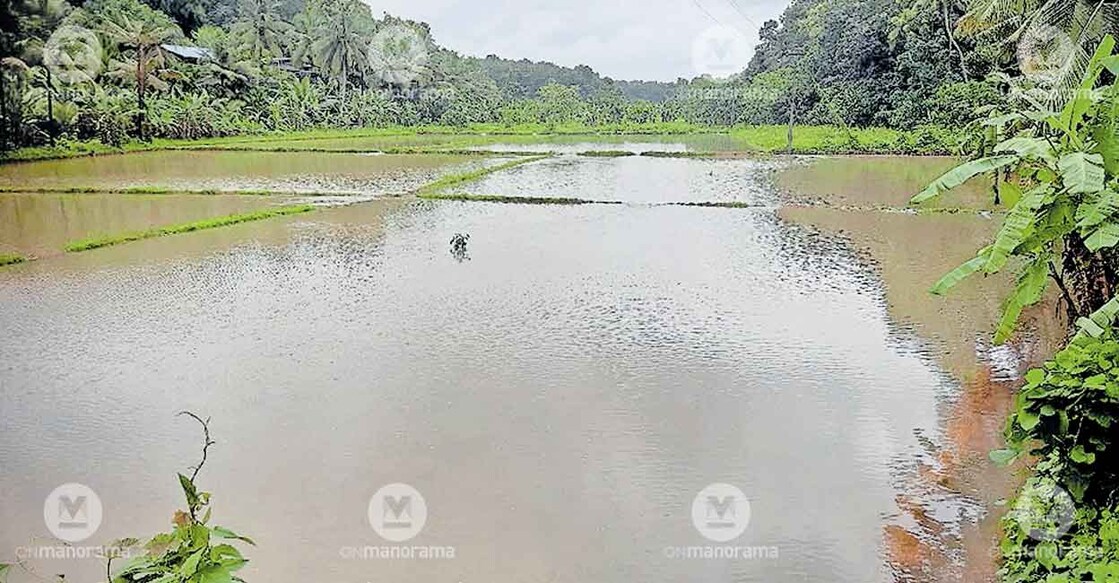
Enathu/ Pathanamthitta: While the monsoon is typically a season of sowing, this year’s relentless downpours have dealt a severe blow to farmers who had timed their crops for the Onam harvest. Both vegetable and paddy cultivation intended for the festival season lie devastated in several parts of the region, with fields submerged and seeds washed away.
Though farmers had planned to sow early, taking advantage of the initial rains, the unexpectedly heavy and continuous showers disrupted their preparations. Vegetables like bitter gourd, snake gourd, and peas, which were expected to be ready for harvest in three months, were among the worst hit. Seeds had just begun to sprout when the intensified rains caused them to rot in the soil.
In a bid to salvage their efforts, farmers are now replanting whatever saplings they can. However, the damage is widespread across key farming areas such as Mannadi, Manalkkandam, Thazhathu, Vettuvayal and Punnakkadu. Already burdened by high input costs, pest attacks and falling prices, the latest weather-induced setback has left many cultivators in despair.
The repeated disruption in vegetable farming has forced many growers to shift their focus to tapioca and plantain, which are more resilient to weather extremes. Even so, the lure of high prices keeps farmers hopeful. For instance, bitter gourd often sells at ₹100/kg during Onam and around ₹80 at other times. Yet, preparing fields for such crops remains a challenge in the current conditions.
While snake gourd cultivation continues, farmers complain of heavy losses due to alternating rain and drought conditions. The arrival of produce from other states has also depressed the prices of local crops. Farmers now find themselves selling snake gourd for as low as ₹10/kg, compared to the usual ₹30/kg, making it difficult to break even.

Traditional monsoon crops such as ivy gourd, ladies’ finger, ash gourd, and pumpkin, once commonly cultivated during this season, are becoming increasingly rare as crises mount. Tuber crops, typically harvested during the monsoon, have also suffered due to waterlogging.
One of the major challenges remains the absence of proper water management systems. Streams and channels overflow without embankments, turning farms into flood zones. Paddy fields intended for the Onam harvest have not been spared, with seeds getting washed away before germination could take root. At Enathu Kalamala Karippal, entire stretches of sown land have been inundated.
"I cultivate vegetables on over three acres at Mannadi-Manalkkandam. Our plans were hit hard by the heavy rain. We had prepared 70 cents specifically for bitter gourd, snake gourd, and peas to target the Onam market. The lack of a proper irrigation system makes things even worse," said Nalendran Aravakkal, a vegetable farmer.
Basheer Methukummel, who does paddy farming, says, "I do paddy farming on five acres spread across different fields. At Kalamala Karippal, I had completed sowing on two and a half acres. All the seeds were swept away by the floodwaters. Efficient irrigation and water regulation are crucial for farming now."
 Add as a preferred source on Google