

Former Upa-Lok Ayukta who quashed CMDRF case against Pinarayi made fee regulator, activist alleges favouritism
Mail This Article


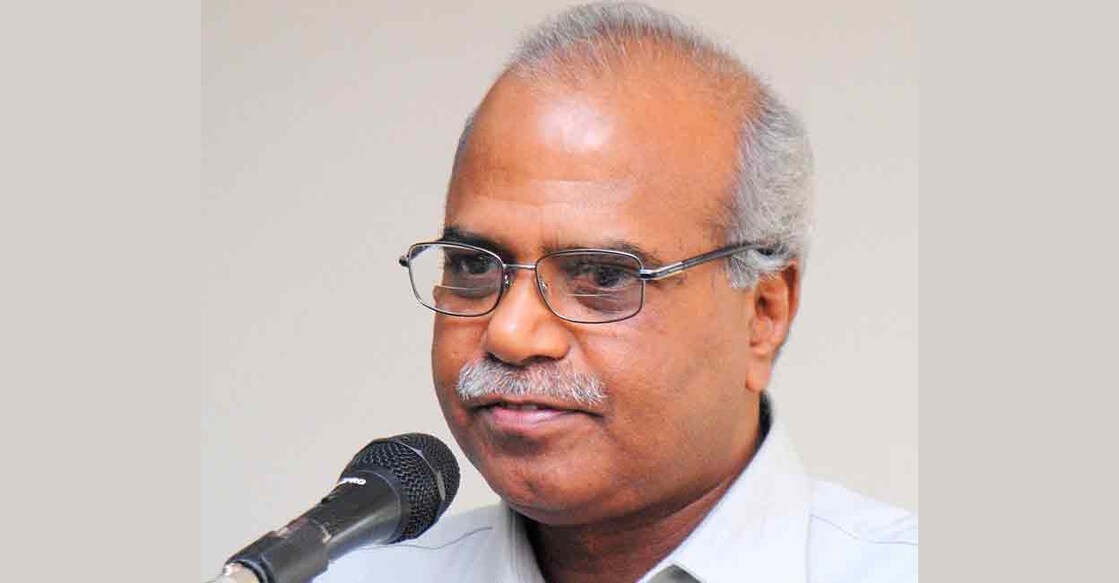
Thiruvananthapuram: The appointment of retired Upa-Lok Ayukta Justice Babu Mathew P Joseph as chairman of the Professional Colleges Fee Regulatory Committee and Admission Supervisory Committee violates the Kerala Lok Ayukta Act and should be rescinded, said education activist and chairman of the Save University Campaign Committee R S Sasikumar.
The two committees regulate the fee structure and admissions in professional colleges in Kerala.
Sasikumar alleged that the government picked the former Upa-Lok Ayukta as a reward for the verdict he delivered in favour of Chief Minister Pinarayi Vijayan. The CM had faced charges of favouritism for releasing CMDRF money to the families of two deceased LDF leaders, Uzhavoor Vijayan and K K Ramachandran, and a police officer attached to the then Home Minister Kodiyeri Balakrishnan's security detail.
In its order dated September 11, the Higher Education Department reconstituted the Admission Supervisory Committee and the Fee Regulatory Committee under the Kerala professional colleges admission and fee regulation Act, 2006, and appointed Justice Babu Mathew P Joseph as the chairman of the two committees. He replaces retired High Court judge K K Denesan.
After K T Jaleel lost his minister post in 2021, the government in 2022 diluted the Kerala Lok Ayukta Act to make it a recommendatory body, said Sasikumar. "But the Act still bars former Lok Ayukta and Upa-Lok Ayukta from accepting post-retirement employment from the government," he said.
Under the Kerala Lok Ayukta Act, a person who has served as Lok Ayukta or Upa-Lok Ayukta "on ceasing to hold office, shall not be eligible for further employment to any office of profit under the government or in any authority, corporation, company, society or university".
Babu Mathew Joseph's appointment clearly violates the Act, said Sasikumar. "Another factor behind the illegal appointment could be that he is a close relative of the late CPM leader and trade unionist M M Lawrence," the activist said.
Onmanorama contacted Babu Mathew Joseph for a comment. He said he did not wish to be quoted for this article.
A person privy to the matter said Babu Mathew Joseph had not yet received the appointment order. "If the government has taken such a decision, it must have examined the legal aspects. Besides, the posts in the admission supervisory committee and the fee regulatory authority are independent, not under the government," he said.
When it was pointed out that the Act bars employment not only "under the government" but also in any "authority", he responded: "In that case, let the court decide".
Babu Mathew Joseph, who retired as a High Court judge in July 2016, first came into prominence in the 2000s as a sessions judge when he tried the Marad riot cases, sentencing 62 accused to life imprisonment.
Sasikumar said he would move the court if the government did not rescind his post-Upa-Lok Ayukta posting.
Babu Mathew P Joseph was part of the three-member Lokayukta bench that, in November 2023, held the petition against the Chief Minister and 18 ministers of the first LDF government was not maintainable.
The CMDRF case that threatened the govt
In 2018, Sasikumar filed a complaint with the Lok Ayukta challenging a 2017 Cabinet decision to release CMDRF monies to the families of the late NCP state president Uzhavoor Vijayan and the late CPM leader and former Chengannur MLA K K Ramachandran, and to the family of a deceased police officer who had been the driver of the then Home Minister Kodiyeri's pilot car. Sasikumar alleged that the police officer's wife was offered a job in the Secretariat, and then, on the recommendation of Kodiyeri, the government released Rs 20 lakh to her from the CMDRF. He said the government had admitted before the Lok Ayukta that similar assistance was not extended to families of other political leaders, which he said was proof of favouritism in the three cases.
In 2019, a three-member Lokayukta bench led by Justice Pius Kuriakose held that Sasikumar's petition was maintainable and issued notices to the respondents, including the Chief Minister. When the tenures of the presiding judges ended, the matter was taken up by Lok Ayukta Justice Cyriac Joseph and Upa-Lokayukta Justice Harun-ul-Rashid. According to Sasikumar, the petition remained pending for nearly a year, prompting him to approach the Kerala High Court seeking intervention.
Subsequently, the two judges delivered a split opinion and referred the matter to a full three-member bench. In November 2023, the full bench comprising Justices Cyriac Joseph, Harun-ul-Rashid and Babu Mathew P Joseph dismissed the petition, holding that the Lok Ayukta lacked jurisdiction to investigate Cabinet decisions.
Sasikumar has challenged that dismissal before the Kerala High Court, contending that the earlier Lok Ayukta full bench headed by Justice Pius Kuriakose had settled the question of jurisdiction and that the subsequent full bench should have confined itself to considering whether the Cabinet's disbursement decision was tainted by favouritism. The High Court had issued notices to the respondents, and the matter is listed for hearing this month.
Meanwhile, in April 2021, Pinarayi's minister K T Jaleel lost his berth in the cabinet after Kerala Lok Ayukta found him "not fit to continue as minister" after finding that he misused his position to appoint his cousin in the Kerala State Minority Development Finance Corporation, by tweaking rules to make him eligible. "An adverse remark against Pinarayi from Lok Ayukta would have threatened his position too. So the government diluted the Lok Ayukta Act in 2022," he said.
After the 2022 amendment, the verdicts of the Lok Ayukta are no longer binding on the government: the Legislative Assembly may reject findings against the Chief Minister; the Chief Minister may review findings against ministers; and the Speaker may review findings against MLAs. Before the Amendment, the Lok Ayukta verdicts were binding on the government under Section 14 of the Act.
Sasikumar said that the anti-corruption ombudsman used to hear around 2,000 cases in a year. "After it was made toothless, there were hardly 150 cases before it," said the education activist.
Sasikumar said he would pursue both the appointment and the CMDRF case legally. "I am prepared to go up to the Supreme Court," he said.
 Add as a preferred source on Google