

Custodial torture: Pinarayi wants the last word, accepts UDF demand for Assembly debate
Mail This Article
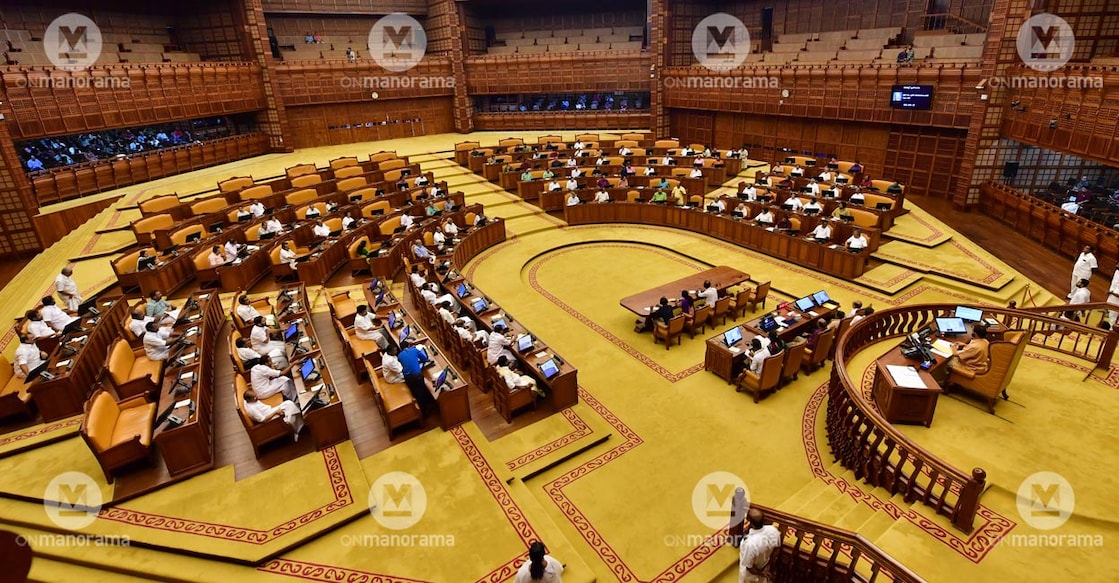
Chief Minister Pinarayi Vijayan on Tuesday sprang a surprise in the Assembly, accepting the opposition UDF's demand to suspend all proceedings of the day to discuss custodial torture, an issue the UDF had hoped would have the CM running for cover.
The adjournment motion on the reluctance of the LDF government to act against police officials involved in the custodial torture of Youth Congress leader Sujith of Chovannur in Thrissur in 2023, the CCTV visuals of which had come out recently, was moved by Congress MLA Roji M John.
The CM began in a matter-of-fact manner. "When it came out (the CCTV visuals), the issue was widely discussed, " he said. Soon it was clear his words were laced with sarcasm. "The media responded commendably. Newspapers devoted a large space to it for many days. Channels invited special guests and held discussions repeatedly," he said, and added, "Now that everyone has discussed the issue a lot, we will also discuss this." The two-hour discussion will begin at noon.
Speaker A N Shamseer declared this as an "all-time record". "This is the 14th adjournment motion taken up for discussion during the 15th Assembly (the second Pinarayi Ministry). From the first to the 14th Assembly, only 30 adjournment motions have been taken up for discussions," the Speaker said.
Though the second Pinarayi Vijayan ministry had attempted to curtail the Opposition's right to move an adjournment motion in March 2023, it is also aware of the possibilities of accepting the notice for the adjournment motion.
Adjournment motions are moved based on rules 50, 51 and 52 of the Kerala Assembly Rules and Procedure. It is the power given to the Opposition to bring to the Assembly matters of urgent public interest. Essentially, it is a plea to the government to temporarily suspend all normal proceedings to debate a particular issue of public importance.
Generally, adjournment motions are rejected. But even when they are rejected, the Opposition can get their points in, perhaps more effectively than the ruling side.
Once a one-line adjournment motion is moved, the Speaker will first ask the minister concerned whether a discussion is necessary. If not, the minister is given 8-10 minutes to argue why there was no need to suspend the Assembly over the issue.
The mover of the motion can now counter the minister's contentions. He/she will be given 10-12 minutes to make the case for adjourning the House to discuss what he/she thinks is a serious matter. After this, the minister is given another chance, this time to rebut the points made by the mover of the motion.
Finally, on the basis of what the minister says, the Speaker declares that the motion has been rejected.
Now, it is time for the Opposition to stage a walkout. But before this, the Opposition Leader is given a chance to make a walk-out speech. He will take nearly as much time as the minister, or even more. He ends with calling for a walkout.
Though technically the motion has been rejected, a discussion of over an hour takes place in the Assembly. And the Opposition Leader will have the last word.
But once the government accepts the challenge and a two-hour discussion is held, the last word is reserved for the minister, and in today's case, the Chief Minister.
 Add as a preferred source on Google