

500-year-old Buckingham Canal in Kollam in ruins due to waste dumping
Mail This Article


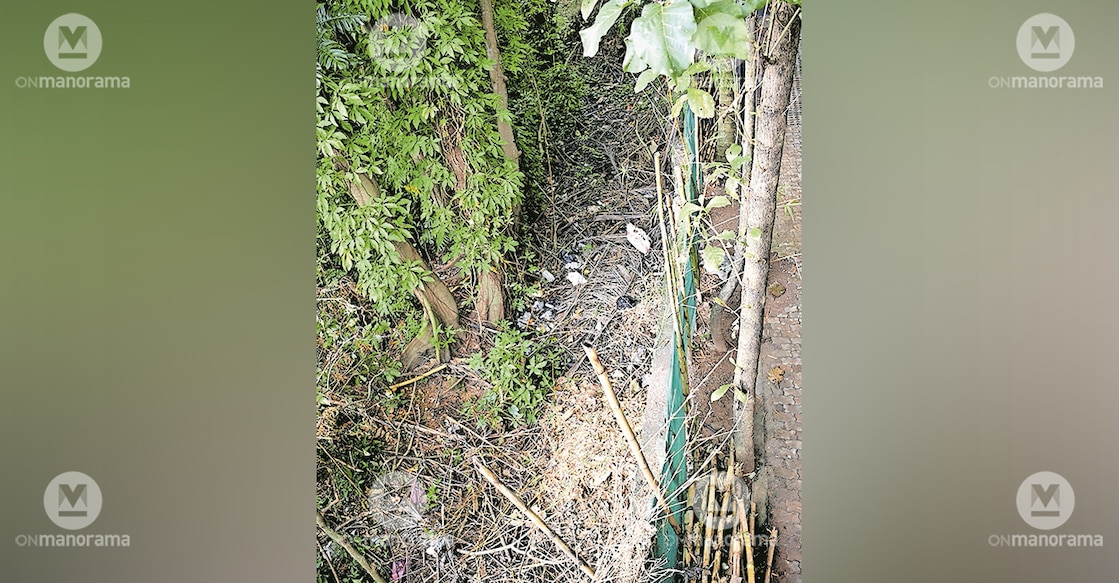
Kollam: The historic Buckingham Canal at Thangassery in Kollam is slowly vanishing due to encroachment, waste dumping, and soil erosion.
At present, there are no official records of the canal’s original boundaries, as much of its area has been taken over by private parties. Large-scale dumping of construction debris has also occurred, in clear violation of regulations meant to protect waterways. Locals allege that authorities have failed to act even as new buildings come up along what was once the canal’s path.
Originally built by the Portuguese nearly 500 years ago, the canal stretched about 750 metres long and 30 metres wide. Over time, however, its width has drastically reduced — with recent surveys showing it now measures barely 2 to 10 feet across.
Encroachment and dumping of garbage, including tonnes of plastic bottles and covers, have blocked the flow of water. Leaves from nearby trees have also piled up in the canal, creating obstacles to water flow. Consequently, the flow of water has been reduced to a trickle. The situation increases the risk of flooding during heavy rains.
The original canal was constructed by the Portuguese in 1560 to enable the smooth transport of goods from St Thomas Fort in Thangassery to the port. The area was subsequently captured by the Dutch and later came under the control of the British, who gave the name ‘Buckingham’ to the canal. The canal passes between the Portuguese cemetery and Thangassery lighthouse to merge with the Arabian Sea.
Boris Paul, a local resident, has submitted a petition to various officials seeking measures to protect the canal. The officials include the District Collector, the engineer of the Kerala State Pollution Control Board, the chairman of the Kerala Coastal Zone Management Authority, the tahsildar of Kollam taluk and the village officer of Kollam West. The petition urges the authorities to carry out a comprehensive survey of the canal, evaluate the environmental damage and implement rejuvenation measures.
 Add as a preferred source on Google