

Dalit percussionists barred from 6-decade-old traditional performance in Kozhikode temple, committee denies caste-bias
Mail This Article


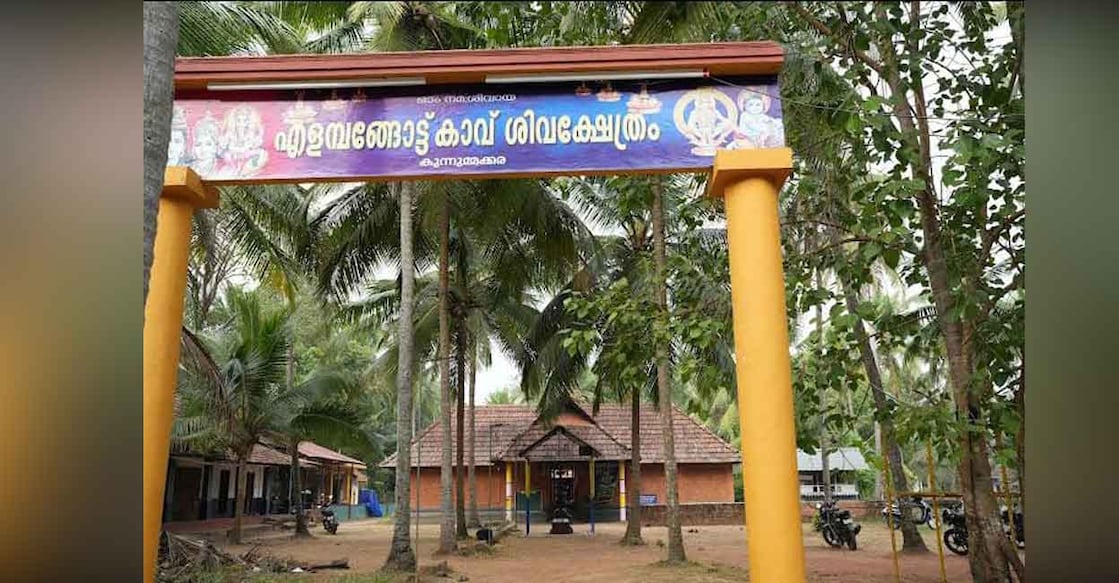
Kozhikode: For three brothers — Sudheesh M, Vinodhan M, and Ratheesh M — rendering the rhythmic percussion beats at the Mandala Vilakku Festival in the Elambangottu Kavu Shiva Temple has been a lifelong tradition. They grew up watching their father, Ramakrishna Panikkar, perform during the annual festival, and later took up the role themselves, continuing a family legacy that spans generations.
The family, belonging to the Malayan community (a Scheduled Caste), resides in Aeralam panchayat, Vadakara. Their devotion to the temple has always been the guiding force behind their performances — until last year, when the temple committee informed them that their services would no longer be needed.
“The committee says it’s not a caste issue, but it clearly is,” says Unnikrishnan Vijayaram, a Dalit rights activist. “The temple was recently renovated with donations worth crores. They wanted to elevate its status by bringing in the Nambeesan community for kuthuvilakku. But since Nambeesans prefer Marars as co-performers, the Malayans were removed,” he said.
After a year of failed discussions, the brothers and their uncle have now lodged a police complaint against the temple committee, alleging caste-based discrimination and the denial of their traditional right to perform.
According to the family, the temple president, Sudheeran KM, summoned Sudheesh in 2024 and told him that members of the Nambeesan caste would henceforth handle the kuthuvilakku ritual, replacing members of the Thiyya community. This would also effectively end their participation in the Mandala Vilakku festival. Sudheesh was even offered ₹10,000 as dakshina (offering) for stepping aside.
“The performance, which begins after deeparadhana in the evening and lasts until around 11 pm, involves three artists — two on drums and one on elathalam. We also participate in pradakshinam, bhajana, chuttuvilakku, and bhiksha rituals. In 2023, we received ₹160 per day for these services. We continued to perform only due to our devotion to the deity.”
“When the temple authorities informed me about their decision, I agreed to step back temporarily and accepted ₹10,000 as dakshina, but it wasn’t on behalf of my entire family. My brothers wanted to continue, so they submitted a written petition to the temple,” Sudheesh, the eldest of the siblings, said.
“They have denied us our birthright. All of father’s sons are entitled to perform at the temple. When our brother informed us about the incident, we immediately approached the committee to reconsider the decision,” says Vinodhan M, Sudheesh’s younger brother.
“The committee members told us that after the ashtabandhakalasham associated with the punaprathishta (idol re-installation), the rituals usually change. We were removed as part of this change. But it happened in March. They summoned my brother to the temple in November, a week before the Mandala Vilakku. This shows they had a clear plan to remove us. It is a clear case of caste discrimination,” Vinodhan M, one of the brothers, told Onmanorama.
Vinodhan says that his family has been playing at the temple for over six decades. “Playing vaadhyam and theyyam is our right and an integral part of our tradition. There have been similar rituals at the temple in the past, but we have continued playing. Ironically, the kuthuvilakku ritual, which is the basis for the change, started only 10 to 15 years ago. Our family has been handling the vaadhyam at the temple long before that,” he said.

Negotiations with temple priest Prasad Namboothiri failed to resolve the dispute. On November 11, 2024, the committee held another meeting and declared that only one of the brothers (Ratheesh), with a smaller role (valamthala), would be allowed to perform.
However, on the first day of the festival, Ratheesh was reportedly barred from performing before the sanctum sanctorum and was forced to perform outside, breaking with long-held tradition. He was also denied permission to join the ritual procession (pradakshinam) with the valamthala. Vinodhan, too, was allegedly humiliated and prevented from entering the temple, despite performing for the entire 41-day festival.
“They’re now planning to give the work to members of the Marar community. But why remove us when we’ve been performing for years at such meagre pay?” asked Vinodhan. While Vinodhan is employed as a contract worker at the railways, Ratheesh works at a local school. The three brothers also perform Theyyam at about 15 temples in the region.
Temple authorities, however, deny the allegations of caste discrimination. “The temple’s 21-member committee is inclusive. We haven’t even thought about caste. Sudheesh approached us saying he couldn’t continue the work. We gave him a dakshina of ₹10,000 and settled the matter. Later, his brothers complained to the tantri. They even demanded ₹2 lakh for a settlement,” said Vinodan PK, secretary of the Elambangottu Kavu Shiva Temple.
“After several discussions, we allowed one of them to perform last year as a goodwill gesture. We also paid the one who performed, a settlement. We can’t afford high payments since our revenue is limited. The temple was renovated through public donations,” he added.
Responding to claims that the Malayan community was denied entry to the sanctum area, he said, “Traditionally, their performances have always been outside the temple. We’ll take a final decision after the committee meeting on November 16.”
Vinodhan, however, denied the temple secretary’s statement that his brother was offered a settlement after last year’s Makaravilakku. “They just paid us the cost of performing for 41 days at the temple. Nothing more or less,” he said, adding that he had been pursuing the matter with the temple committee since August.
“We were forced to file a complaint when there was no response from their side,” he said.
According to the complaint filed with the Director General of Police and the Kozhikode Rural District Police Commissioner, the family alleges that they were subjected to threats and social pressure, forcing one of them to sign a document under duress. The complaint cites offences under Sections 309 (extortion) and 351 (criminal intimidation) of the Indian Penal Code, as well as Section 3(1)(r) (public humiliation based on caste) of the Scheduled Castes and Scheduled Tribes (Prevention of Atrocities) Act, 1989. The Kerala High Court has also directed authorities to issue a notice to the respondents.
 Add as a preferred source on Google