

Despite digital push, election graffiti holds its ground as eco-friendly campaign tool
Mail This Article


Kottayam: While modern election campaigns rely heavily on digital media and flex boards, election graffiti continues to be a resilient and recognisable form of political communication.
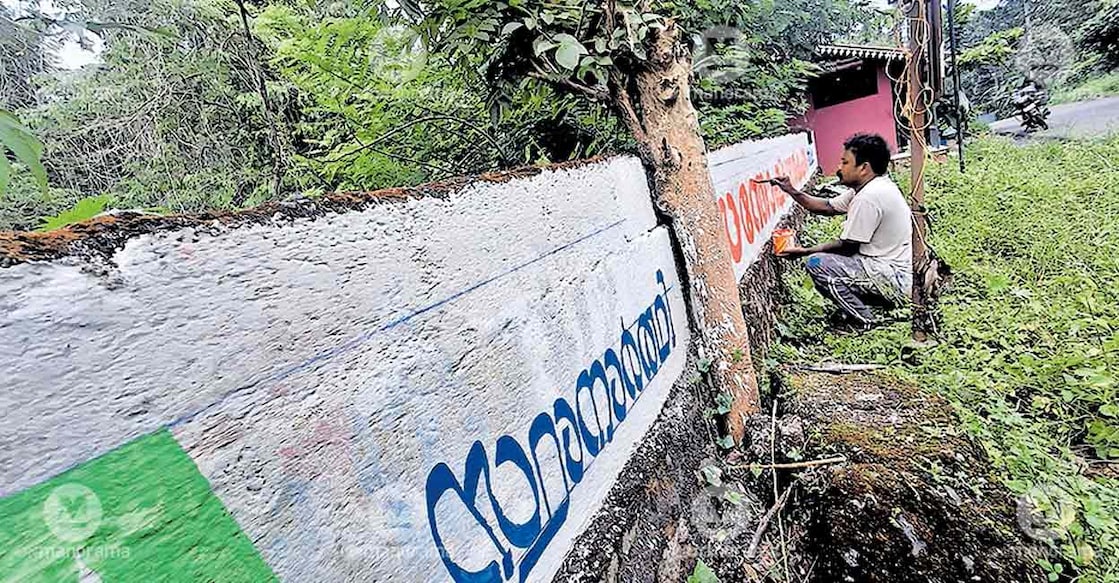
Graffiti artist CK Vinu (Vinukuttan Kurichithanam) says these wall artworks, commissioned on spaces booked in advance by political parties, remain among the most environmentally friendly modes of campaigning. The Election Commission mandates that no campaign material can be displayed on private properties without explicit consent, and prohibits graffiti, posters, cutouts or banners on government buildings and premises.
Candidates must also comply with green protocols throughout their campaign activities, and the ongoing graffiti work strictly follows these rules.
While flex boards are cheaper and easier to deploy, graffiti has the unique advantage of durability. However, the number of available walls has sharply decreased as advertising occupies most public spaces. Artists also note that the cost of producing graffiti has steadily risen.
Fluorescent powders used for painting have become more expensive, and labour charges for artists have also increased over the years.
 Add as a preferred source on Google