
The science and sense behind choosing the right varieties in farming
Mail This Article


One thing is beyond doubt: whatever the crop, everything begins with the seed. The entire harvest hinges on that tiny starting point. Even if everything else is done flawlessly, a poor seed can undo it all. Krishigeetha captures this wisdom perfectly, saying that a farmer stops being a farmer the moment they get four essentials wrong, namely the seed, the land, the cattle, and the worker. Long ago, our farmers knew this instinctively. They saved the finest grains from every harvest, understanding that the future of their fields depended on the quality of the seeds they chose.
Earlier, taste was the primary consideration in selecting seeds, largely because most of the harvest was meant for household consumption. Villages had a rich variety of seeds in those days. However, with the population explosion, seeds with better yield became essential. Economist Robert Malthus further intensified the concern by warning that hunger and unrest could force nations to redraw their borders unless food production rose in proportion to population growth.
This set the stage for the development of high-yielding seeds. Scientists began prioritising yield and resistance to pests and diseases over taste. This led to the creation of shorter paddy varieties such as TN-1 (Taichung Native-1) and IR-8 (International Rice-8) with heavier spikes that prevented lodging, though they were still vulnerable to pests and diseases. In wheat too, shorter varieties like Sonalika, Sharbathy Sonara, and Kalyan Sona were developed from compact Mexican types such as Sonora 63, Sonora 64, Sonalika, and Lerma Rojo 64A. These efforts triggered a surge in agricultural productivity, gradually helping the country become self-sufficient in food.
Paddy: Over time, a recommendation of 80 kg of seeds per hectare was established. With proper care, farmers began to routinely harvest 6,000–7,000 kg—about 70–80 times the quantity of seeds used. Breeders then shifted focus to developing varieties that combined taste and export potential with high yields. Today, farmers can choose from short-term, medium-term, and long-term maturity varieties. The market now offers scented rice, medicinal rice, fortified rice, and even coloured rice.
Hybrid varieties capable of producing up to 10,000 kg per hectare are also available, though they come at a higher cost and their seeds do not retain parental traits in the next generation. For example, the hybrid Arize 6444 is priced at Rs.1,425 for 3 kg, and just 2–2.5 kg is enough for an acre. A single seed can produce 30–35 shoots, most of which develop into spikes. Unless the weather turns unfavourable, a bumper harvest is almost assured through controlled watering, equal-distance sowing, effective weed management, integrated nutrient application and proper pest and disease control.
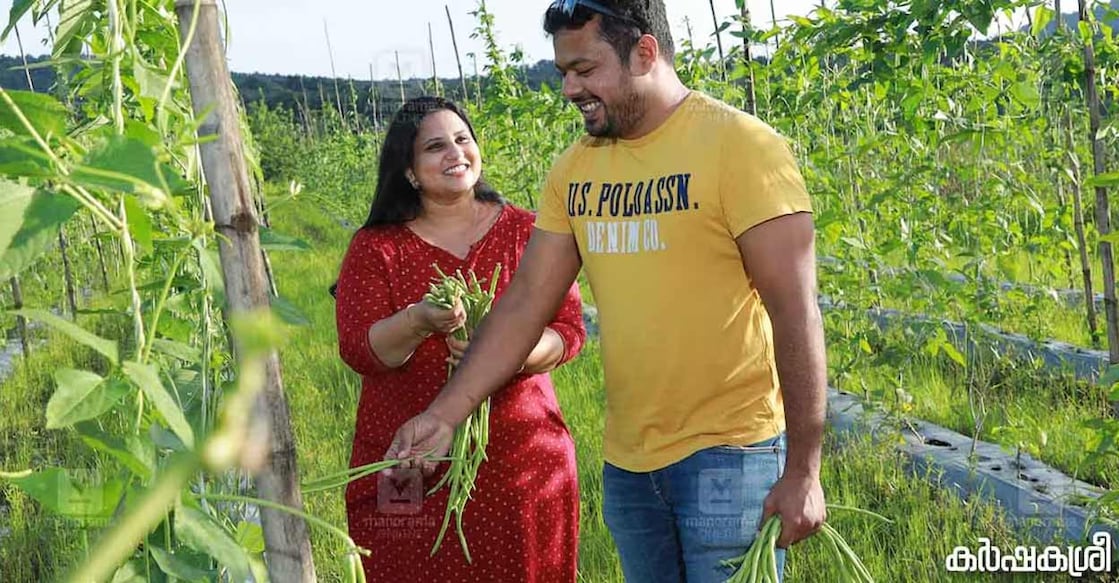
Vegetables: In earlier times, most vegetables grown were indigenous. Over the years, high-yielding versions developed from these traditional types gained popularity. Today, many commercial growers have moved to hybrid varieties, valued for their superior yield, attractive appearance, longer shelf life and stronger resistance to pests and diseases. In precision farming systems, where water and nutrients are delivered directly to the root zone, hybrids can produce several times the yield of traditional varieties. Most of these seeds are produced by private companies, though government agencies are gradually stepping into the sector. The drawbacks, however, are their higher cost and the fact that seeds saved from hybrids rarely retain the qualities of the parent plant.
For household or backyard farming, high-yielding seeds are usually more than enough. Soil-less media for raising saplings has also become popular, and plug nurseries that grow seedlings in pro-trays inside polyhouses are emerging as a promising enterprise. Grafted vegetable saplings, especially in tomato, brinjal and chilli are increasingly used, as grafting offers protection against soil-borne diseases like bacterial wilt. Seeds coated with protective layers to prevent decay during early growth stages are also widely available.
In coconut farming, growers still rely largely on traditional sapling-raising methods. Although tissue-culture technology has advanced, its adoption remains limited. Even so, fully developed tissue-culture coconut bunches can now be seen at the Central Plantation Crops Research Institute in Kayamkulam, demonstrating the technology’s potential.
For plantain, both suckers and tissue-culture saplings of various varieties are widely available through public and private nurseries. Tissue-culture plants offer two major advantages: they ensure uniform harvesting and are virus-free at the time of planting.
Pepper cultivation continues to depend mainly on rooted stalks. To speed up sapling production, farmers use methods like Rapid Multiplication Technique and Serpentine Layering. Rooted top shoots are planted on support posts to achieve earlier harvests. Another method involves spreading pepper vine cuttings over wire-mesh columns filled with coir pith; the nodes that touch the coir pith develop roots, after which they are separated and planted in polybags. Once these vines establish, they are transferred to the base of support poles in the field. Nurseries also supply Piper colubrinum, a variety resistant to quick wilt and ideal for flood-prone regions.
In nutmeg cultivation, bud saplings are widely preferred. This method involves grafting high-yielding nutmeg varieties onto strong, disease-resistant rootstocks. Another popular approach is developing indigenous nutmeg variants by sprouting and then budding them at a certain height. Multi-root saplings are also available, created by planting two or three nutmeg saplings in a single polybag, introducing a high-yielding tender bud into one and later joining the other two to it. These saplings are well-suited for windy areas, though they come at a higher cost.
For crops such as rambutan and Malabar tamarind, which have distinct male and female plants, planting bud saplings is ideal. In contrast, sprouted saplings are better for mangosteen. Both sprouted and bud saplings are available for avocado, with suitable varieties chosen based on location and climatic conditions.
For ginger, turmeric, Kasturi manjal (Curcuma aromatica), and Mangainji ( mango ginger), farmers continue to use the traditional method of planting tubers. Additionally, sprouting tuber pieces with a single bud in coir-pith mixtures within pro-trays is increasingly practiced. In tapioca, stalks with a single node are grown in pro-trays before replanting. Planting mini-setts to produce small elephant-foot yams is also gaining popularity. These methods have proven effective for yam, potato and taro cultivation as well.
 Add as a preferred source on Google