

Canning breakthrough offers new hope for Rambutan farmers in Kerala
Mail This Article


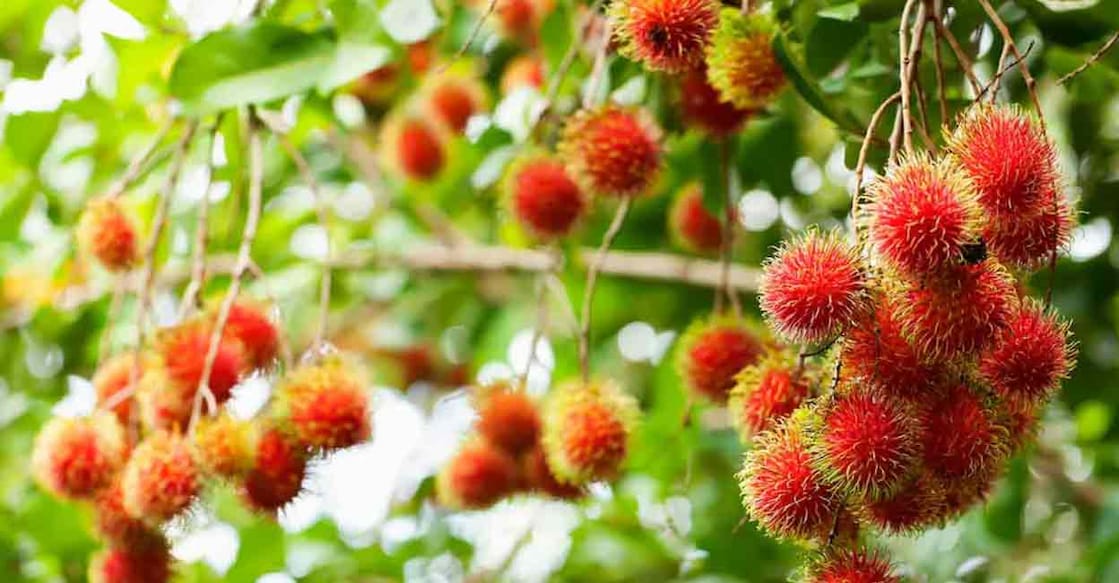
For rambutan farmers, every season comes with a familiar set of anxieties. Will prices crash? Will buyers disappear if flowering is delayed? And what can be done with surplus produce? These questions continue to trouble both those who have already invested in rambutan cultivation and those planning to take it up.
Across India, the cultivation and supply of rambutan are largely handled by Malayali farmers. Even so, many remain uncertain about marketing the fruit in distant cities and wider markets. In this context, the ability to process rambutan to add value and extend its shelf life, much like jackfruit and bananas, would have brought immense relief to farmers. It could also have opened up avenues for exports and off-season sales, leading to better returns. Unfortunately, until now, value addition of rambutan had not been possible in Kerala.
That concern, however, may finally have an answer. A farmer has demonstrated that rambutan fruits can be preserved for more than one and a half years. Adv. Babu Joseph Painadath, owner of Fruit Food Farm at Mothirakkanni near Chalakudy, has shown that the shelf life of rambutan, like that of other fruits, can be significantly extended through canning.
“During the last season, I processed 200 kilograms of rambutan using the facilities of a processing unit at Vazhakkulam. Even after six months, the processed fruits have retained their quality without any deterioration,” says Babu Joseph. He distributed the products as samples to friends and exporters. According to him, the canned rambutan matches the quality of imported varieties, making it highly competitive in the market.
According to Babu, the canning process uses no preservatives other than a mild sugar solution. The processing of rambutan is slightly different from the canning of other fruits. Once the processing is completed, the fruits become softer. This is because they are sterilised by passing through steam at around 90 degrees Celsius. As a result, canned rambutan melts on the tongue much faster than fresh rambutan that is usually eaten by peeling the skin. It also has a pleasant sweetness.
The canning is being done after removing the outer skin, without removing the seed. However, Babu says that canning can be done after removing the seed as well. The processed fruits are packed and stored in one-litre tins. Since they are sealed in tins, they can be transported easily, even in small vehicles.

Each tin contains 900 grams of fruit and it takes about two kilograms of fresh rambutan to produce one tin. The processing cost alone comes to ₹160 per tin, which could be cut down by ₹10 if done on a commercial scale. When the cost of raw fruit, priced at ₹175 per kilogram for two kilograms, is added, the total production cost of one tin comes to around ₹500. Despite the high production cost, Babu is confident that canning will be profitable. He points out that imported canned rambutan currently sells for around ₹3,000 per kilogram.
Babu plans to launch canned rambutan in the market next year at ₹1,000 per tin, targeting a production of one lakh tins. To meet this goal, he intends to source around two lakh kilograms of rambutan from members of the Kerala Rambutan and Mangosteen Farmers’ Association, of which he is the chairman. According to Babu, this approach will not only help farmers secure better prices but also create a market for smaller-sized fruits. At the same time, it will make Kerala’s own rambutan available year-round at tourist centres and other outlets.
Farmers like Babu, also a High Court advocate, who take the initiative to solve their problems instead of waiting for officials are the need of the hour. He can be reached at 9947364727.
 Add as a preferred source on Google