

Gold sifting in Nilambur: Between livelihood, law & looming environmental threat
Mail This Article


Malappuram: For decades, tribal communities and local residents of Maruthamala in Nilambur had been sifting sand for traces of gold from the Chaliyar river and its tributaries, without machines or artificial methods. Conducted on a small scale, the practice was largely tolerated by authorities as it served as a means of livelihood for a few families.
However, concerns have resurfaced over large-scale and illegal gold sifting by trespassers within forest areas. As Mahatma Gandhi once observed, "The earth has enough resources to meet everyone's needs, but not everyone’s greed," words that aptly reflects the growing environmental concerns surrounding gold extraction in Nilambur.
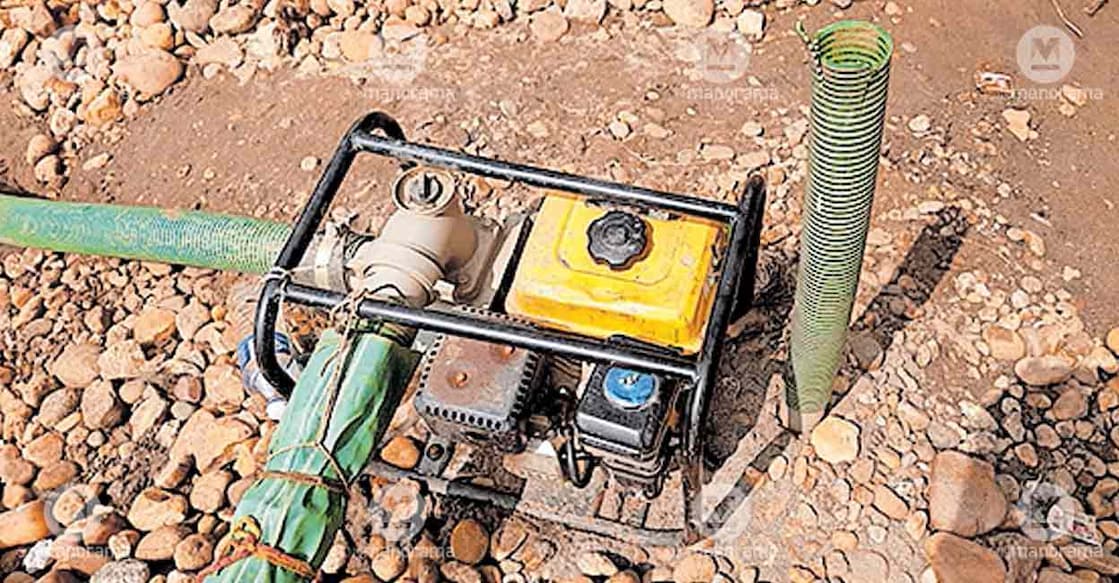
The native residents of Maruthamala had largely abandoned gold hunting nearly 20 years ago after the Forest Department enforced stricter regulations. Intervention by the Forest and Revenue departments becomes stringent when mechanised methods- such as the use of motors and generators- are employed, posing a serious threat to the river ecosystem.
While the Forest Department has jurisdiction over stretches of the river flowing through reserve forest areas, the Revenue Department is responsible for monitoring regions outside forest boundaries.
Imprisonment up to five years
Sifting for gold by trespassing into the forest in violation of the law can attract imprisonment of up to five years. Recently, the forest department apprehended a seven-member group from the Ayiravallikkavu region under the Nilambur North Forest Division for trespassing into the reserve forest and engaging in illegal mining. They were found sifting for gold using motors, generators and other machinery, digging up to 30 feet into the riverbed.
A similar incident occurred at the same spot in 2023. The forest department seized machinery and registered a case against the offenders that time as well.
The forest department has information about groups attempting large-scale gold sifting to profit from soaring gold prices. Officials warn that the formation of huge pits in the river could trap tourists and wild animals inside the forest. Some have dug massive pits along the shore, which may cause erosion and alter the river’s structure.
Tribal groups usually dig small pits in search of gold and refill them afterward. Water rushing from the mountains during the monsoon further fills these pits with sand and water. However, pits dug as deep as 30 feet remain for many years.
Devala in Tamil Nadu, along the Kerala border, stands as testimony to the dangerous traps created by gold sifting. Local residents often deepen the huge pits left behind from British-era mining in search of gold. Around 5,000 such pits have formed here. The forest department imposed strict restrictions after elephants frequently died after falling into these pits.
The 'sieve' is in official hands
Nilambur has witnessed several attempts at commercial-scale gold exploration since Independence. In 1952, the Mining and Geology Department, in collaboration with the Geological Survey of India, conducted a study at the direction of then Prime Minister Jawaharlal Nehru. The report concluded that mining using modern technology could be profitable.
In 1977, the State government launched a mineral exploration project that included studies in Nilambur. Further surveys were carried out in the 1980s and again in 1994. One of the reports estimated that mining two tonnes of sand from areas identified as having high gold concentration in Maruthamala could yield up to one kilogram of gold.
In 2008, the Centre sanctioned ₹1.77 crore for gold exploration in Maruthamala. Trial drilling was approved by the Central Mining Department with the assistance of the Mineral Exploration Corporation Limited, a central public sector undertaking. However, the project was stalled after the Union Ministry of Forests and Environment objected, stating that the proposed drilling site lay within the buffer zone of the Silent Valley National Park.
Subsequent attempts to resume scientific exploration failed to materialise for various reasons. Until comprehensive studies are undertaken, the presence of gold in Nilambur and adjoining areas is likely to remain a puzzle- caught between myth and scientific possibility.
 Add as a preferred source on Google