

‘Dravidian Model’ in God’s own country? DMK eyes Kerala Assembly debut in Peerumedu & Punalur
Mail This Article


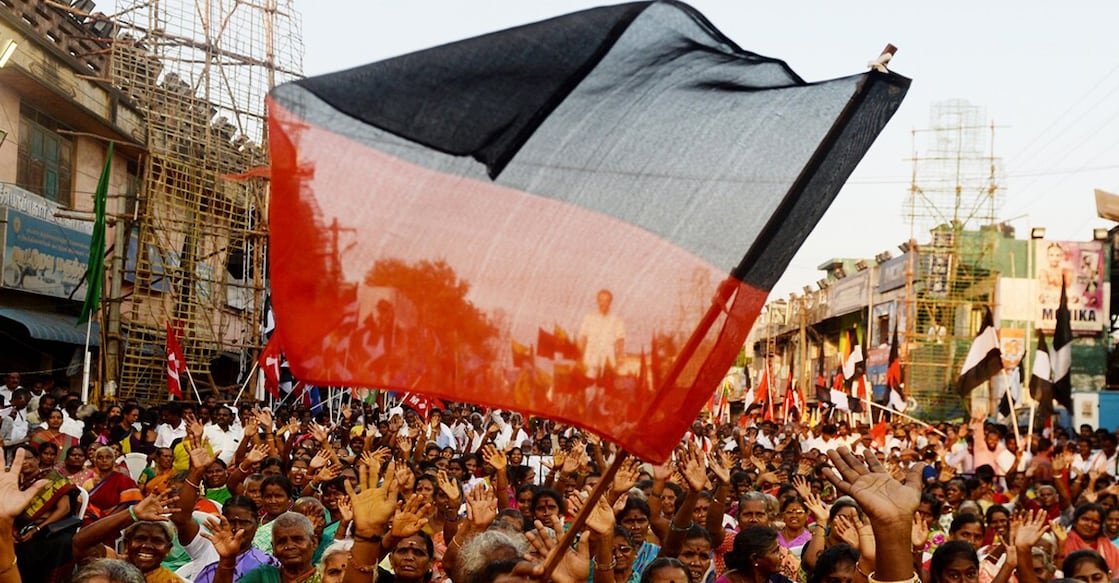
Kochi: The Dravida Munnetra Kazhagam (DMK) is harbouring ambitious plans to contest the upcoming Kerala Assembly elections. Driven by a central mandate to evolve into a national force against the BJP and the Sangh Parivar, the ruling party of Tamil Nadu, which already contested in a few seats in local body polls, has commenced groundwork in key border constituencies, specifically zeroing in on Peerumedu in Idukki and Punalur in Kollam.
Speaking to Onmanorama, Mohammed Asif, member of DMK’s state in-charge committee in Kerala and Idukki district, confirmed the party's readiness. “All committees at various levels in the Peerumedu constituency are ready. We are waiting for the official permission from the DMK leadership in Tamil Nadu,” Asif said.
He added that a high-level meeting is imminent to finalise the roadmap for the Kerala polls. “Whether we should be part of any alliance or go alone will be decided in the meeting. But even if we decide to go alone, we are ready for that,” he said.
Party sources said that the DMK has identified a strategic cluster of approximately 17 constituencies, mostly situated along the Kerala-Tamil Nadu border, where demographic and linguistic factors might swing in their favour. The wishlist includes Sultan Bathery, Nilambur, Mannarkad, Chittur, Malambuzha, Devikulam, Peerumedu, Udumbanchola, Punalur and Parassala among others.
The expansion is not merely about testing waters; it is a calculated move to export the “Dravidian Model” of development and social justice to neighbouring states, including Kerala, Karnataka and Telangana.
“Over the last few years, the party has set up district committees across Kerala, focusing on strengthening the organisational structure in these border constituencies. Besides Peerumedu, the party has high hopes for Punalur in Kollam, where preparations are already underway to contest,” said a senior leader.
There are also strong indications that the party is exploring a contest in Vaikom, Kottayam. The constituency holds symbolic weight; in December 2024, Tamil Nadu Chief Minister and DMK President MK Stalin visited Vaikom with Kerala CM Pinarayi Vijayan to inaugurate the renovated Thanthai Periyar Memorial. The event marked the centenary of the Vaikom Satyagraha, highlighting the shared lineage of social justice championed by reformer and activist EV Ramasamy Naicker, popularly known as Periyar.
From local wards to legislative assembly
The leap to the Assembly follows a pilot run in the recent local body polls. According to KK Janardhanan, DMK’s Idukki district secretary, the party contested 12 panchayat wards and one block division in Idukki. DMK candidates contested in Devikulam block panchayat and Upputhara, Suryanelli, Aranakallu, Marayoor, and Vandiperiyar panchayats under the party symbol ‘rising sun’.
Despite failing to win a seat, the party views the vote share as proof of concept. “Though we could not win, our candidates garnered up to 200 votes in certain wards. We are strengthening our base in the region, particularly where many Tamil workers live in the plantation sectors,” Janardhanan said.
Though the party leaders in Kerala had submitted a proposal to the leadership in Tamil Nadu a few months ago, permission to contest in the local body polls was given only a few weeks before the poll notifications.
“There were no plans until then. We did not get enough time to prepare for the local body polls and yet we performed well,” a senior leader said, adding that the goal is to make the DMK a formidable force in Kerala by 2031.
The DMK’s entry presents an interesting paradox for Kerala politics. While the party is an ideological ally to both the CPM and the Congress at the national level within the INDIA bloc, its decision to contest locally, potentially solo, could cut into the vote banks of the UDF and LDF in Tamil-speaking belts.
For the DMK, however, the priority is clear as it aims for a national expansion to counter the BJP’s agenda. By leveraging the cross-border cultural and linguistic ties and pitching the welfare-heavy “Dravidian model,” the Rising Sun is hoping to dawn on the western side of the Ghats.
 Add as a preferred source on Google