

Syllabus cut aimed at easing student stress, not deleting lessons: Minister Sivankutty
Mail This Article


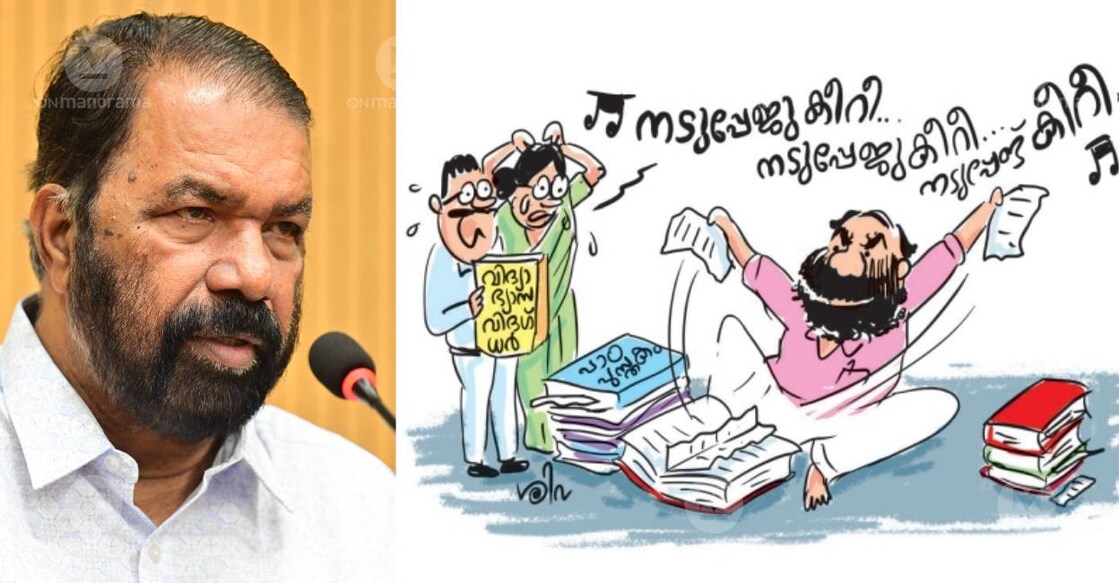
Thiruvananthapuram: Kerala General Education Minister V Sivankutty on Monday clarified that the proposed 25% reduction in the school syllabus is aimed not only at reducing the weight of textbooks but also at easing the mental burden on students.
The minister pointed out that he was aware of concerns raised by some sections that a reduction in the syllabus could adversely affect academic standards.
“Any change in the syllabus will be implemented only on the basis of reports submitted by committees comprising teachers and academic experts,” he said, responding to a recent report in Malayala Manorama.
Stressing that reducing the ‘content load’ does not mean deleting important lessons from textbooks, the Minister said the content would be modified by avoiding repetition and retaining only topics appropriate for students of a particular age.
“This scientific approach will be adopted for SSLC lessons as well,” he added, pointing out that reducing examination-related stress is among the government’s declared policies.
The Minister revealed that the government has been seeking regular feedback from teachers and students on the revised textbooks. “We have received responses indicating that content related to certain topics is heavy. The syllabus will be revised only after a scientific examination of such content. The curriculum committee will hold detailed discussions on lightening the syllabus and arrive at a decision at the earliest. There is no confusion on the part of the government in this regard,” he said.
“We have proposed introducing the concept of an ‘Evolving Text’, under which timely changes will be made to the curriculum instead of teaching the same textbooks for 10 years,” the Minister said.
“A child’s knowledge does not increase in proportion to the number of chapters in a textbook. The government believes in quality, not quantity,” he added.
“We will ensure that students acquire deep knowledge through an experimental academic process,” Sivankutty said.
 Add as a preferred source on Google