

BJP pitches AIIMS, ₹3,000 women pension, Sabarimala CBI probe in Kerala manifesto
Mail This Article


With an eye on expanding its footprint in Kerala, the Bharatiya Janata Party has unveiled an expansive manifesto for the 2026 Assembly elections, promising a mix of welfare measures, healthcare expansion and infrastructure push. Key assurances include a ₹3,000 monthly pension for women and vulnerable groups, a ₹2,500 grocery and healthcare recharge card for poor households, and the establishment of Kerala’s first AIIMS, alongside a politically significant pledge for a CBI probe into the Sabarimala issue.
Framed under the theme “Vikasita Keralam”, the document seeks to address both economic concerns and identity-driven issues, positioning the party as an alternative to the ruling Left and the Opposition Congress-led fronts.
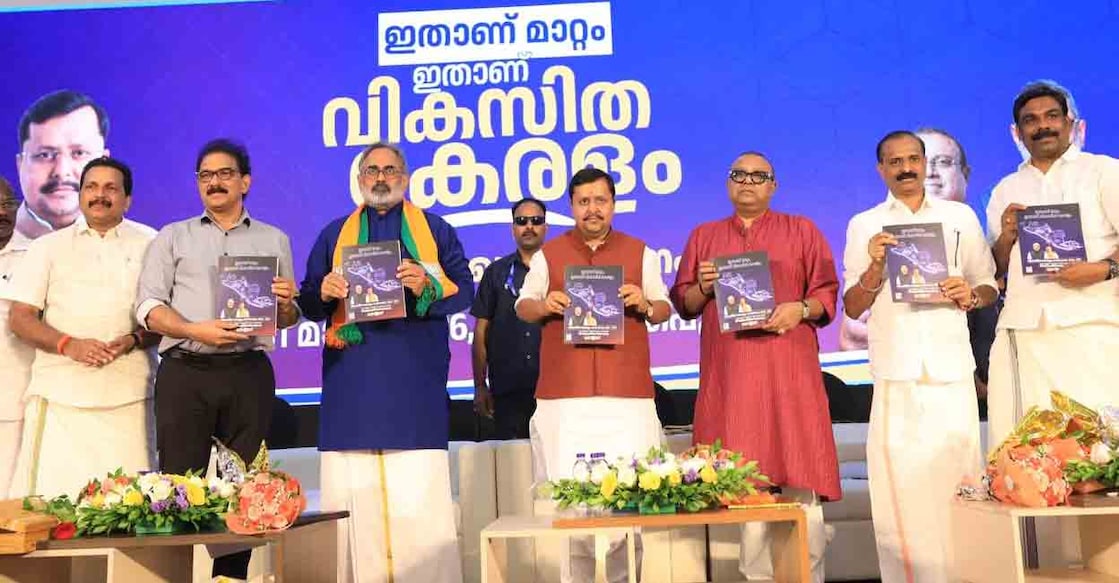
The manifesto, outlining the party’s vision for 2026–31, was unveiled by BJP president Nitin Nabin at a function held in Thiruvananthapuram, in the presence of senior leaders of the National Democratic Alliance in Kerala, including Rajeev Chandrasekhar, Thushar Vellappally and Sabu M Jacob, among others. Framing the document as a blueprint for transformation, the BJP said the roadmap sets out its governance priorities and development vision for Kerala over the next five years.
Sabarimala probe, Devaswom reforms in focus
A key political highlight is the promise of a time-bound CBI inquiry into the alleged gold theft at Sabarimala Temple, a move clearly aimed at tapping into long-standing concerns among devotees. The party has also proposed revamping Devaswom Boards to increase devotee participation in temple management and curb corruption. Alongside, it has promised a “Sabarimala Infrastructure Development Mission” to improve facilities for pilgrims.
₹3,000 pension, welfare push for women
The manifesto places strong emphasis on direct welfare, especially targeting women and vulnerable sections. It promises a strengthened welfare pension of ₹3,000 per month for women heads of poor households, widows and senior citizens above 70.
In another major assurance, the BJP has proposed a “Bhakshya Arogya Suraksha Card” for women from poor and BPL families, with a monthly recharge of ₹2,500. The card can be used for purchasing groceries and medicines, effectively combining food security with basic healthcare access.
Additionally, the party has promised two free LPG cylinders every year for poor families, to be distributed during Onam and Christmas.
Healthcare, food and social security
The BJP has pledged to expand Ayushman Bharat PM-JAY to cover every Malayalee, promising a broader safety net during medical emergencies. It has also committed to establishing Kerala’s first AIIMS, addressing a long-pending demand for advanced healthcare infrastructure in the state.
Other social sector promises include free supply of up to 20,000 litres of water per month to households and minimum support price (MSP) coverage for all crops requiring support.
Jobs, industry and Vizhinjam push
On the economic front, the manifesto proposes an Employment Linked Incentive Scheme, offering soft loans of ₹1 lakh per job created for Kerala residents. A major thrust is placed on developing Vizhinjam Port into a large industrial hub, with plans for a ship repair and marine engineering cluster, a dedicated industrial corridor and improved rail connectivity.
The party has also outlined city-specific economic visions, including positioning Thiruvananthapuram as an IT and innovation capital, Kochi as a shipbuilding hub, and Kozhikode as a healthcare innovation centre.
Infrastructure and connectivity
The BJP has promised a high-speed railway corridor connecting Thiruvananthapuram to Kannur, alongside expansion of metro networks. This includes completing all phases of Kochi Metro and introducing metro services in Thiruvananthapuram and Kozhikode.
Education and agriculture reforms
In education, the manifesto proposes introducing optional English-medium instruction in state-run schools over the next five years. Agriculture and plantation sectors also feature prominently, with assurances to amend land and forestry laws to enable multi-crop farming in plantation areas.
Balancing politics and policy
The manifesto reflects a dual strategy: combining welfare-driven promises such as pensions and subsidy cards with politically resonant issues like Sabarimala and governance reforms. As the election campaign gathers pace, the BJP’s challenge will be to convert these promises into electoral gains in a state where it has historically struggled to make major inroads.
 Add as a preferred source on Google