
Leaks, charging woes hit double-decker electric bus service in Kozhikode
Mail This Article


However, with the onset of heavy rains in June, the problem has worsened, leading to a decline in passenger numbers. Water from the upper deck has started seeping into the lower deck through gaps near the lights. Though the issue was brought to the company’s attention, its representatives are yet to visit the site and carry out repairs.
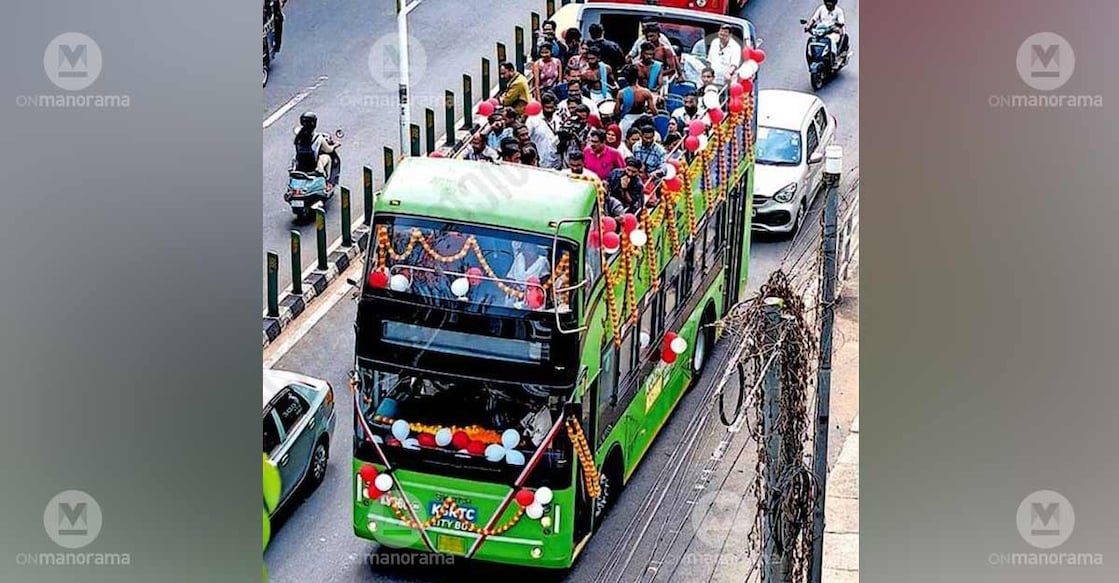
Since its launch on March 27, the double-decker bus has emerged as a major attraction in the city, drawing large crowds and even serving as a venue for celebrations and events. The service has generated around ₹12 lakh in revenue so far. During the summer season, daily earnings had touched nearly ₹35,000. However, the onset of monsoon has led to a sharp decline in passenger footfall, with revenue dropping to as low as ₹1,500 on some days.
Meanwhile, the bus's charging infrastructure has also run into trouble. A charging point installed at the KSRTC terminal developed a short circuit, damaging the charger's internal components on two occasions. After identifying the electrical issue, the Kerala State Electricity Board (KSEB) issued a notice seeking corrective measures.
The bus is currently being taken to an external charging station, resulting in additional expenses and hours of waiting time. The district, meanwhile, has no other charging facilities for KSRTC buses outside the terminal.
Officials fear that unless the bus manufacturer resolves the leakage issue soon, the service could become financially unviable.
Kozhikode: The double-decker electric bus service launched under the City Tour project has run into trouble, with rainwater leaks and charging issues affecting its operations.
The ₹2.5 crore bus has been experiencing severe water seepage during heavy rains, with passengers reporting water dripping from the ceiling inside the vehicle. The company had reportedly cautioned authorities at the time of launch that leakages could occur during the rainy season and assured that the issue would be addressed through leak-proofing measures. However, the problem persists.
 Add as a preferred source on Google