
No-hassle dairy farming: How a Kerala co-operative is turning cows into high-yield mutual funds
Mail This Article


Forget the stock market and mutual funds; the latest lucrative investment trend in Kerala could be grazing in a pasture. A unique dairy venture is now offering individuals the opportunity to invest in cattle without having to clear cow dung, feed the animals, or even milk them. Your cow lives safely on a modern communal estate, yields milk, and earns you a neat monthly dividend directly deposited into your bank account.
By investing ₹1 lakh in a cow, investors can secure an average monthly return of ₹2,200. Contrast this with the modest ₹600 monthly interest a bank typically offers on a similar fixed deposit. Each cow is registered under the investor's name and backed by a comprehensive insurance policy, eliminating the fear of financial loss if the animal falls ill. Far from a speculative scheme, this is a highly praised, scientific initiative pioneered by the Melkadakkavoor Dairy Industrial Co-operative Society (Milco) based in Attingal, Thiruvananthapuram. Dubbed the community dairy farm, it offers a sustainable blueprint to resolve age-old hurdles in the dairy sector.

What is a community dairy farm?
At its core, a community dairy farm is a centralised hub equipped with modern infrastructure to house, feed, and manage cattle owned by various small-scale investors. In a densely populated state like Kerala, traditional backyard dairy farming is becoming increasingly difficult. Rapid suburbanisation, shrinking land sizes, and potential neighbourhood conflicts over waste management and odour often deter passionate cattle rearers. Moreover, many lack the physical time, labour, or scientific expertise required to run a dairy farm. The community farm bridges this gap, bringing diverse smallholders under one collective, professional umbrella where they can reap profits without the operational stress.
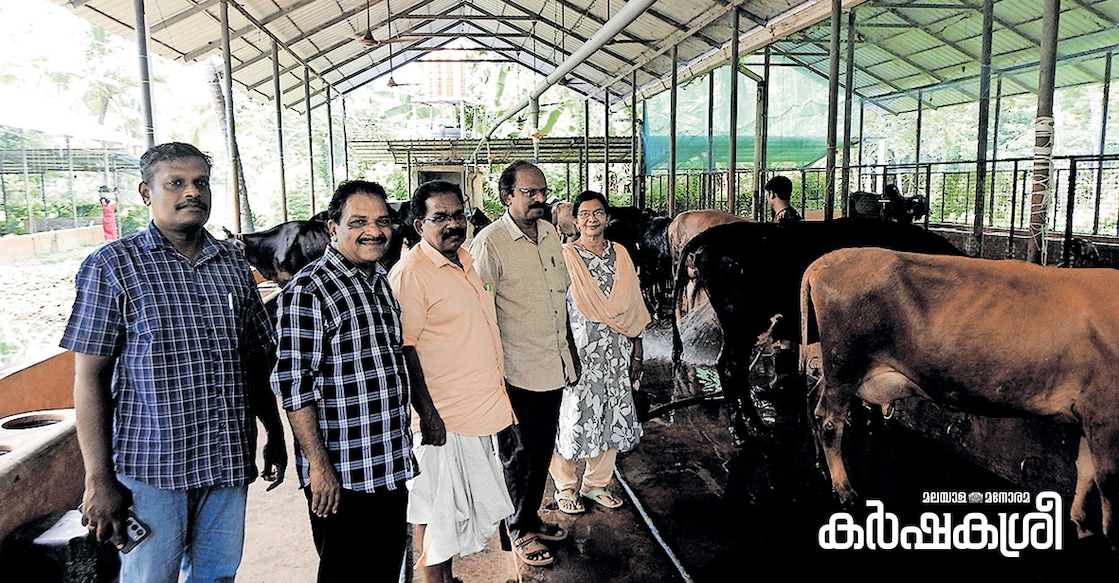
The concept was envisioned by Dr P Kamalasanan Pillai, a renowned agricultural scientist celebrated for his extensive research into azolla cultivation. As the technical advisor to Milco, Dr Pillai argues that modern challenges like surging cattle-feed prices, labour shortages, and low milk procurement rates cannot be solved by state subsidies alone. Instead, structural changes like community farming are vital to sustaining the state's dairy sector. Under his guidance, the Palazhi Community Dairy Farm was established in Attingal, and it has already successfully distributed its first cycles of monthly dividends to its members.
High returns with minimal risk
Milco leveraged a state-backed heifer park initiative to establish the community farm on a sprawling 3.5-acre leased plot. Designed to house up to 100 cows, the modern facility features high-efficiency cattle sheds, fodder cultivation fields, and organic manure processing units. The project is managed by a dedicated committee spearheaded by Milco board member S Baiju. To start with, 16 dairy farmers joined the initiative, investing ₹1 lakh each, either directly or through bank loans. For loan-takers, the monthly dividends seamlessly cover their bank instalments.
To safeguard the investment, ₹70,000 of the capital is earmarked as the purchase value of the cow, which is fully covered by insurance. The remaining ₹30,000 is diverted into profitable ancillary businesses. This includes a poultry unit housing over 500 high-yielding BV 380 layer chickens, known for producing over 300 eggs a year. According to Baiju, the profits from egg sales are substantial. Another key revenue stream is processing cow dung into dried, nutrient-rich organic manure for retail. Because the farm is operated by dedicated labourers and supervised by an expert committee, investors can rest easy. If any investor wishes to actively participate in the physical work, the co-operative pays them standard daily wages.
Seamless marketing and high-quality yield
Milco has eliminated middlemen by establishing its own retail outlets across Thiruvananthapuram, where organic eggs and fertilisers are sold directly to consumers. The 100% pure milk produced at the community farm is branded as premium milk, procured from the farm at ₹55 per litre and sold at ₹60 per litre via automated milk ATMs. Customers in Attingal and Melkadakkavoor can purchase fresh, chilled milk at any hour using prepaid smart cards.
Dr Pillai notes that the livestock is fed a highly nutritious, natural diet rich in azolla, reducing dependency on expensive commercial cattle feeds. This direct control over nutrition guarantees superior quality milk and eggs. Dr Pillai points out that while traditional farms only focus on milk, the real untapped wealth lies in utilising cow dung, urine, and biogas—particularly at a time when organic fertilisers and fuel prices are soaring. Looking ahead, the Palazhi Community Dairy Farm aims to expand under the central government's Rashtriya Gokul Mission, while designing training programmes to help NGOs, FPOs, and Kudumbashree groups replicate this successful community-driven agricultural model across India.
 Add as a preferred source on Google