

Mail This Article


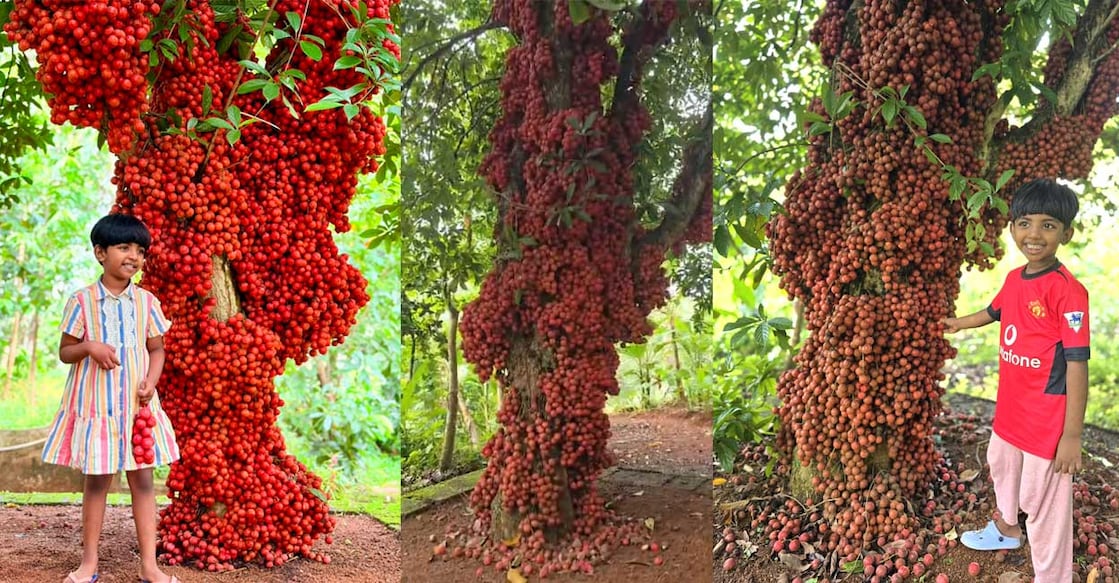
In an impressive feat of backyard farming, PJ Mathew, a traditional farmer from Avoli near Muvattupuzha, has successfully cultivated a bumper crop of the rare and exotic mooty fruit (scientifically known as Baccaurea courtallensis). Typically found deep within the Western Ghats forests, this unique tree has grown so abundantly on Mathew's farm that vibrant clusters of fruit cascade from the main trunk all the way down to the roots touching the ground. The spectacular sight of the crimson-laden tree has turned his farm into a local attraction, drawing curious visitors and farming enthusiasts alike.
A unique sweet and sour forest delicacy
Mootyppazham, or mootyppuli, is a distinctive round fruit about the size of a Indian gooseberry. Wrapped in a brownish-red rind, it boasts a unique blend of sweet, sour, and slightly astringent flavours. While the soft pulp inside is usually eaten fresh, the fleshy outer skin is highly versatile and is commonly used to make pickles, homemade wines, and refreshing juices. It is also a vital part of forest ecosystems, serving as a favourite treat for wild animals such as bears, deer, and monkeys.
A powerhouse of vitamin C and health benefits
Nutritionally, this rare forest fruit is regarded as a powerhouse of vitamin C. Traditional wellness experts recommend it for its natural cooling properties, which help regulate body temperature during warmer months. Additionally, the fruit is believed to aid digestion, boost immunity, and act as a natural blood purifier. The peak harvesting season for the fruit spans from June to September, making it a highly anticipated monsoon treat.
Low-maintenance crop with premium market value
One of the most appealing aspects of the mooty tree is its resilience. It requires minimal maintenance once established, starting with coffee-brown blossoms on its lower bark before developing into eye-catching red globes that resemble glowing bulbs. Beyond its aesthetic appeal, cultivation offers highly lucrative returns. Due to its rarity and high demand, the fruit currently commands a premium price of up to ₹650 per kilogram in the market, proving that conserving forest varieties can yield sweet rewards for local farmers.
 Add as a preferred source on Google