

Kerala mulls shifting of 167-year-old Thiruvananthapuram Zoo
Mail This Article


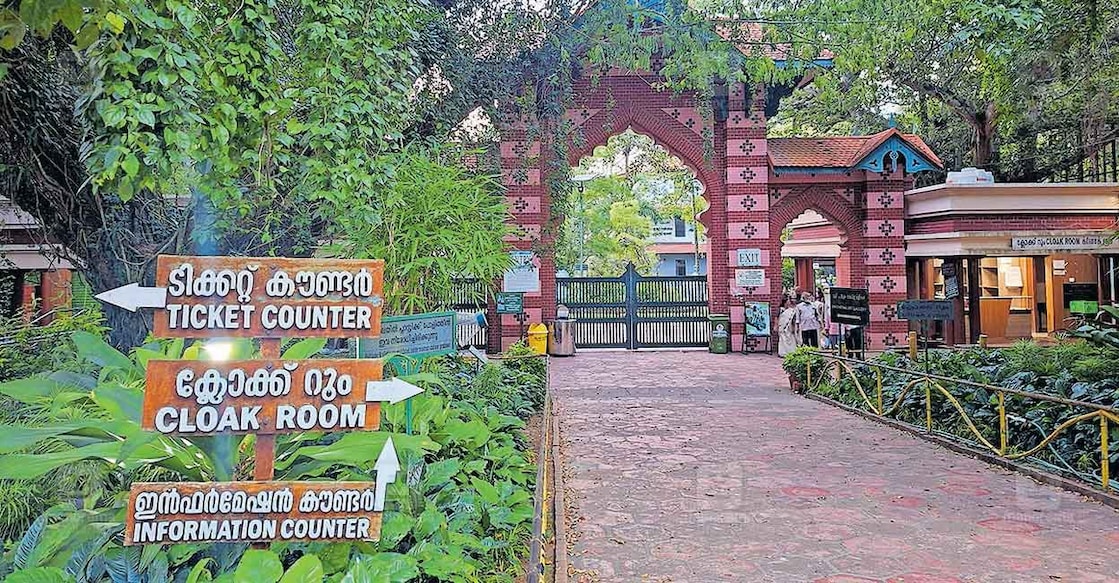
The Kerala government is considering a landmark proposal to relocate the historic Thiruvananthapuram Zoo from its current location in the heart of the capital city. While extensive renovations are currently underway to replace old iron cages with spacious, natural enclosures, the government is exploring a grander vision of shifting the entire facility to a much larger, state-of-the-art ecological park outside city limits. However, securing a massive tract of land remains the most significant hurdle for this ambitious project.
Developing a modern zoological park is a highly complex undertaking. Beyond creating natural habitats for animals, the master plan must incorporate a veterinary hospital, quarantine facilities, feed preparation centres, staff quarters, visitor parking, and access roads. Estimates suggest that building a world-class facility of this scale would cost the state exchequer at least ₹500 crore.
The history of the zoo dates back to the reign of Maharaja Swathi Thirunal, an avid wildlife enthusiast who began collecting exotic animals. What started as a royal menagerie grew over the decades to house tigers, leopards, cheetahs, bears, and lions. The museum and zoo were formally established in 1855, with the museum opening to the public in 1857, followed by the zoo and public gardens in 1859. Reacting to the relocation discussions, Zoo Director PS Manjuladevi stated that the department has not yet received any official directive regarding the move.
To realise this massive project, feasibility studies will need to be conducted in suburban and forested regions such as Nedumangad, Aruvikkara, Vithura, Kattakkada, and Neyyar. Potential sites under consideration include the Neyyar Wildlife Sanctuary, which spans 128 square kilometres, the Agasthyavanam Biological Park Range covering 32 square kilometres, and the Peppara Wildlife Sanctuary spanning 53 square kilometres. However, relocating a major zoological park to the vicinity of protected forest zones will require stringent environmental impact assessments and statutory clearances.
The blueprint for this transition already exists within Kerala. The Thrissur Zoo was successfully relocated from its cramped city-centre location to the expansive 336-acre Puthur Zoological Park. Developed at a cost of approximately ₹369 crore, the Puthur model prioritised open, cage-free, and natural environments for animals, successfully solving the acute spatial constraints faced by the older facility.
If the zoo is indeed shifted, the prime land in the city centre could be redeveloped as a vibrant public space. Kerala Chief Minister VD Satheesan has proposed transforming the vacated area into an urban park modelled after New York City's famous Madison Square Park. The iconic six-acre park in Manhattan serves as a community hub for walks, relaxation, and public events, offering a perfect model for revitalising Thiruvananthapuram's green canopy.
