

Kerala High Court reserves verdict on Thachankary's sentence suspension plea
Mail This Article


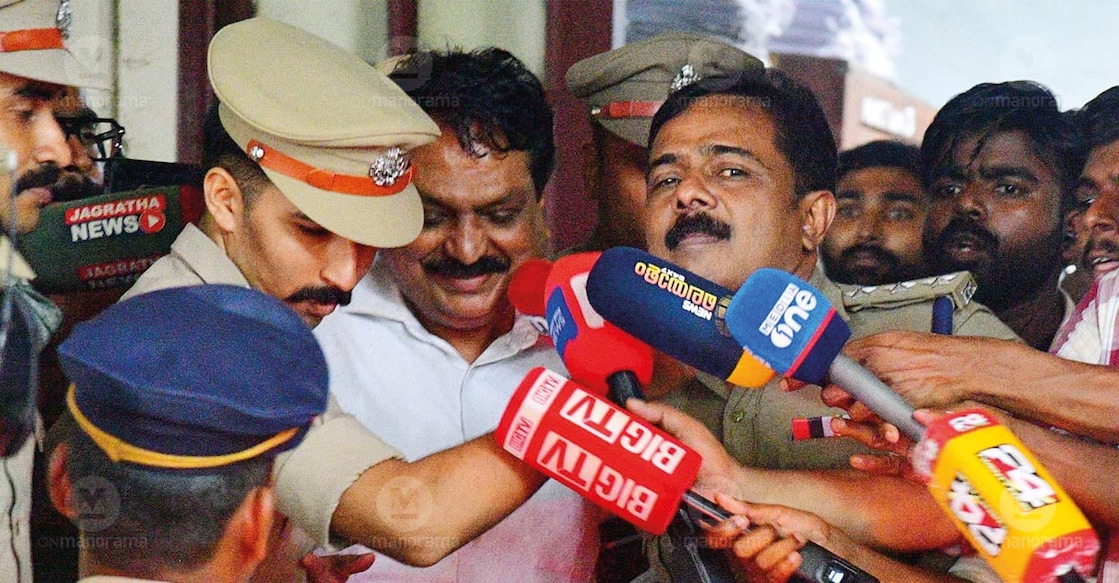
Kochi: The Kerala High Court on Thursday reserved its verdict on the sentence suspension plea filed by former DGP Tomin J Thachankary in a disproportionate assets case.
Justice A Badharudeen heard detailed arguments from Senior Advocate B Raman Pillai, who appeared for Thachankary. The prosecution opposed the plea. The senior counsel submitted that in cases registered under the Prevention of Corruption Act where the sentence was below 10 years, the convict's sentence was generally suspended and bail was granted. The prosecution, however, argued that suspension of sentence was not automatic and that the court had the discretion to decide such pleas on a case-by-case basis, even when the sentence was below 10 years.
During the hearing, Justice Badharudeen orally observed that suspension of sentence could not be treated as an automatic consequence of a conviction. "Sentence suspension is also not automatic. That is also subject to the discretion of this court on a case-to-case basis," the judge said.
The court also expressed concern over delays in corruption trials and appeals, noting that convicts may obtain suspension of sentence from appellate courts even after lengthy trials, while their appeals remain pending for years. "What is happening is, getting a conviction in a trial itself is a difficult task. Trial will be stalled in multiple ways. Ultimately, somebody who faced all these situations, subjected to trial, on conviction and sentence, will get easily released by the appellate court and thereafter continues for years without even hearing the appeal," the court observed.
The judge further noted that some accused could die while their appeals remain pending, potentially defeating the purpose of the Prevention of Corruption Act.
Justice Badharudeen also orally observed that in PC Act cases, there should be strict construction of provisions to ensure that the corrupt officials do not go scot-free, affecting public confidence.
"But what is actually happening? Once a person is found to be included in a PC Act offence, then also, after a while, when he is getting bail, he will be re-introduced into the service, he may continue the same process, and sometimes repeated offences. Sometimes, he may not," the judge said, saying that the provisions of PC Act should be made strict.
Earlier, Justice Badharudeen had on Tuesday granted the time sought by the prosecution to oppose Thachankary’s plea, with the state describing the case as an exceptional one given his former position as a senior police officer.
The prosecution argued that Thachankary had held a high-profile post and that the circumstances of the case warranted an opportunity to file a detailed written objection. "This case cannot be treated as an ordinary case. He was a Director General of Police. His position, the seriousness of the allegations and the fact that this is a crime against society must be considered," the State's counsel said.
After hearing both sides, the court allowed the prosecution two days to file its objections, taking into account the circumstances of the case.
The Enquiry Commissioner and Special Judge (Vigilance), Kottayam, had convicted Thachankary under Section 13(2) read with Section 13(1)(e) of the Prevention of Corruption Act, 1988. He was sentenced to four years' rigorous imprisonment and fined ₹30.84 lakh. The trial court found that even after giving Thachankary the benefit of discrepancies established through evidence, 52% of his known income remained disproportionate to his assets.
(With LiveLaw inputs)
