

National Highway 66 progress lags in Kerala, NHAI brings in AI to monitor work
Mail This Article


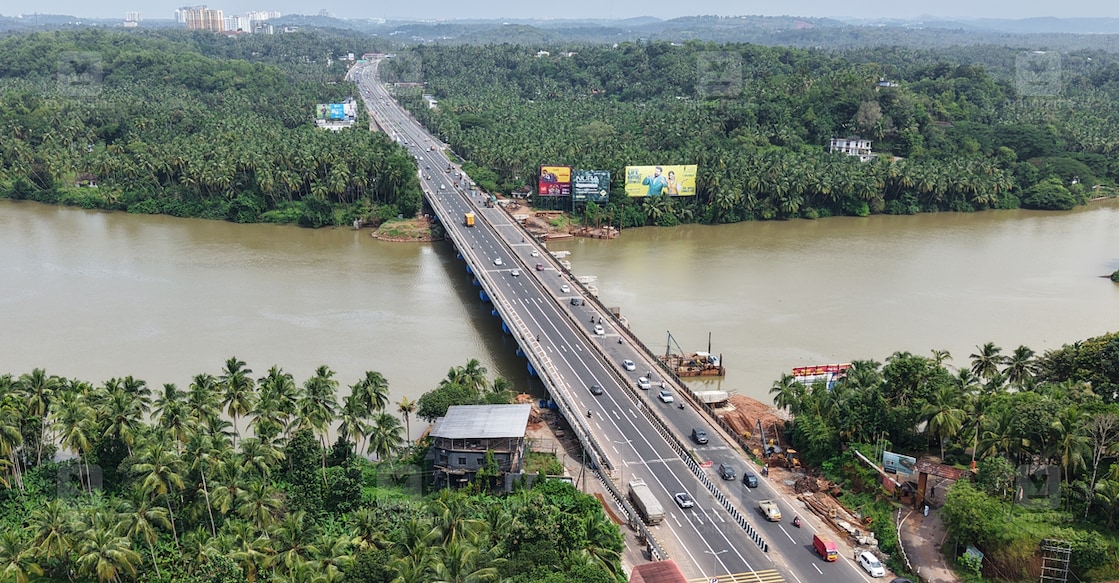
The widening of National Highway 66 in Kerala is facing severe headwinds, with major delays reported across Kannur and Kozhikode districts. While commuters are already worried about impending hikes in toll rates once the highway is ready, the slow pace of work has pushed completion dates far into the future.
While the Chengala–Nileshwaram reach in Kasaragod district is nearing completion at 91%, work in Kannur and Kozhikode is lagging significantly behind schedule.
In Kannur, the National Highways Authority of India (NHAI) has been forced to extend the project deadline to April 2028. Under the original contract, the highway was slated for completion by March last year. A major factor behind the slow progress in the Nileshwaram–Taliparamba reach is a severe labour shortage. Megha Engineering, the contractor handling this stretch, has reportedly defaulted on workers' salaries for three consecutive months, leaving only half the workforce on site. This stretch has only reached 87% completion so far.
A combination of unscientific initial construction that required complete design overhauls, shortage of essential construction material, adverse weather and the allocation of contracts to financially weak firms has severely hampered progress. Meanwhile, the Azhiyur–Vengalam stretch in Kozhikode district is trailing even further behind, with only 68% of the work completed.
Predictive asset management via AI
To address mounting complaints regarding poor construction quality and to detect road damage at an early stage, the NHAI is introducing an artificial intelligence (AI) based monitoring system. Labelled as 'Predictive Asset Management', this system aims to identify early signs of wear and tear before they escalate into major road hazards.
Under this initiative, specialised vehicles equipped with high-resolution AI cameras will continuously monitor the highway. These smart systems will scan the asphalt to identify uneven surfaces, cracks, and deep structural flaws. Crucially, the AI technology will be able to detect weaknesses in the road foundation even before visible damage appears on the top layer, allowing for proactive maintenance and repair.
