

Bacterial leaf blight detected in Palakkad's second-season paddy fields
Mail This Article


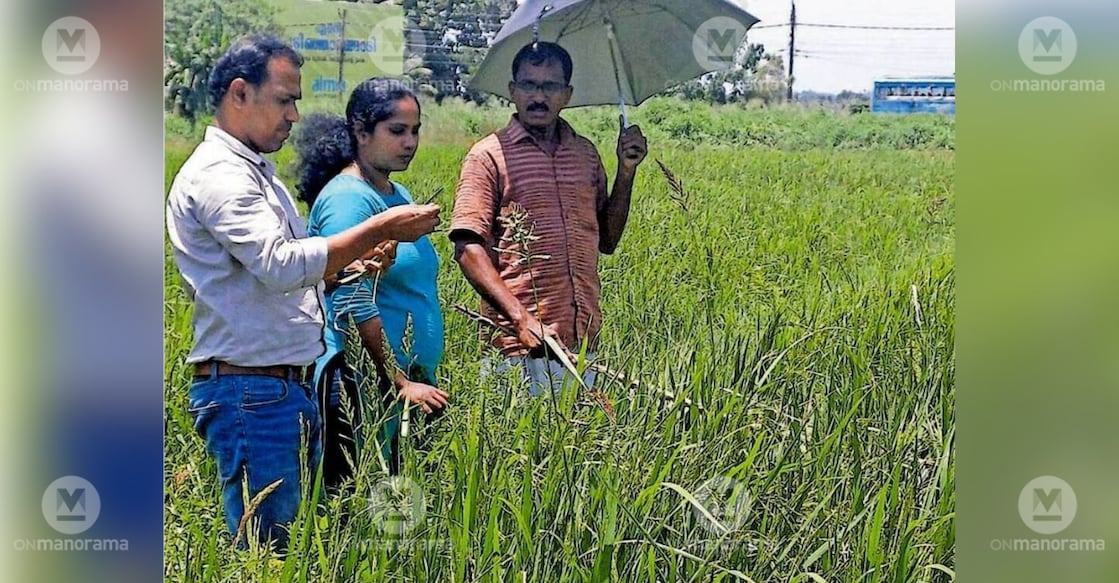
Koppam: Bacterial leaf blight has been detected in paddy fields cultivated during the second cropping season across the district, prompting the Agricultural Science Centre to issue an advisory urging farmers to take immediate preventive and control measures.
Unexpected rainfall, strong winds, high atmospheric humidity and excessive application of nitrogenous fertilizers have contributed to the rapid spread of the disease, according to the advisory. Farmers have been urged to remain vigilant, particularly in fields where the disease was reported in previous years or during the first cropping season.
Farmer committee officials have been advised to contact their nearest Krishi Bhavan or the Agricultural Science Centre if they notice leaf scorching, yellowing or other signs of infection. The disease can cause substantial crop losses if not controlled in its early stages.
Symptoms of the disease
The most severe form of bacterial leaf blight is known as 'Kresek', or seedling blight, which typically appears within one to three weeks after transplanting. Infected seedlings and transplanted plants wilt rapidly and may dry up completely, resembling crops affected by water scarcity.
Water-soaked lesions initially appear along the edges or tips of leaves before spreading and causing yellowing, drying and wilting. Bacterial exudates may also appear as droplets on infected leaves during the morning. In severe cases, entire plants may wither, resulting in significant yield losses.
Nutrient and water management
The advisory recommends liming to reduce soil acidity and improve crop health. Farmers should avoid excessive application of urea after symptoms appear and apply potash fertilizers at the recommended rates to support plant resistance.
Water movement between infected and healthy fields should be prevented to limit the spread of bacteria. Regular removal of weeds from fields and bunds has also been recommended as part of field sanitation measures.
Recommended control measures
During the early stages of infection, farmers can spray a solution containing 20 grams of Pseudomonas per litre of water. Alternatively, 200 grams of fresh cow dung can be mixed with 10 litres of water, strained and sprayed on the crop, as recommended in the advisory.
The advisory also outlines a bleaching powder treatment for field water. Farmers are instructed to reduce the water level to 2–3 centimetres and block the outlet channels. Two kilograms of bleaching powder can be placed in a sack or thin cloth bag at the main water inlet, allowing incoming water to dissolve the powder as it enters the field.
Alternatively, two kilograms of bleaching powder can be mixed thoroughly with 25–30 kilograms of dry, powdered sand and broadcast evenly over the standing water. Following treatment, farmers should avoid draining the water or introducing fresh water for 24–48 hours.
For severely infected crops, the advisory recommends foliar spraying with a mixture of six grams of copper oxychloride and one gram of streptocycline in 10 litres of water.
Agricultural authorities have urged farmers to seek guidance from the Agricultural Science Centre or their nearest Krishi Bhavan as soon as symptoms are detected, stressing the importance of timely intervention to prevent further spread and minimise crop losses.
