

Kochi Mini Cooper crash: Court rejects Borstal School's plea to move Suhail to Viyyur jail over threat to his safety
Mail This Article


Kochi: The Judicial First Class Magistrate Court in Angamaly has rejected a plea by the superintendent of Kakkanad Borstal School to transfer 19-year-old Suhail Sajeev, the prime accused in the Nedumbassery fatal Mini Cooper crash, to Viyyur Central Prison, citing concerns over his safety amid fears of a possible attack by fellow inmates.
The application sought Suhail’s transfer to the Central Prison in Viyyur on the grounds that the intense public attention surrounding the case and its sensational nature could put his life at risk at the Borstal School.
However, Judicial First Class Magistrate Samyuktha M K held that an adolescent accused with no prior criminal antecedents could not be shifted to a conventional prison for adult offenders based solely on unsubstantiated apprehensions about his safety.
The court referred to Section 39(4) of the Kerala Prisons and Correctional Services (Management) Act, 2010, and the Borstal Schools Act, 1961, observing that the statutory framework envisages the detention of adolescent offenders in Borstal Schools even after conviction.
Underlining the impropriety of transferring an accused whose trial is pending to a prison housing adult offenders, the court observed “... when the law contemplates the detention of even an adolescent offender found guilty of an offence in a Borstal School, it would be inappropriate to direct the detention of an adolescent accused, whose trial is pending, in a sub-jail where adult and hardened offenders are detained.”
The court also scrutinised the facilities available at Viyyur Central Prison. Although the prison authorities had indicated that arrangements could be made to accommodate Suhail, their report did not establish that separate lodging facilities for adolescent offenders were currently operational.
The court further noted the severe overcrowding at the prison. According to official figures placed before it, Viyyur Central Prison has a sanctioned capacity of 553 inmates but was accommodating 1,227 at the time of the report, more than twice its designated capacity.
The magistrate also found no factual basis to conclude that Suhail faced an immediate threat from other inmates. No report of an actual threat, unrest or physical attempt against him by fellow inmates had been recorded. The court noted that Suhail had not raised any complaint about his safety when he was produced before it on a production warrant.
The court said ensuring the safety and security of inmates fell within the administrative responsibility of prison authorities. It noted that the authorities were empowered under the applicable prison rules to implement necessary protective measures without seeking a specific judicial direction.
While rejecting the transfer application, the court clarified that the prison authorities could seek administrative approval from the Director General of Prisons and Correctional Services if necessary. They could also approach the court again if a specific and tangible security threat emerged and suitable segregation facilities were available at another institution.
Borstal remand, haircut controversy
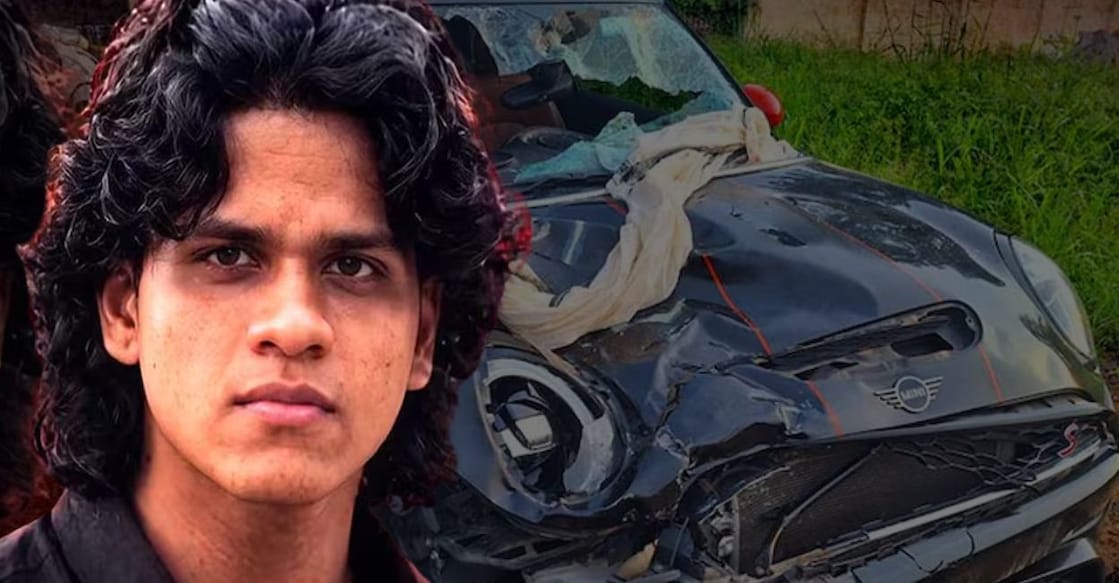
The order comes amid continued public scrutiny of the high-profile Nedumbassery crash, in which a speeding Mini Cooper driven by Suhail collided with a two-wheeler, killing three young students.
Following Suhail’s arrest, the magistrate’s initial decision to remand him to Kakkanad Borstal School drew widespread criticism on social media and other public platforms. Several people alleged that the wealthy youngster was receiving preferential treatment because of his background.
Legal officials subsequently clarified that the law categorises persons aged 18 to 21 as adolescent offenders for the purposes of the applicable detention framework, requiring their segregation from adult convicts and under-trial prisoners. Kakkanad Borstal School was identified as the only designated facility for such detainees in the district.
The case subsequently triggered another controversy when Suhail appeared before the court with a dramatically altered hairstyle. He had noticeably long hair at the time of the crash but was produced before the court with his head shaved and his hair cropped close to the scalp.
The change also led to allegations that it could have been a deliberate attempt to alter his appearance, potentially complicating eyewitness identification.
Prison authorities maintained that inmates had access to personal grooming tools and that the haircut was voluntary. However, after the issue became a controversy, the prison officials maintained that his haircut was part of the mandatory personal hygiene measures.
