

Fort Kochi Kashi cafe finds sudden footfall over vlogger's communal rant, but Gandhi-Jinnah artwork taken off months ago
Mail This Article


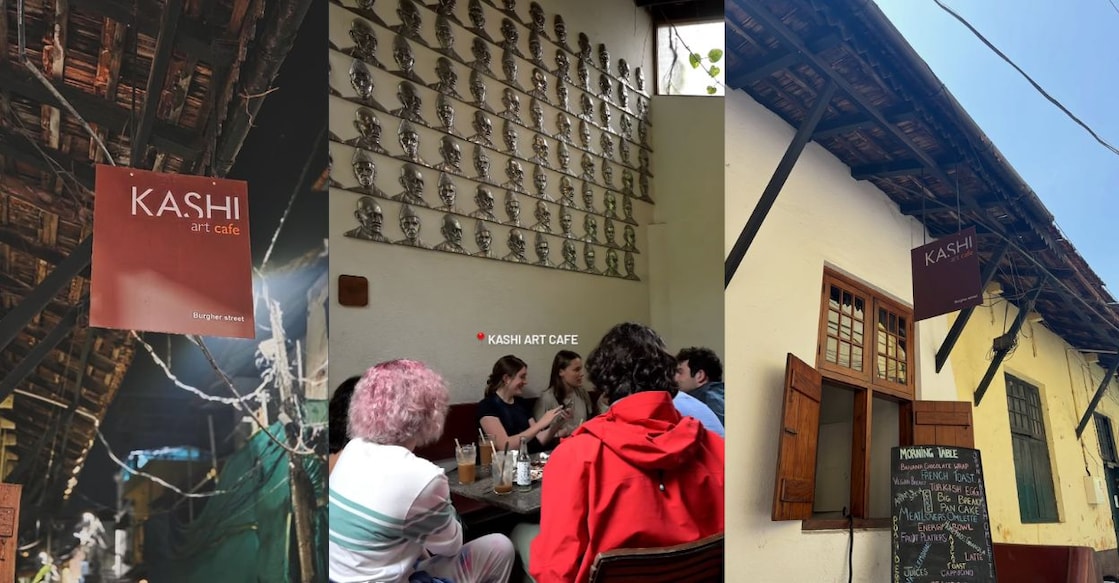
The usually tourist-filled Burger Street in Fort Kochi has been unusually busy in recent days, with visitors flocking to Kashi Art Cafe and Gallery to catch a glimpse of an artwork featuring Mahatma Gandhi and Muhammad Ali Jinnah. The installation has become the centre of a national controversy following a North Indian vlogger’s remarks about Kerala. But there is a twist: the artwork that sparked the debate was removed from the cafe at least three months ago.
Kashi Art Cafe and Gallery has long showcased works by artists from across the world, reflecting Kochi’s enduring engagement with traditional and contemporary art. The installation at the centre of the controversy, Blood Brothers: Two Fathers from Gujarat, was created in 2008 by Malayali multimedia artist Riyas Komu, co-founder of the Kochi-Muziris Biennale. The gallery has collaborated with Komu on several occasions in the past.
According to Kashi Art Gallery’s social media posts, the installation had been displayed at the cafe since at least 2025. It was subsequently replaced as part of the gallery’s regular rotation of artworks.
“The work was removed at least three months ago. We are now displaying works by a Greek artist and two Sri Lankan artists,” said Jude Vibin, general manager of Kashi Art Gallery.
The gallery decides how long an artwork remains on display in consultation with the artist, taking into account factors such as the artist’s profile and the work’s relevance and value, he explained.
Komu’s Blood Brothers: Two Fathers from Gujarat places Muhammad Ali Jinnah alongside Mahatma Gandhi. The installation came under scrutiny after North Indian influencer Amrit Singh Darren questioned its display in a video shared on October 22.
“What is Jinnah doing in Bharat?” Darren asked, questioning why Jinnah was placed alongside Gandhi. He also made claims about the neighbourhood’s Muslim population and food culture, warning that Kerala was in danger and calling for the state to be “saved”.
The video drew widespread criticism in Kerala, with many accusing him of portraying Fort Kochi as a place divided along religious lines. Kerala Police subsequently registered a case against Darren over remarks allegedly promoting communal enmity.
The controversy has brought an unexpected surge of visitors to Kashi, many of whom arrive specifically to see the installation. Staff have had to explain repeatedly that the artwork is no longer on display.
“The controversy has given us a lot of publicity. We also realised that the influencer had visited the cafe earlier. The signboard shown in his video is an old one that we have since replaced,” Vibin said.
While the increased footfall has boosted sales, managing the crowds has become a challenge. “Our sales have gone up, but the staff are finding it difficult to manage the people who come asking about the artwork. We do not know whether more people will arrive from outside,” he added.
The video also questioned the cafe’s decision to serve beef dishes, citing the name ‘Kashi’, which is associated with the Hindu holy city of Varanasi, also known as Banaras, in Uttar Pradesh. However, the cafe’s name has a different origin. Established in 1997 in a Dutch-era heritage rowhouse, ‘Kashi’ is a Japanese word associated with confectionery and sweets.
Over the years, Kashi has become a landmark in Fort Kochi, bringing together art, food and contemporary cafe culture. It developed at a time when Kochi’s contemporary art scene was still gaining wider recognition. Long before the Kochi-Muziris Biennale put the city on the international art map, spaces such as Kashi helped nurture its creative community.
