

How TVM coconut grower doubled income through intercropping with Red Lady papaya
Mail This Article


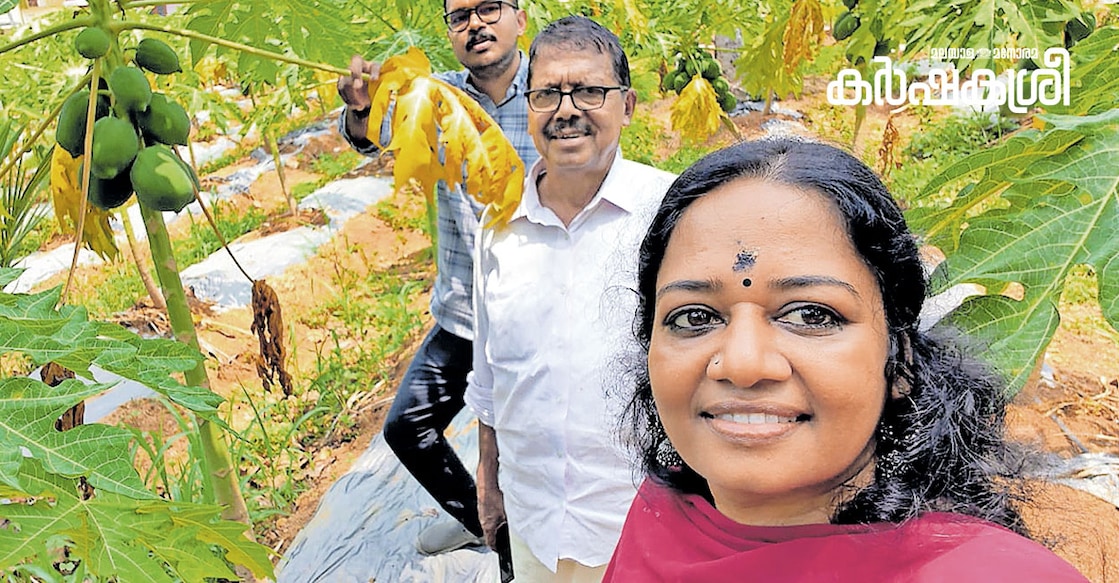
Seeking ways to overcome rising labour costs, unpredictable weather, and sluggish returns from his 1.5-acre coconut grove, V S Padmakumar of Edavakode in Nalanchira, Thiruvananthapuram, approached the Ulloor Krishi Bhavan a year ago. What began as a consultation on intercropping strategies soon transformed into a highly profitable venture in precision papaya cultivation.
Adopting precision farming methods
Under the guidance of Ulloor Agriculture Officer C Swapna, Padmakumar launched his project in August last year by selecting the high-demand Taiwan 786 'Red Lady' papaya variety. Out of more than 1,000 seeds sown in a managed nursery, over 90 per cent germinated successfully. Land preparation involved creating raised beds 1.5 metres wide and 40 cm high to prevent monsoon waterlogging, spaced 50 cm apart. Pits measuring 45x45x45 cm were dug at intervals of 2x2 metres, treated with lime according to soil test results.
Soil enrichment and drip fertigation
Two weeks after liming, each planting pit received 8 kg of an enriched organic mixture comprising 5 kg of Trichoderma-fortified cow dung powder, half a kilogramme each of neem cake and bone meal, 250 grams of rock phosphate, alongside essential biofertilisers, growth enhancers, and micro-nutrients. Drip irrigation lines were installed alongside plastic mulching before transplanting six-week-old saplings.
Water management was calibrated precisely, starting at two to three litres per plant daily during initial growth and increasing to seven to ten litres as trees matured. Water-soluble fertilisers such as urea and potassium nitrate were delivered bi-weekly via drip fertigation. Foliar sprays of zinc sulphate and boron (2-3 grams per litre) were applied at four and seven months to boost flowering. The drip system proved critical in maintaining steady hydration during severe summer dry spells.
Pest management and high yields
To guard against aphids and sucking insects that spread the destructive papaya ring spot virus, a preventive spray of neem oil solution (5 ml per litre of water mixed with 1 ml soap solution) was applied monthly from day 20. Any plants showing early viral symptoms were promptly uprooted and destroyed to safeguard the plantation. Within four and a half months, 95 per cent of the plants bloomed, and by eight months, around 800 trees were bearing fruit averaging 2 kg each.

Financial assistance and market returns
Padmakumar invested approximately ₹2 lakh in setting up the farm. He received nearly ₹1 lakh in total financial support from the state agriculture department, including a ₹72,000 subsidy under the Fruit, Flower, and Medicinal Plant Development Scheme for 2025-26.
Harvesting began four to five months ago, with Red Lady trees offering a productive lifespan of 2.5 to 3 years. Fetching ₹40 to ₹50 per kg, the crisp, sweet fruit attracts direct farm-gate buyers, local retailers, supermarkets, and Krishisamriddhi retail outlets. Padmakumar expects a cumulative harvest of 30 metric tonnes over two and a half years, effectively doubling the revenue generated from his traditional coconut grove.
