

NIT Calicut standoff continues as students demand open meeting with director; administration defends decision
Mail This Article


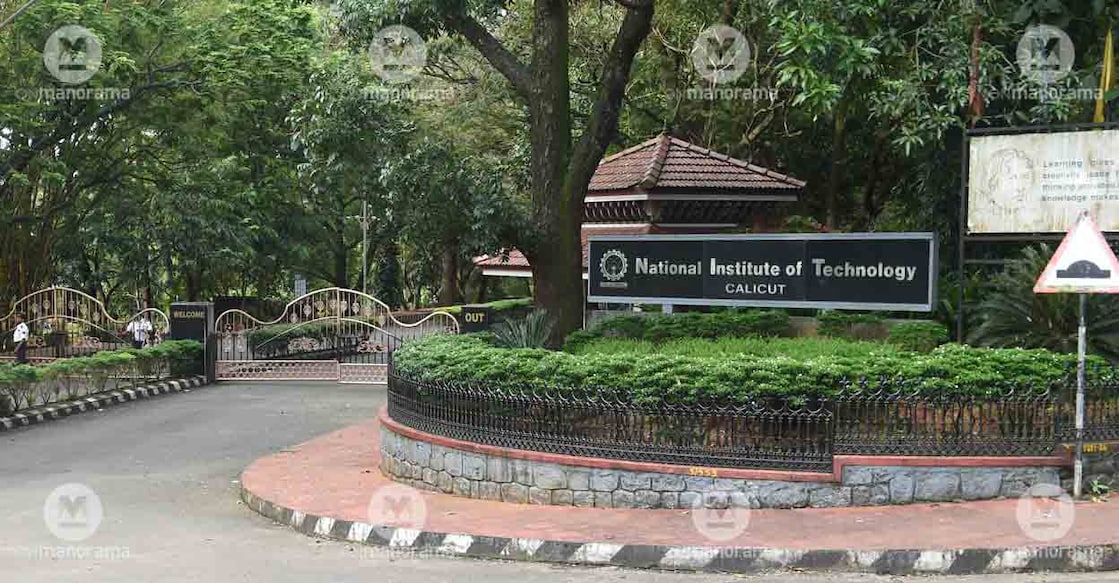
Kozhikode: The standoff between the National Institute of Technology-Calicut (NIT-C) administration and the protesting students is likely to continue, with talks between the institute director and student representatives being cancelled after the Students' Governance Body (SGB) insisted that all students wishing to raise grievances should be allowed to interact directly with the director.
Following a series of protests over various issues, the institute administration had agreed to hold a meeting between the director and student representatives at the Senate Hall on Saturday morning. Members of the SGB, the SGB Council and undergraduate branch representatives were invited to attend the meeting. However, the students opposed holding the meeting at the Senate Hall, citing its limited seating capacity, which would prevent wider participation.
What you should read next

"The concerns to be discussed affect the entire student community, and students believe that everyone should have an opportunity to participate, raise their concerns, and directly interact with the Director. Therefore, we strongly request that the meeting be conducted at Aryabhatta Hall, which can accommodate a larger gathering of around 450 students, allowing for wider participation and meaningful interaction between the administration and the student community," the SGB said in its response to the invitation.
Following this, the proposed meeting was cancelled. The NIT-C authorities, however, informed students that an urgent meeting had been held at the institute to address their grievances and that decisions had been taken on the various demands.
While students are unhappy with the cancellation, they maintain that they were willing to hold the meeting at Aryabhatta Hall, which can accommodate around 450 people. The administration, meanwhile, argues that it is not practical for the director to interact directly with such a large gathering and that selected student representatives are the appropriate forum to present the concerns of the student community.
The protests, which began days ago, were centred on several demands, including the revival of the Students' Affairs Council (SAC). Other concerns included delays in addressing student grievances, inadequate campus bus services, and the need for adequate funding for student clubs. The students also sought clarification on successive fee hikes, 24-hour library access, relaxation of restrictions on Arch Gate access, and improvements in hostel mess facilities and food quality.
Their demands further included the removal of curfew restrictions on movement within the campus, clarification regarding the proposed installation of a Vivekananda statue, and a transparent grievance redressal mechanism with defined resolution timelines and regular updates.
In an email communication to students, the Dean (Students' Welfare) outlined the administration's response to the demands. The proposal to revive the SAC, concerns over fee hikes, and restrictions on students' movement within the campus will be placed before the Deans' Meeting, chaired by the director, for consideration.
The administration also assured that two additional buses would be arranged to improve campus transportation and that reimbursements for student club activities would be expedited, preferably within a week of submission of the required documents.
The library will remain open until 2 am during examination periods, while the guest wallet facility will be permitted in all hostel messes, subject to registration. Regarding grievance redressal, the administration said complaints submitted through the existing online portal would be addressed within a week and acknowledged with reference numbers.
Efforts would also be made to keep students updated on the progress of their complaints. However, the existing restrictions on Arch Gate access will continue. The administration added that the proposed statue installation had already been discussed with the SGB at a previous meeting.
Despite these assurances, students remain dissatisfied with the administration's response and are likely to continue their protest. An SGB representative told Onmanorama that the administration's reluctance to meet the entire student community was an attempt to evade the core issue.
The administration, however, maintains that a meeting involving SGB members and representatives from each class would be sufficient to present the students' demands and concerns. It argues that it is not practical for the director to hold a direct interaction with a large gathering of students instead of their representatives.
The administration has also pointed out that the demand for reviving the SAC was not raised during the initial phase of the protest and was brought up only after several of the major demands had been addressed.
Meanwhile, students have launched a social media campaign demanding the revival of the SAC, seeking to garner wider support from fellow students and faculty members.
