

Kalpathy Ratholsavam: How Ezhavas rolled into Kalpathy streets and struck first blow against untouchability in Madras Presidency
Mail This Article


Palakkad: This year, the chariots of Gods will start to roll along Kalpathy streets on November 14. A century and two years ago in 1924, November 13 was the start date. Then, too, decorated chariots carrying deities were taken out through the narrow streets of Kalpathy 'agraharams' (Brahmin settlements) in Palakkad.
But on that day in 1924, along with the Gods, over 50 Ezhava activists had also entered the 'agraharam' from the western side. Before they could exit along the eastern side, the Ezhavas were confronted by a group of aggressive Brahmins who accused them of polluting the 'agraharam' and the Gods with their presence. A full-blown physical fight erupted. The British government quickly stepped in and imposed curfew.
It was the first time that Ezhavas, considered lower caste ('adhakrithar'), defiantly moved through the 'upper caste' streets of Kalpathy in such collective force. The centuries-old ban on entry was only for the 'depressed castes' like Ezhavas, Cherumars, Parayars and Nayadis. Upper caste Hindus like Nairs, Pillais, Tharakars, Gounders and Moothanmaars, and Christians and Muslims, too, freely used the dirty mud paths of the 21 'agraharams' in Kalpathy.
Palakkad was then under the Madras Presidency, and this Ezhava advance into Kalpathy on November 13, 2024, is considered the first rebellion against untouchability in Madras Presidency. By then Vaikom Satyagraha, for the right of lower castes to access the roads around Vaikom Mahadeva Temple, had already begun (March 30, 1924) in Travancore.
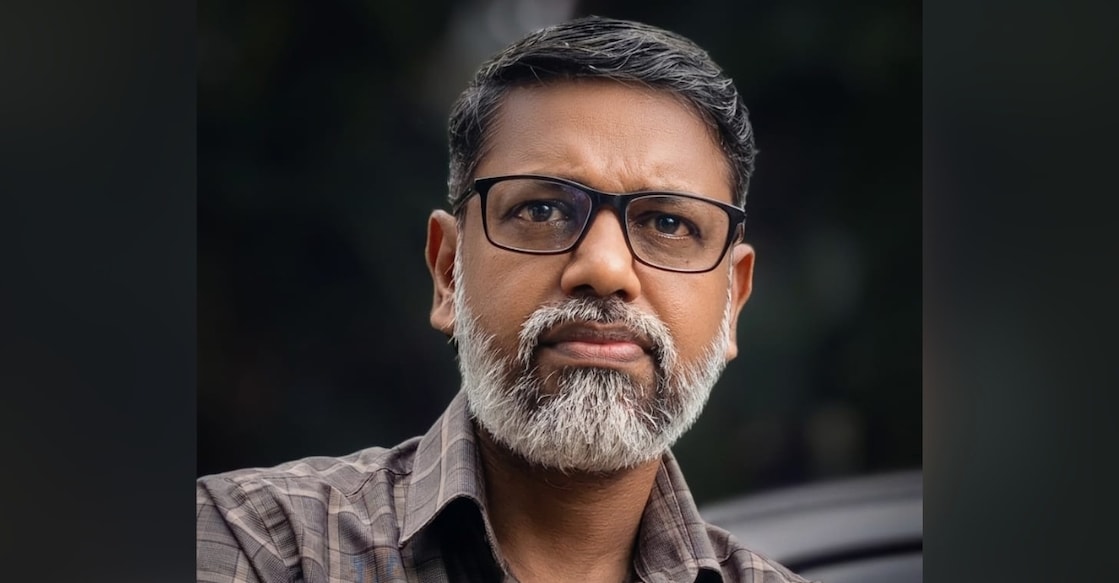
The Vaikom Satyagraha was celebrated but the Kalpathy struggle was largely ignored. This Ezhava mutiny is now the subject of historian and public activist Boban Mattumantha's book 'Kalpathy Ezhava Samaram'.
Boban's book evokes the 19th century Madras Presidency that is rigidly structured around primitive caste prejudices, traces the Ezhava rebellion from its initial stirrings, introduces readers to the ideological battles waged by heroic individuals like R Veerayyan inside legislative bodies in Madras Presidency and Travancore and then elaborates why it took many more years after the first Ezhava entry into Kalpathy for hearts to eventually change.
"Kalpathy roads refused to open before the lower castes even if they achieved high social standing or occupied high posts in the government," Boban writes. "In 1879 a sub-magistrate's movement through an 'agraharam' in Kalpathy was obstructed. His only crime was that he was an Ezhava," says the book. In 1874, the chariot festival was held up for a few days for a purification ritual. Reason: Some of the policemen who arrived to control the crowd were Ezhavas.
In 1902 there was a cholera outbreak in Palakkad and hospitals were overflowing with patients. The outbreak was particularly severe in Kalpathy as houses were packed together.
When death rates soared alarmingly, the British government appointed Dr K Krishnan, a doctor who had done stellar service in Anantpur, Krishna and Malabar districts, as the chief of Palakkad Municipal Hospital. The Brahmin-dominated Palakkad Municipal Council responded by passing a resolution against Dr Krishnan. It said an Ezhava could not be allowed into Kalpathy 'agraharams'.
"Casteism refused to bow its head even when faced with a deadly pandemic, and instead made monkey faces perched on the rotting rafters of the 'agraharams'," Boban writes.
Fact is, when Ezhavas stepped into Kalpathy on November 13, 1924, it was not an illegal act. "St George Fort (The British seat of power in Madras) issued GO (government order) 2660 on September 25, 1924, that granted the depressed classes freedom of movement along public roads and free access to government offices and public spaces like wells and tanks," Boban writes.

But GO 2660 did not deter the Brahmins. They said that Kalpathy streets were not "public". What can be considered 'public' are only those paths that were owned by the king and through which all the subjects of the king, irrespective of caste and religion, can freely move. Kalpathy streets, they argued, are designed to sustain the unique customs and beliefs of the Brahmin community. These roads are thus 'private thoroughfares' and not 'public roads' ('raja veethi).
Boban quotes a letter sent to the British government by Brahmana Samajam secretary K S Venkiteshwara Iyer. "A gramom in Palghat usually consists of one street inhabited exclusively by Brahmans with the temple and tank at one end of it. However fastidious and fanciful the prejudices of the Brahman may be, I can see no reason why they should not be allowed to maintain their privacy. I think a distinction must be drawn between a thoroughfare and a highway in that the former may by custom be dedicated to a limited portion of the public," says the letter.
Ezhavas, on the other hand, argued that any road maintained using public money is public. Boban's book has the details of the annual municipality expenditure for the upkeep of the 'agraharam' roads from 1915-16 to 2024-25.
However, the British seemed more inclined to sustain upper caste beliefs than bring about equality. It issued a new order (GO 37) three months later, on January 9, 1925, that Boban says "both accepted and rejected" the original 2660 order.
GO 37 said that the lower castes could use 'agraharam' roads when they "form a natural means of access to a main road or business centre" but warned that if the entry is dictated by the "desire to assert an abstract right" then law enforcement authorities were under no obligation to support the lower castes.
Frustrated, many Ezhavas converted to Christianity and Islam to secure the freedom to walk along Kalpathy streets. Boban writes that one of the converts was T K Chamy, the grandfather of writer O V Vijayan.
Finally, it took a Madras High Court order on March 4, 1927, to persuade Brahmins that they had more to lose than gain by perennially obstructing the entry of lower castes.
The order was prompted by the belligerent act of a Brahmin named Sundaraswara Sastrikal. He blocked an Ezhava clerk on duty from the Palakkad Registrar's Office right in the middle of the New Kalpathy road. The court refused to entertain Sastrikal's contention that the Ezhava clerk was out to insult his community, convicted him under Section 341 of the Indian Penal Code and also imposed a fine of ₹30.
"Brahmins now realised that any attempt to block the lower castes can invite the wrath of the courts and gradually came to terms with the growing disgust with untouchability in the country," Boban says.
