

Why P Jayarajan, T V Rajesh were acquitted in Ariyil Shukoor murder case
Mail This Article


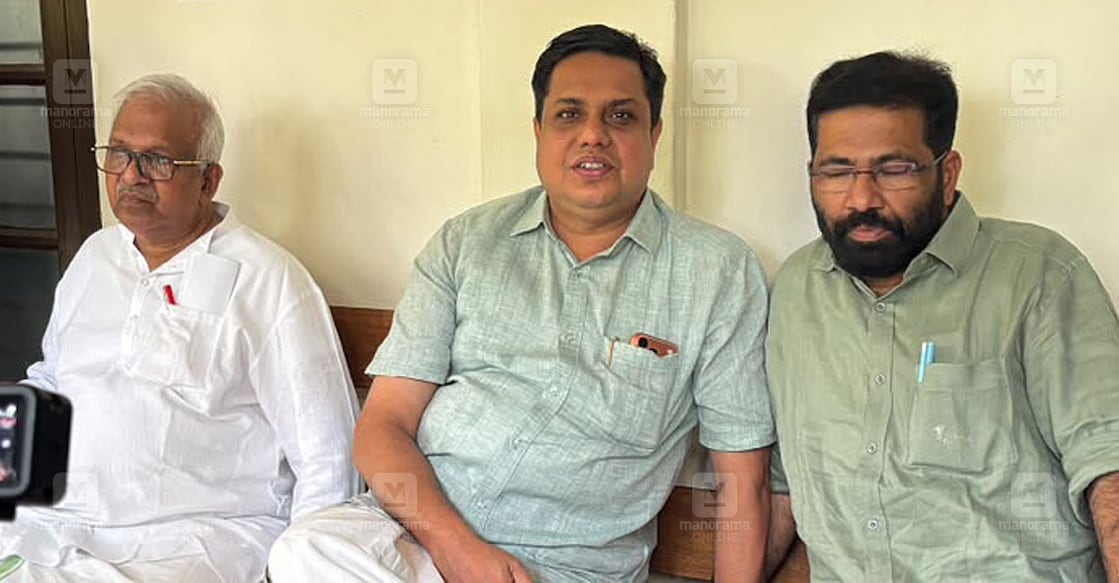
Kochi: The prosecution's failure to establish the alleged criminal conspiracy at the Taliparamba Co-operative Hospital, the non-appearance of crucial witnesses, and gaps in the electronic evidence led to the acquittal of CPM strongman and the party's then Kannur district secretary P Jayarajan and former Kalliasseri MLA T V Rajesh in the 2012 Ariyil Shukoor murder case.
The Additional Special Sessions Court (CBI)-III, Ernakulam, found that the prosecution had failed to prove beyond reasonable doubt that Jayarajan and Rajesh- the last two accused in the list of 33 accused- were part of a conspiracy to murder Muslim Students Federation (MSF) activist Abdul Shukoor Ariyil and attempt to murder his friend P Sakkariya.
The two leaders had been accused of being part of a conspiracy allegedly hatched at Room 315 of the Taliparamba Co-operative Hospital on February 20, 2012, where they were admitted after their vehicle was attacked by suspected Muslim League activists at Ariyil in Pattavum grama panchayat near Taliparamba.
The prosecution alleged that CPM leaders and activists had gathered at the hospital and conspired to eliminate those involved in the attack on Jayarajan and Rajesh. It further alleged that the two leaders knew about the plan to murder Shukoor but concealed it without informing the authorities.
Kerala police had initially charged the two leaders under Section 118 of the Indian Penal Code (IPC), accusing them of knowing about the alleged plan to kill Shukoor but not stopping it.
The CBI subsequently filed a supplementary chargesheet accusing them of criminal conspiracy under Section 120B read with Sections 364 (kidnapping or abducting in order to murder), 307 (attempt to murder) and 302 (murder) of the IPC.
The court, while framing charges on October 18, 2024, held that Section 120B was prima facie attracted and that there was no need to frame a separate charge under Section 118.
Key witnesses did not turn up
In its examination of the alleged conspiracy, the court noted that the prosecution had cited P P Abu (CW22), Mohammed Swabir (CW23), Divakaran (CW40) and M K Manoharan (CW41) to establish the alleged conspiracy at the hospital.
The CBI, in its supplementary final report, had also cited four witnesses – Vasudevan (CW15), Pramod (CW16), Rajesh (CW17) and Mukundan (CW18) to prove the same charges.
Of the eight witnesses, only M K Manoharan, a reporter with Makthab, an evening daily at Taliparamba, turned up.
P P Abu and Mohammed Swabir went abroad, and their presence could not be secured despite repeated warrants.
Vasudevan was reported dead. The prosecution gave up on Rajesh, Mukundan, Divakaran and Pramod, who was the personal security officer of Jayarajan at the time.
The court noted that the prosecution had thus failed to examine almost all the witnesses it had cited to establish the alleged conspiracy.
Journalist's testimony helped the defence
The testimony of Manoharan, the journalist, proved significant in the acquittal.
Manoharan had reported on the CPM-Muslim League clash at Ariyil on February 19, 2012. He went to Ariyil again on February 20 after receiving information that suspected Muslim League workers had painted the red office of the CPM green at Ariyil.

He testified that Jayarajan, the then CPM Kannur district secretary, Rajesh, the then Kalliasseri MLA, and other leaders had reached the place. Their vehicle was attacked and destroyed, leaving Jayarajan, Rajesh, Deshabhimani reporter Rajeevan and CPM area committee member Balakrishnan injured.
Manoharan followed them to the Taliparamba Co-operative Hospital, where Jayarajan and Rajesh were admitted to Room 315.
He testified that several CPM leaders and activists, including former MLA K K Shylaja, C N Chandran, U Babu Gopinath, T K Govindan (now a UDF MLA) and former MLA C N Krishnan, visited the two leaders.
During cross-examination, he said several people had assembled at the hospital following the attack and police officers were also on duty there. LDF leaders gathered in the room where Jayarajan and Rajesh were admitted, and a decision to call a hartal the following day (Feb 21, 2012) was announced. The announcement was communicated to reporters waiting outside the hospital.
However, Manoharan did not mention the presence of accused Nos. 28 to 31 —Suresan, K Babu, the then manager of Ezhome Service Co-operative Bank, U V Venu, and A V Babu—at the hospital at any point. They were also accused of being co-conspirators by the prosecution. A V Babu (A31) died during the trial.
Manoharan did not testify to any conspiracy involving Jayarajan and Rajesh.
The court noted that the prosecution had not disputed Manoharan's version.
Telephone evidence also failed to establish conspiracy
The prosecution relied on call detail records (CDRs) to establish communication among the alleged conspirators.
The court, however, found serious gaps in this evidence. It noted that the prosecution had produced CDRs relating to accused Nos. 29, 30 and 31. But the records produced as evidence against accused No. 31 (A V Babu) were actually those of prosecution witness K Santhosh.
The prosecution alleged that accused A V Babu had used Santhosh's SIM card. However, Santhosh testified that the mobile number belonged to him and that he had not handed over the SIM card to anyone.
The court also noted that the prosecution had not examined Sajitha, the wife of Babu. She was cited as a witness to establish his mobile number.
The CDRs showed conversations between A29 K Babu and A30 U V Venu. However, the court held that the mere existence of telephone calls was insufficient to establish that they were part of a criminal conspiracy.
It also found that the investigating agency had failed to seize the mobile phones of A10 N P Dinesan, accused of taking the photo of the victims, and A11 C N Mohanan to scientifically establish the prosecution allegation that photographs and personal details of the Muslim League workers were sent to others over the phone.
More importantly, the court pointed out that the CBI had not collected the call detail records of Jayarajan and Rajesh, despite alleging that they were parties to the conspiracy.
The court concluded that the evidence was insufficient to establish that accused Nos. 28 to 33 had conspired at Room 315 to assault and murder Shukoor and attempt to murder Sakkariya.
Consequently, the court found that the prosecution had failed to prove the conspiracy charge against Jayarajan and Rajesh.
M V Govindan's son acquitted over identification doubts
Syamjith (A19), son of CPM state secretary M V Govindan, was among the 18 accused acquitted by the court. He had faced allegations of participating in the attack on Shukoor and his companions.
The prosecution's case against him rested substantially on the identification by P S Ayoob (PW2), one of the witnesses who had been taken away from the house where Shukoor and others had sought refuge.
Ayoob testified that Syamjith was among the attackers at the courtyard of Muhammed Kunhi's house. He also attributed a threat to Syamjith, saying that Shukoor and Sakkariya would be sent back in boxes when Ayoob and others pleaded that the two men were innocent and should be released.
However, the court found serious problems with the identification.
Syamjith had not been arrested during the investigation and was not subjected to a test identification parade. The prosecution had not attempted to establish his identity through P Sakkariya (PW1), the other key eyewitness.
During cross-examination, Ayoob admitted that he had not given Syamjith's name to either the police or the CBI during the investigation. He had only described the person as tall and good-looking.
He also admitted that he came to know the person's name as Syamjith only when the accused disclosed it during his identification in court. Syamjith was the tallest among the accused standing in the dock.
The court accepted the defence contention that Ayoob had identified Syamjith on the basis of instructions from others, who had described him as the tallest person among the accused.
It also noted that Ayoob had denied telling the CBI that the person was Syamjith.
Finding the dock identification unreliable as Ayoob had not known Syamjith earlier, the court held that the prosecution had miserably failed to prove his guilt beyond reasonable doubt.
The court accordingly acquitted him of the charges.
