

Beyond rubber: How Pala turned farm crisis into a thriving food processing revolution
Mail This Article


It is a common misconception across Kerala that agriculture in Pala begins and ends with rubber. For generations, lush homesteads along the Meenachil river thrived with plantains, tapioca, jackfruit, ginger, turmeric, nutmeg, and cloves. However, when rubber prices plummeted, the entire rural farming ecosystem took a hit. Recognising that declining farm incomes threatened both rural livelihoods and nutritional security, the Bishop of Pala diocese, Mar Joseph Kallarangatt, stepped in to drive a structured intervention in the agricultural sector.
The initiative began under the leadership of the Pala Social Welfare Society (PSWS), the social service wing of the diocese, by setting up self-reliant farmer groups (Karshakadalams) in every parish. The vision was to build a community-driven institution providing manpower, funding, and innovative ideas to support growers. Over time, 215 self-help groups coalesced into 18 farmers' clubs, which eventually evolved into 7 Farmer Producer Organisations (FPOs).
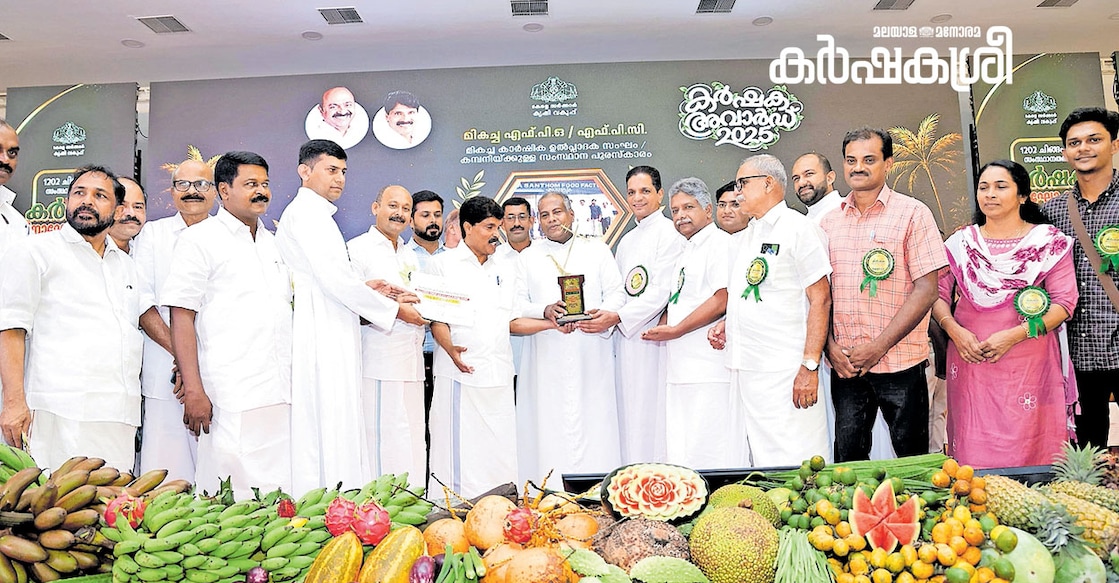
Celebrating the diocese's platinum jubilee, the SantHome Food Factory was established as a centralized venture. Its operating arm, SantHome Producer Company, established to bring small and large parish enterprises under the unified brand name 'Palanova', recently won the Kerala state award for the best FPO.
Modern processing unit powering local growers
Owned by over 600 farmer shareholders, the company connects nearly 10,000 farmers through partner organisations, clubs, and self-help groups. Central to SantHome's success is its state-of-the-art processing infrastructure. The facility is equipped with blanchers, pulpers, roasters, pulverisers, fruit mills, vacuum fryers, homogenisers, rice washers, steamers, ripening chambers, heat pump dryers, and advanced blast freezers. Thanks to this equipment, local farmers no longer need to rely on distant facilities to process and market their produce.
The company now markets more than 50 value-added products, including frozen tapioca, frozen cut vegetables, vacuum-fried banana chips, spice blends, chutney powders, tapioca chips, and traditional snacks. According to Project Officer PV George, vacuum-fried jackfruit chips have emerged as the single most popular item in their catalogue.

Global reach and strategic funding
Partnering with Viswas Foods, the producer company exported 128 tonnes of processed frozen tapioca this year. Establishing the factory required an investment of ₹4 crore. Executive Director Fr Joseph Wattappillil explained that the unit was funded through equity from farmer shareholders, ₹60 lakh from the Small Farmers' Agribusiness Consortium (SFAC), a loan of ₹1.17 crore from the Agriculture Infrastructure Fund, and ₹10 lakh from the State Horticulture Mission. The enterprise also expects an additional grant of ₹67 lakh under the PMFME scheme through the Department of Industries.
Direct marketing and community outreach
The enterprise operates a extensive nursery named Agrima along with two retail Outlets. Value-added products from member farmers and FPOs are sold through Kerala Agro Stores and Agrima Eco Shops. Through the Agrima Farmers Open Market, raw farm produce such as bananas, tubers, and eggs are sold directly to consumers, eliminating intermediaries. By 31 August, the market had procured and sold 5 tonnes of Nendran bananas, 7.5 tonnes of other banana varieties, 11 tonnes of fresh vegetables, 87,000 chicken eggs, 29,000 quail eggs, and 6.7 tonnes of exotic fruits at premium prices paid directly to growers.
To help farmers secure fair prices and gain access to quality organic fertilizers, rural agricultural festivals are organised in partnership with the Karshakadalam federations. High-quality planting materials raised at the Agrima Central Nursery in Pala are also distributed at these fairs. The central nursery received financial assistance of ₹7.5 lakh from the Horticulture Mission.
Empowering farmers through institutional linkages
SantHome and PSWS actively connect farmers with government support schemes. For instance, eight self-help groups secured farm machinery worth ₹80 lakh with an 80 percent subsidy under the SMAM scheme. The organisation facilitates benefits from NABARD, NCDC, SFAC, the Department of Agriculture, KVK, Kerala Agricultural University, Horticorp, and VFPCK. Exposure visits have also been conducted to premier institutions, including Sahyadri Farms in Nasik, Amul headquarters in Gujarat, the National Research Centre for Banana in Trichy, the Institute of Food Technology in Thanjavur, CTCRI, and NIIST.
PRO Dantis Koonanickal noted that strong market backing has motivated many locals to return to farming and secondary ventures. Initiatives such as leasing fallow lands, poultry, piggery, aquaculture, beekeeping, and snack production have created sustainable streams of income. Tapioca cultivation and snack making carried out with technical support from CTCRI serve as a model in this regard.
Small-scale processing units producing coconut oil, ground spices, chapattis, cocoa products, and dried jackfruit allow local groups to earn auxiliary revenue. A 17-member self-help group in Kalikavu distributed profits ranging from ₹3,000 to ₹10,000 per member last year.
Structural support and leadership
The diocese provides continuous training and operational guidance to the FPOs, which include four registered under the Companies Act and three under cooperative laws. Notable among them is Kanjiramattam Agro Producer Company, which gained attention for its value-added products and rambutan marketing. Another sister concern, Pala Haritham Farmer Producer Company, focuses on honey collection and processing.
An FPO based in Fathimapuram, backed by NABARD, operates two rural markets and provides agricultural drone services. Meanwhile, FPOs in Erattupetta, Pallam, and Vaikom run ventures spanning arrowroot powder production, coffee processing, organic fertilizer units, coconut and rice trade, mushroom seed production, and natural farming.
This agrarian revival is guided by Bishop Mar Joseph Kallarangatt and Vicar General Mgr Sebastian Vethanath, alongside PSWS Executive Director Fr Joseph Wattappillil and Assistant Directors Fr Joseph Thazhathuvarikkayil, Fr Francis Edathinal, and Fr Mathew Pulikkaparambil. SantHome Company is led by Chairman Sibi Mathew Kaniampady and CEO Vimal John Kadalikattil.
Policy support needed for FPO expansion
Highlighting operational challenges, Fr Joseph Wattappillil noted that while agricultural technologies are available, the high costs of technology transfer and product development remain major hurdles for FPOs. He suggested that expenditure incurred on tech adaptation should be reimbursed as infrastructure support. Given that nascent FPOs require continuous guidance, he stressed the need for a dedicated state-level resource team. Fr Wattappillil also urged the government to lease unused public buildings and lands to FPOs at nominal rates to set up processing and marketing hubs.
To stay updated with the latest agricultural knowledge, modern techniques, and success stories, read Karshakasree. Subscribe today!
