

Kerala HC appoints amicus curiae in Rahul Mamkootathil's plea against phone passcode order
Mail This Article


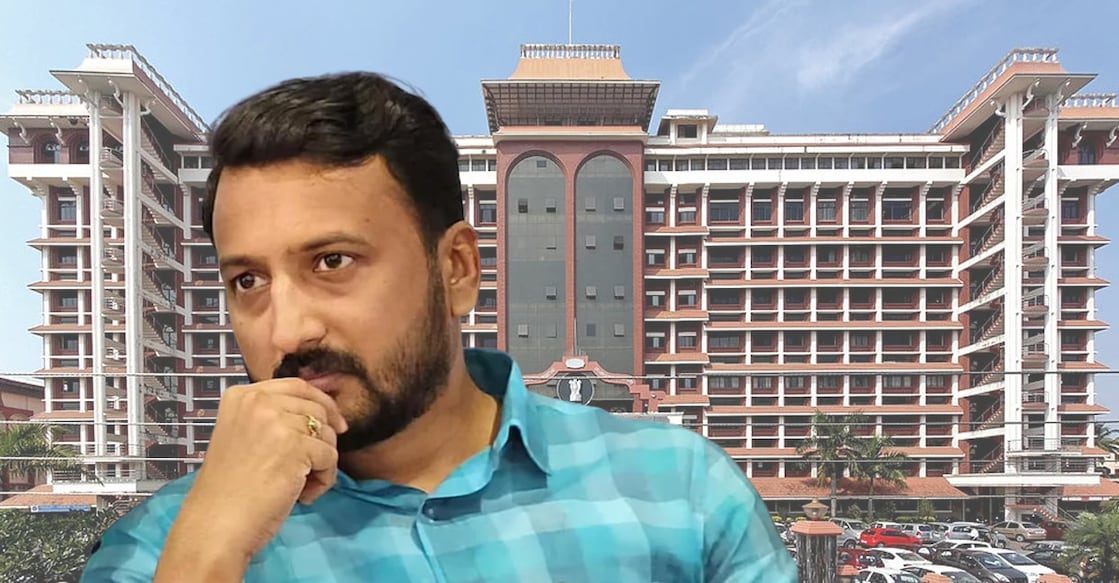
Kochi: The Kerala High Court has appointed an amicus curiae to assist it in considering a plea by former MLA Rahul Mamkootathil challenging a lower court's direction to hand over the passcodes of his seized mobile phones to the police.
Justice C Jayachandran appointed Senior Advocate Harikumar G as amicus curiae on Wednesday, after hearing preliminary arguments from Senior Advocate Sasthamangalam S Ajithkumar, appearing for Mamkootathil, and Director General of Prosecution T Asaf Ali. The court noted that the issue involved legal complexities and that there was no binding precedent on the matter.
The dispute concerns an order passed by the Judicial First Class Magistrate Court (JFCM), Thiruvalla, in February, directing Mamkootathil to furnish the passwords of mobile phones seized by the investigating officer in connection with the third rape case registered against him.
Mamkootathil challenged the order before the High Court, which stayed its implementation in March. The interim stay has now been extended until the next hearing.
Constitutional safeguards at the centre of dispute
During the earlier hearing, Mamkootathil's counsel argued that compelling him to disclose his phone passcodes would violate the protection against self-incrimination guaranteed under Article 20(3) of the Constitution.
The defence also contended that such a direction would infringe upon the fundamental right to privacy recognised by the Supreme Court in the Justice KS Puttaswamy judgment.
Referring to judgments including State of Bombay v. Kathi Kalu Oghad and Selvi v. State of Karnataka, the counsel argued that compelling an accused to disclose a passcode could amount to testimonial compulsion.
The defence also referred to provisions of the Information Technology Act and the Bharatiya Nagarik Suraksha Sanhita (BNSS), besides the Criminal Procedure (Identification) Act, 2022, which provides for the collection of specified measurements from convicts and other persons for identification and investigation.
It was argued that asking an accused to disclose a phone passcode was comparable to compelling a person to provide biological samples such as blood or urine, or a specimen signature or handwriting.
The State, however, maintained that the police demand for the passcodes was constitutionally valid and would not amount to testimonial compulsion.
Case posted to December 9
Taking note of the complexity of the legal questions involved and the absence of a binding precedent, the High Court appointed Harikumar G to assist it as amicus curiae.
The case will be considered further on December 9. The interim stay on the Magistrate's Court's direction to furnish the mobile phone passcodes will remain in force until then.
(With Live Law inputs)
