When Kamaladevi Chattopadhyay stood up to the Travancore authorities

Mail This Article


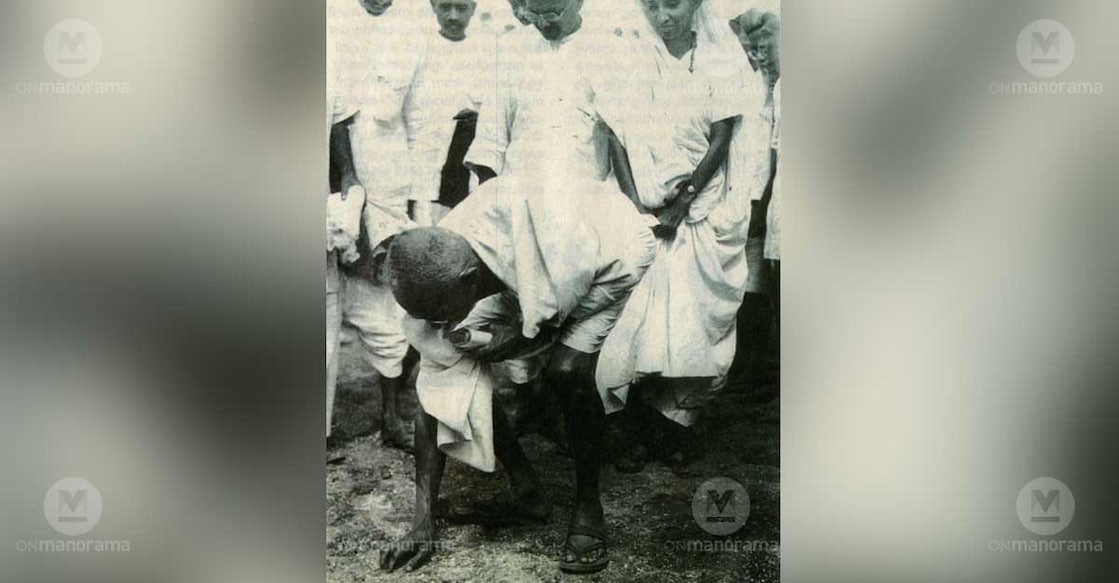
Social reformer, feminist, writer and freedom fighter Kamaladevi Chattopadhyay was a pathbreaker in several ways and became involved in social causes from a very young age. Celebrated as one of the heroes of the 1930 Salt Satyagraha when she was arrested for trying to sell “Freedom Salt” in the Bombay Stock Exchange, Chattopadhyay had several run-ins with the colonial authorities in the 1930s.
In 1936, she applied for a passport and said the purpose was “cultural work” in South Africa, Australia, Britain, Europe, Japan, China and other countries. The Home Department, however, found out that Chattopadhyay was nominated by the executive committee of All-India Congress Socialist Party as a delegate for the International Congress against War, Fascism and Imperialism, which was due to be held in Brussels that year.
“The International Congress has been called by bodies having distinct communist tendencies and it is a reasonable assumption that is if Mrs. Kamaladevi Chattopadhyay is permitted to go abroad, she will engage in activities in furtherance of the communist movement,” H M Hood, secretary to the government of Madras, wrote in a letter to the Foreign Department of the Government of India in October 1936.
The matter was raised in the British Parliament by Welsh Labour MP Morgan Jones who asked the Under Secretary of State for India why Chattopadhyay was denied a passport. When Hood’s statement was read out loud in Parliament, Jones asked whether persons who regarded themselves as Socialists were being denied passports. The under secretary said it was only Communists or those engaging in “revolutionary activities” who were not allowed to travel abroad. When Jones asked if there was evidence of Chattopadhyay being a revolutionary or Communist, the official said, “I imagine that the authorities in India were satisfied.”
Two years later, Chattopadhyay and her son were granted passports and allowed to travel abroad, but the Raj kept a close watch on her and continued to suspect her of being a Communist. A few weeks after the colonial authorities granted her a passport, Chattopadhyay once again faced legal trouble. This time, however, it wasn’t in British India but in the princely state of Travancore.
When she accepted an invitation to preside over a youth conference in Trivandrum in August 1938, the authorities in the princely state quickly swung into action. The District Magistrate (DM) of Quilon issued an order under the Travancore Criminal Procedure Code to prohibit the social reformer from entering the district.
Aware that Chattopadhyay was taking a train on the Quilon-Shencottah line, an official from Quilon served the notice to the activist in the Madras state town, telling her that she was not welcome in Travancore. The notice said, “Since Mrs Kamaladevi has been openly preaching socialistic and communistic doctrines, including complete modification of the existing social and political order, she could not be allowed to enter the district and preside over the Youth Conference.”
Chattopadhyay, however, ignored the notice and stayed aboard the train, determined to attend the conference in Trivandrum. When the train reached Quilon, the DM approached the activist and asked her to break her journey and head back to the Madras State. As expected, she refused to listen to the official.
“At Varkalai another prohibitory order was served on her by the District Magistrate under Section 127, Cr.P.C. prohibiting her entry into the Trivandrum district,” the United Press said in a report on August 20. As someone who stood up to the British and spent time in prison, Chattopadhyay was not one to back down. She stayed in the train, determined to head to Trivandrum.
“On her proceeding to Trivandrum, the District Magistrate and the District Superintendent of Police accompanied her and on arrival in Trivandrum today she was arrested,” the United Press report said. From the station she was directly taken to the First Class Magistrate’s Court.
When Chattopadhyay was asked by the magistrate whether she had applied for bail, she said no. The social reformer was remanded to custody for two days, making her miss the youth conference. The newspaper archives contain no further information about this case, and so Chattopadhyay was probably released and went back to Madras. She proceeded to Europe after this almost-forgotten incident.
She passed away at the age of 85 in 1988, making invaluable social and cultural contributions in independent India, where she headed iconic institutions such as the National School of Drama and the Sangeet Natak Akademi. Besides a Padma Vibhushan from the Indian government, Chattopadhyay was conferred the Ramon Magasasay Award among other honours. In her lifetime, Chattopadhyay was able to witness the social changes that she wanted to propagate in Kerala in the pre-independence era.