

Middle East conflict: Israel vows intensified strikes on Tehran as Iran's missiles target Gulf centres
KEY EVENTS
Mail This Article


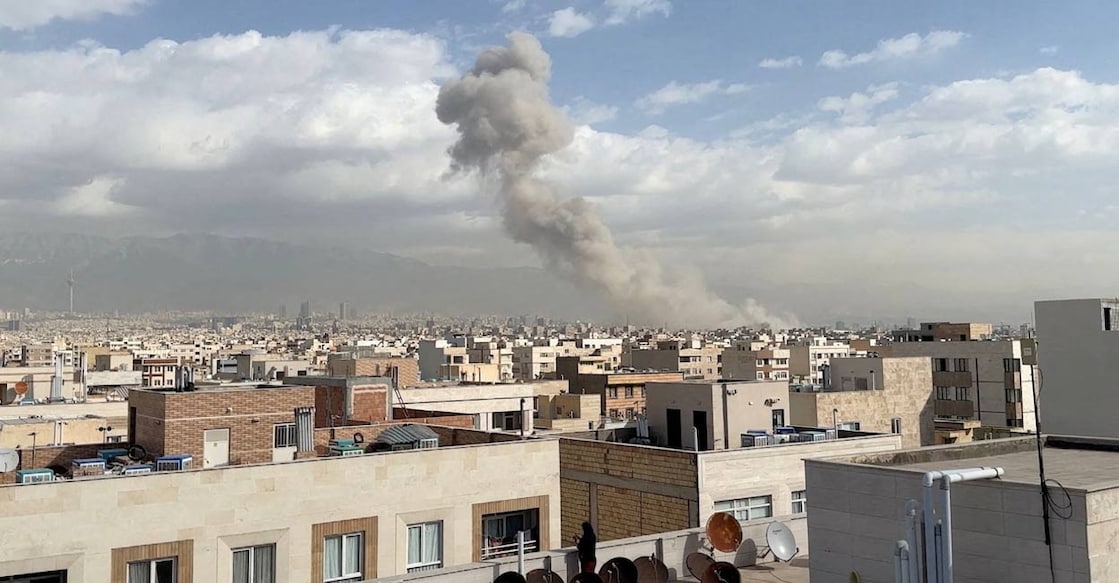
Israeli Prime Minister Benjamin Netanyahu vowed on Sunday to intensify air strikes on Tehran in the coming days, declaring that the military had mobilised its "full strength" in the campaign against Iran.
"I have issued instructions for the continuation of the campaign... Our forces are now striking at the heart of Tehran with intense power, and this will only escalate in the days ahead," Netanyahu said in a video statement. "We are engaged in a campaign in which the IDF (military) is deploying its full strength as never before, to ensure our existence and our future," he added.
After the US and Israel launched strikes on Iran on Saturday, Tehran said it would target US bases in the region. But it has also hit a range of civilian and commercial areas across Gulf cities, widening the conflict's impact on key regional aviation and trade hubs.
As retaliatory strikes widened on Sunday they reverberated across Gulf Arab states, with loud blasts heard in Dubai and the Qatari capital Doha and with Oman being hit for the first time.
In Dubai, two people were injured after shrapnel from drones fell on two houses when they were intercepted, a Dubai state media office statement said. Dubai's international airport, its landmark Burj Al Arab hotel and man-made Palm Jumeirah Island all suffered damage overnight, as did Abu Dhabi's international airport.
Debris from an intercepted drone damaged an Abu Dhabi complex housing the Israeli embassy and several other international missions, causing minor injuries to a woman and her child, Abu Dhabi's state media office said.
Thick black plumes of smoke continued to rise from the Jebel Ali port area, where one of the berths caught fire on Sunday because of debris from an intercepted missile. State-owned logistics firm DP World has temporarily paused operations at Jebel Ali Port, according to a notice seen by Reuters.
The operator said the move was taken as a precaution following the recent regional developments and following the direction of relevant government authorities. The operator's Jebel Ali Port and adjacent free trade zone account for 36 per cent of Dubai's gross domestic product. The company says it handles around 10 per cent of global container traffic with operations spanning countries including Angola, Britain, Canada, India and Peru.
Air travel across the region remained severely disrupted, with major airports- including Dubai, the world's busiest international aviation hub- facing closures in one of the largest aviation interruptions in recent years.
Oman hit for first time
In a significant escalation, a Palau-flagged oil tanker under US sanctions was struck off Oman's Musandam peninsula on Sunday, injuring four crew members, according to the country's maritime security centre. Authorities did not specify what hit the vessel.
The attack followed earlier drone strikes at Duqm port on Oman's Arabian Sea coast. These incidents mark the first time targets in or near Oman have been struck since Iran began retaliatory attacks following joint US-Israeli strikes on its territory.
In Pakistan, police clashed with protesters who breached the outer wall of the US Consulate in Karachi on Sunday. Nine people were reported killed in the unrest that followed news of the strikes in Iran.
Trump defends strikes
US President Donald Trump said the airstrikes were aimed at ending what he described as a decades-long threat posed by Iran and preventing it from developing a nuclear weapon.
"This is not only justice for the people of Iran, but for all great Americans, and those people from many countries throughout the world, that have been killed or mutilated by Khamenei and his gang of bloodthirsty thugs," Trump wrote on Truth Social.

Succession process begins in Iran
Under Iran's constitution, the Supreme Leader is appointed by the 88-member Assembly of Experts, a clerical body that oversees the position.
Iran's Expediency Discernment Council said Ayatollah Alireza Arafi had been elected to the interim leadership council following Khamenei's reported death. "The Expediency Discernment Council has elected Ayatollah Alireza Arafi as a member of the interim leadership council," said expediency council spokesman Mohsen Dehnavi in a post on X.
The Supreme Leader wields ultimate authority in Iran, serving as commander-in-chief of the armed forces and shaping foreign policy, particularly in relation to the United States and Israel.
