
Iran uses cluster munitions amid Israel attacks; US defence firms to quadruple weapons output
Mail This Article


Israel has accused Iran of repeatedly using cluster munitions since the outbreak of the latest war, which began with a joint US-Israeli attack on the Islamic republic over the weekend. Cluster munitions explode mid-air and release multiple smaller bomblets over a wide area. Some fail to detonate immediately and remain dangerous for long periods, posing risks particularly to civilians and children.
Israeli military spokesperson Lieutenant Colonel Nadav Shoshani said Iran had used cluster munitions “multiple times”, though he did not specify when or where the attacks allegedly took place. “They've used it multiple times, which is a war crime when it's directed towards civilians, and we're tracking that situation,” Shoshani said at a news briefing.
Both Iran and Israel have faced accusations over the use of cluster munitions. During a 12-day war between the two countries in June 2025, Amnesty International said Iran had used such weapons at least three times, based on analysis of photos, videos and media reports. A 2007 investigation by the US government found that Israel had likely violated arms export agreements with Washington when it dropped US-made cluster bombs among villages in Lebanon during its 2006 war with the Hezbollah militant group.
Neither Iran nor Israel is among the more than 100 countries that are signatories to the 2008 Convention on Cluster Munitions, which bans the use, production, transfer and storage of such weapons.
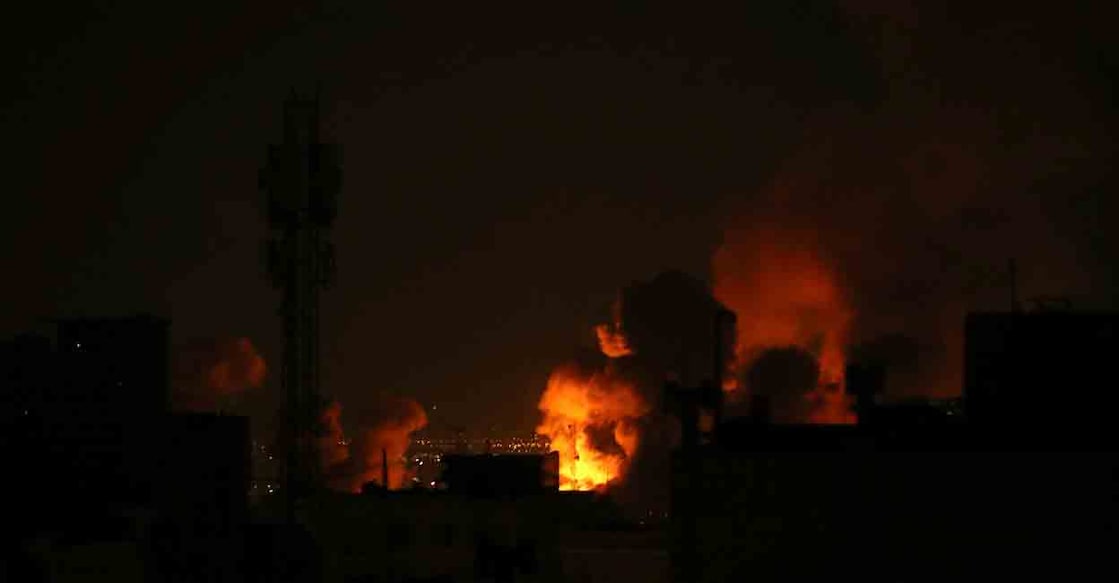
The Israeli military said on Saturday it carried out a “broad-scale wave of strikes” on targets in Tehran. Iranian state television reported an explosion in the western part of the capital. Earlier, the Israel Defense Forces said it had detected another round of Iranian missile launches toward Israel after explosions were heard in Tel Aviv.
Iran’s ambassador to the United Nations, Amir Saeid Iravani, condemned remarks by US President Donald Trump suggesting he should be involved in choosing a successor to Iran’s slain supreme leader Ayatollah Ali Khamenei.
“The selection of Iran's leadership will take place strictly in accordance with our constitutional procedures and solely by the will of the Iranian people, without any foreign interference,” Iravani told reporters in New York.
US expands military response
Trump said major US defence companies had agreed to quadruple production of advanced weapons as the war entered its seventh day. The US military also said it had struck more than 3,000 targets during the first week of the conflict.
Trump is expected to attend the dignified transfer of six US soldiers killed in an Iranian attack on Kuwait. The troops died when a drone struck a key US command centre in the southern industrial hub of Port Shuaiba.
Regional attacks and interceptions
The conflict has triggered attacks and counterattacks across the Middle East. Saudi Arabia said it intercepted and destroyed a ballistic missile fired toward Prince Sultan Air Base southeast of Riyadh, which hosts US military personnel. In a separate incident, a drone attack targeting a major oil field near the Emirati border was also thwarted, according to the Saudi defence ministry.
-
1 HOUR 19 MINUTES AGO
Supplyco hits record Onam sales as turnover crosses ₹422 crore

-
3 HOURS 35 MINUTES AGO
Fishers escape unhurt as boat breaks loose, hits Sakthikulangara coast
Meanwhile, rockets targeted the Baghdad airport complex, which hosts a military base and a US diplomatic facility. A group calling itself Saraya Awliyaa al-Dam (Guardians of Blood), claiming ties to the Iran-backed Islamic Resistance in Iraq, said it carried out the attack.
Explosions were also reported near Erbil airport in Iraq’s autonomous Kurdistan region, where US-led coalition forces are stationed. Authorities said production at an oil field operated by US firm HKN Energy was halted following the attack.
Oil prices surge, shipping disrupted
Global oil prices have surged amid fears that the conflict could disrupt energy supplies in the Gulf. Brent North Sea crude rose to $92.69 per barrel, climbing 8.5 percent in a single day and nearly 30 percent over the week.
Shipping through the Strait of Hormuz has slowed dramatically. MarineTraffic data analysed by AFP showed that only nine commercial vessels had passed through the key waterway since Monday.
Normally, nearly 20 percent of the world’s crude oil and about 20 percent of liquefied natural gas shipments transit through the strait.
Civilian toll rises in Lebanon
The war has also intensified fighting in Lebanon, where Israel has been targeting positions of the Iran-backed Hezbollah militia.
Lebanon’s health ministry said the death toll had risen to 217 after Israeli air strikes battered Beirut’s southern suburbs. The Norwegian Refugee Council said about 300,000 people had been displaced and questioned the legality of Israeli evacuation orders.
Several Ghanaian peacekeepers serving with a United Nations mission were also wounded when their base in southern Lebanon was hit, according to state media, though the source of the attack was not specified.
UN Secretary-General Antonio Guterres condemned what he called “unlawful attacks” across the Middle East and warned that the conflict risked spiralling out of control. He said the war was causing “tremendous suffering and harm” and posed a “grave risk” to the global economy.
France has meanwhile deployed a helicopter carrier to the Mediterranean in response to the escalating conflict, after earlier sending its aircraft carrier and a frigate to the region.
 Add as a preferred source on Google