

Netanyahu says Iran 'decimated,' Tehran targets Gulf petro-facilities
Mail This Article


Jerusalem: Israeli Prime Minister Benjamin Netanyahu said on Thursday that Iran is being "decimated" and it is unclear who is in charge, as Tehran sent jitters through global markets by turning its sights on Gulf oil and gas facilities.
Nearly three weeks into the Middle East war launched by Israel and the United States, Netanyahu said the Islamic republic no longer has the capacity to enrich uranium or manufacture ballistic missiles.
Lebanese President Joseph Aoun, during a meeting with French Foreign Minister Jean-Noel Barrot, renewed his call meanwhile for a truce between Israel and Iran ally Hezbollah and the opening of negotiations.
With no ceasefire on the horizon, Lebanon's health ministry said the death toll from Israeli airstrikes on southern and eastern Lebanon and on Beirut's southern suburbs has surpassed 1,000.
In Brussels, the European Union, following a meeting of EU leaders, called for a moratorium on strikes against energy and water facilities and vowed to prevent "uncontrolled migratory movements" towards the 27-nation bloc.
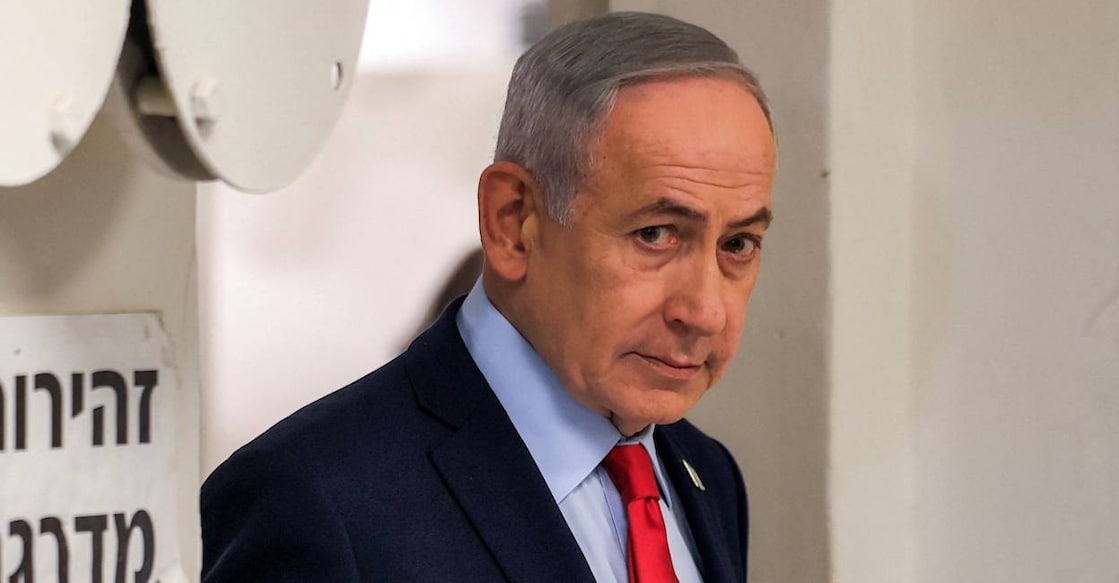
Netanyahu, speaking at a press conference, hailed his cooperation with US President Donald Trump and said "We are winning and Iran is being decimated."
"This war ending a lot faster than people think," he said without providing a specific timeframe.
His comments came after Washington said there was no deadline to end the war launched against Iran on February 28.
Netanyahu said he was "not sure who's running Iran right now."
"Mojtaba, the replacement ayatollah, has not shown his face," he said, in a reference to Iran's newly appointed supreme leader, the son of Ayatollah Ali Khamenei, who was killed in an Israeli airstrike on the first day of the war.
"We're seeing cracks, and we're trying to propagate them as fast as we can, not only in the top command. We're seeing cracks in the field," Netanyahu said.
However, Iran launched multiple rounds of missiles towards Israel soon after Netanyahu’s statement. AFP reporters heard several loud blasts over Jerusalem as air raid sirens rang out across the city during one of the earlier attacks.
The Magen David Adom emergency services reported no casualties, but police said there was damage in several locations.
Middle East under attack
While Israel and the United States expressed confidence in their war efforts, energy markets were left reeling by Iranian attacks on the world's largest liquefied natural gas plant in Qatar and refineries in Saudi Arabia and Kuwait.
Oil markets have already been shaken by Iran's chokehold on the strategic Strait of Hormuz.
Benchmark Brent surged six percent to $119 a barrel before falling back to $110, while European gas prices rose nearly a third, after Iranian missiles hit Qatar's huge Ras Laffan natural gas complex in retaliation for Israel's air raid on the South Pars gas field on Wednesday.
The latest attack on Ras Laffan caused "extensive damage" that QatarEngery said could cost $20 billion a year in lost revenue and take five years to repair.
Iran also struck elsewhere in the region, with a drone crashing into the Samref refinery in Saudi Arabia's Red Sea port of Yanbu, the Saudi defence ministry said.
The Saudi government said it reserved the "right to take military actions" in response.
In Kuwait, drone attacks sparked fires at the Mina Abdullah and Mina Al-Ahmadi refineries, which have a combined capacity of 800,000 barrels per day. And in Israel an oil refinery in the port of Haifa was hit on Thursday. Media showed images of black smoke rising from the complex.
'It's coordinated'
Trump indicated he did not know in advance about Israel's raid on South Pars, which supplies about 70 percent of Iran's domestic needs. But he said he had told Netanyahu not to hit Iranian gas fields again.
"We get along great. It's coordinated, but on occasion, he'll do something" that Washington opposes, Trump said.
Netanyahu insisted Israel acted alone with the strike.
The Israeli premier also rejected suggestions he had dragged Trump into the conflict, implying he was the junior partner in the joint assault on Iran.
"Does anyone really think that someone can tell President Trump what to do?" Netanyahu said. "He didn't need any convincing."
Trump warned that the United States would "blow up" South Pars if Tehran did not stop attacking Qatar but he said there was no current plan to send ground troops into Iran.
Iran responded with defiance, with the military's Khatam Al-Anbiya operational command vowing the "complete destruction" of Gulf energy infrastructure if the Israeli attack was repeated.
Foreign Minister Abbas Araghchi said there would be "ZERO restraint" if Iran's infrastructure was hit again.
