

Trump threatens to quit NATO, says US may exit Iran war soon
Mail This Article


Washington: The United States could end its war with Iran fairly soon, President Donald Trump said on Wednesday, while warning that Washington may carry out “spot hits” if needed and could even consider withdrawing from NATO.
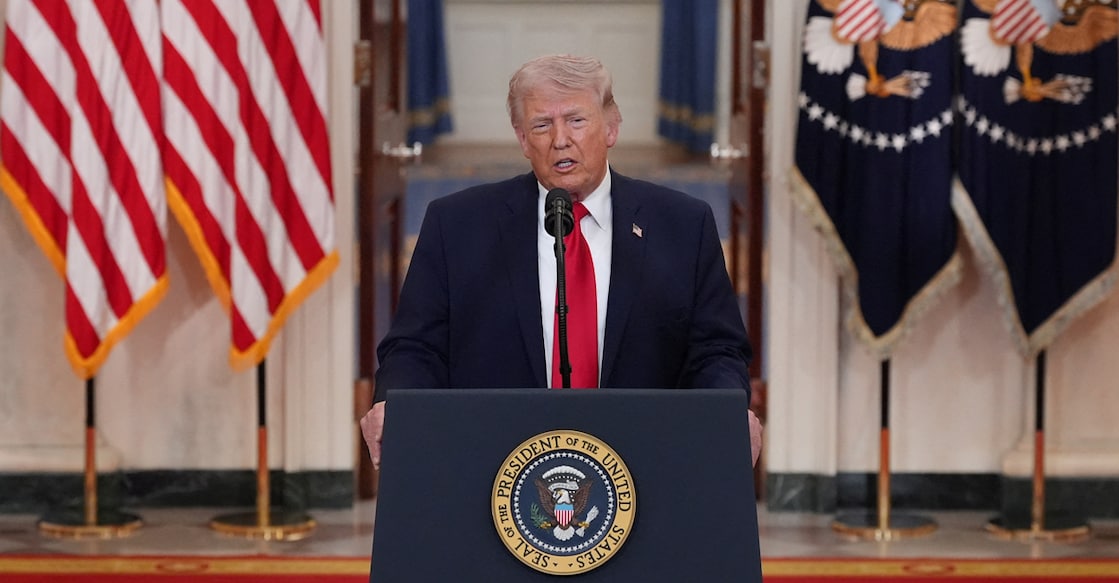
In an interview with Reuters ahead of a scheduled prime-time address at 9 pm EDT (0100 GMT Thursday), Trump said the US was close to concluding its military objectives. He is expected to reiterate a two-to-three-week timeline for ending the conflict.
Trump also indicated he may announce plans to reconsider US membership in NATO, citing what he described as a lack of support from the alliance during the war.
Thousands have been killed across the Middle East since February 28, when the US and Israel launched strikes on Iran, triggering retaliatory attacks on Israel, US bases and Gulf states, while opening a new front in Lebanon.
A White House official said Trump is expected to argue that US forces have achieved their wartime goals. “I can't tell you exactly … we're going to be out pretty quickly,” Trump said.
He added that US action had ensured Iran would not develop nuclear weapons. “They won’t have a nuclear weapon because they are incapable of that now … and if we have to, we’ll come back to do spot hits,” he said.
However, prospects for an immediate end to the conflict remain uncertain. A senior Iranian source said Tehran is demanding a guaranteed ceasefire before halting attacks, and no indirect talks on a temporary truce have taken place.
Meanwhile, global financial institutions including the International Monetary Fund, World Bank and the International Energy Agency warned that the war is having “substantial, global and highly asymmetric” effects.
Trump considers quitting NATO
Trump said Iran had sought a ceasefire but that the US would not consider it unless Tehran stopped blocking the Strait of Hormuz, a critical global oil shipping route. Iran has denied making such a request.
Sources said Pakistan is attempting to mediate, proposing a temporary ceasefire, though no response has been received from either side.
-
7 HOURS 30 MINUTES AGO
‘No safety, no vote’ campaign gains momentum in Wayanad amid rogue elephant threat

US Vice President JD Vance has been in contact with intermediaries, signalling Washington’s openness to a ceasefire if key demands are met, including reopening the Strait of Hormuz.
Trump has also stepped up pressure on European allies, warning he could withdraw from NATO if they fail to support US efforts to counter Iran’s actions in the waterway.
Fuel supply concerns mount
The International Energy Agency warned that global oil supplies could be hit more severely this month, with disruptions already affecting jet fuel and diesel flows to Asia and potentially Europe.
IEA chief Fatih Birol said the situation could worsen in the coming months if the conflict continues.
Airlines are also bracing for disruption. Europe’s largest budget carrier, Ryanair, warned that prolonged fuel shortages could lead to flight cancellations during the summer season.
Businesses worldwide are beginning to feel the impact, with sectors such as cosmetics and tea reporting supply challenges.
Despite the tensions, global markets showed signs of optimism, with stocks rallying and oil prices falling nearly 3% amid hopes of de-escalation.
Attacks across the region
The conflict has intensified across the Gulf. Drones struck fuel tanks at Kuwait International Airport, while Bahrain reported a fire at an industrial facility following an Iranian attack.
Qatar said an oil tanker leased to state-owned QatarEnergy was hit by an Iranian cruise missile in its waters, though no injuries or environmental damage were reported.
In Iran, an overnight strike hit Shahid Haghani Port, the country’s largest passenger terminal, with officials calling it an attack on civilian infrastructure.
Iran has also threatened to target US companies in the region, including Microsoft, Google, Apple, Intel, IBM, Tesla and Boeing.
Latest strikes
In Tel Aviv, air raid sirens sounded repeatedly on Wednesday evening as Iran launched a barrage of missiles shortly before the start of Passover.
Israel’s fire and rescue services reported multiple impacts in the greater Tel Aviv area, though it was not immediately clear whether they were caused by direct strikes or debris from intercepted missiles.
Soon after, the Israeli military said its air force had launched strikes on dozens of targets across Tehran.
 Add as a preferred source on Google