

‘No safety, no vote’ campaign gains momentum in Wayanad amid rogue elephant threat
Mail This Article


Sulthan Bathery: The failure of the forest department to capture a rogue elephant involved in repeated crop raids and killing of a young farmer, in the border villages of Noolppuzha panchayat in Sulthan Bathery taluk, has sparked a “No Safety, No Vote” campaign.
The quick spread of the campaign has put officials and political parties in a fix in the district as the polling, marked for April 9, approaches.
Flex boards carrying boycott messages are appearing across several villages bordering the forest, including Karippoor, Valluvadi, and Vadakkanad.
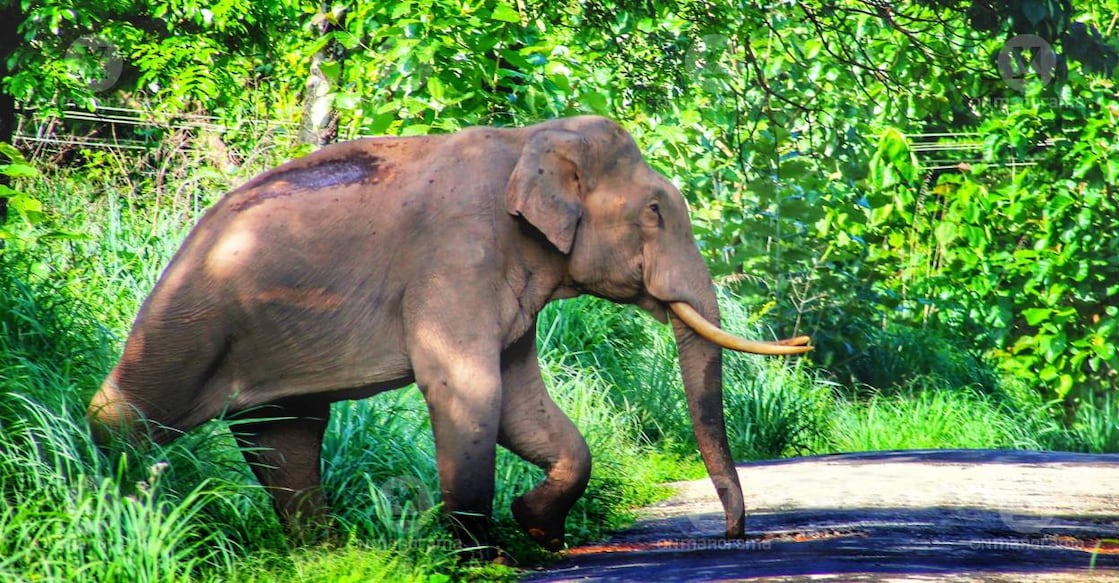
The immediate trigger for the campaign was the killing of a 37-year-old farmer, Kadangath Naduveettil Rejeev from Pachadi in Vadakkanad, around midnight on March 3. The tusker, officially named Thathur Tusker (TT-1) and locally known as Muttikomban, has been spreading fear in Vadakkanad and Valluvadi villages for many weeks.
Life in these villages has since turned into a nightmare. Streets remain deserted, social life has come to a standstill, and fear grips residents. Despite continuous crop destruction and repeated protests by farmers, the forest department has failed to capture the animal or drive it back into the forest.
Youth say no vote if safety isn't guaranteed
Posters across the villages directly address political leaders, criticising them for supporting the forest department. One flex board in Karippoor reads, “No vote if there is no safety” and “A government that cannot ensure life has no right to ask for votes.”
A board in Valluvadi village claims the campaign reflects the voice of the local youth: “Having lost faith in hollow political promises, we respond. Killing elephants will not solve the issue—others will return under different names. Until there is a permanent solution to the wildlife menace, we will not go to polling booths.”
Young residents told Onmanorama that this sentiment is widespread across age groups. They predict that hundreds of voters in the Vadakkanad, Karippoor and Valluvady wards of Noolpuzha panchayat may abstain from voting.
According to Manoj MP, a volunteer leading the youth protest, the campaign was launched only after repeated appeals to authorities were ignored.
Earlier, the Vadakkanad Grama Samrakshana Samithy organised a protest march to the wildlife warden’s office, where officials promised to capture the elephant within five days. “Those promises were broken. We had no option but to call for a vote boycott until our right to life is protected,” he added.
What began with around 17 youths mobilising a paltry fund by chipping in ₹100 each. quickly grew into a larger movement, attracting people across villages, genders, and political affiliations. Farmers noted that while many educated individuals are migrating to cities, those who remain are left to face constant wildlife threats.
A natural climax of neglect
Karippoor resident Karunakaran Vellakkett said that while he does not fully support the boycott campaign, it is a natural outcome of prolonged neglect.
“Nearly 6,000 farmers across these villages are living under an undeclared siege. People are afraid to step out, as the elephant moves unpredictably and can charge at any moment,” he said. “We love this land for its clean air and water. We will not leave—we will stay and fight for our right to live safely.”
Meanwhile, the forest department maintains that efforts are ongoing. An 80-member team led by Chief Forest Veterinary Officer Dr Arun Zachariah, along with three veterinary experts, has attempted multiple tranquilisation operations, but none succeeded.
Wayanad Wildlife Warden Varun Daliah stated that the elephant’s unpredictable behaviour makes capture difficult. “The animal charged at the team during attempts. Though a dart was fired, it missed, and the elephant retreated into the forest,” he said, adding that efforts will continue.
However, farmers allege that recent efforts have slowed and that the elephant continues to raid farms until early morning before retreating into the forest.
“Even when we inform officials, they only advise us to stay indoors. We see no real attempt to capture the animal,” said a farmer.
