

Iran says peace talks ‘unreasonable’ after Israeli strikes on Lebanon
Mail This Article


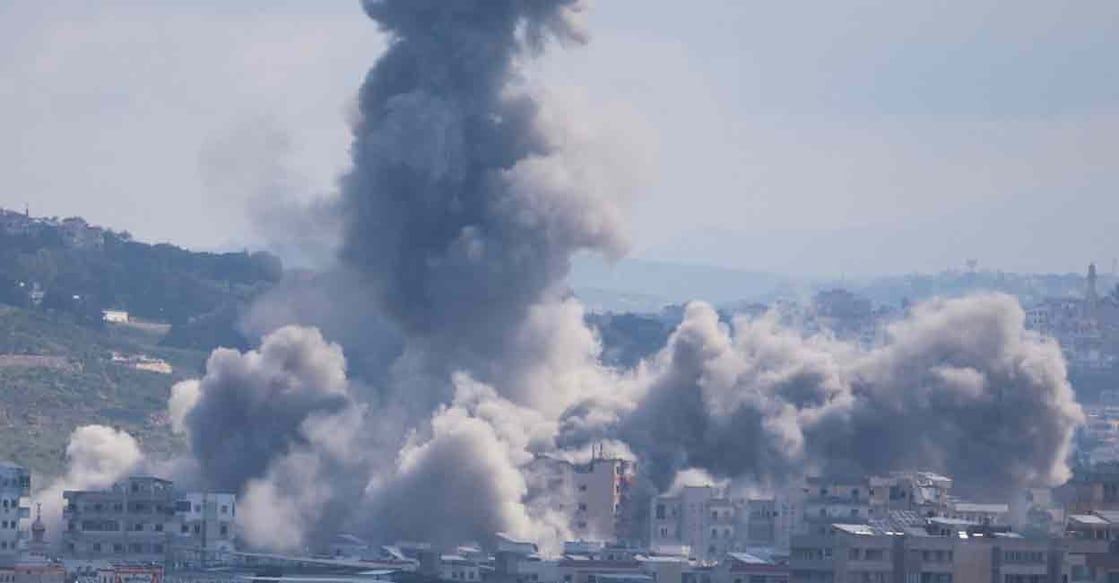
Israel carried out its heaviest strikes yet on Lebanon on Wednesday, killing hundreds and prompting a warning from Iran that moving ahead with peace talks with the United States would be “unreasonable”.
Iran’s lead negotiator and parliament speaker Mohammed Bager Qalibaf said the situation had become too volatile for negotiations, exposing deep uncertainty despite a ceasefire announced a day earlier by US President Donald Trump. Talks were expected to begin on Saturday, but doubts remain over whether the two-week truce will hold.
Qalibaf accused Israel of violating ceasefire conditions through continued strikes on Lebanon targeting Hezbollah, while also alleging that the US breached the agreement by demanding that Iran abandon its nuclear programme. “In such a situation, negotiations are unreasonable,” he said.
Israel and the US, however, maintained that the ceasefire did not apply to Lebanon. Israeli Prime Minister Benjamin Netanyahu said military operations would continue, while US Vice President JD Vance said there had been a misunderstanding over the scope of the truce.
Sharp differences also persist over Iran’s nuclear programme, a key trigger for the conflict. Trump said Iran had agreed to stop enriching uranium and hand over existing stockpiles, while Qalibaf insisted enrichment would continue under the ceasefire terms.
Despite both sides claiming victory in the five-week conflict, core disagreements remain unresolved, raising questions over the prospects for a lasting peace deal.
Markets reacted sharply to the developments. Global stock indices surged, while oil prices fell about 14% to settle near $95 per barrel, though still significantly higher than pre-conflict levels. Analysts said Iran’s ability to disrupt energy flows through the Strait of Hormuz has reshaped regional power dynamics.
‘Finger on the trigger’
Netanyahu warned that Israel remained ready to resume full-scale fighting “at any moment”. Lebanon’s civil defence said at least 254 people were killed in Wednesday’s strikes, including 91 in Beirut, with some attacks reportedly carried out without prior warning.
Hezbollah said it fired rockets into northern Israel in response to what it called ceasefire violations.
French President Emmanuel Macron condemned the strikes as indiscriminate and called for Lebanon to be fully covered by the ceasefire. Leaders from 13 European countries, along with Japan and Canada, also urged a swift end to hostilities to prevent a global energy crisis.
-
2 HOURS 13 MINUTES AGO
‘What upset me most about politics…’ Pisharody opens up as a first-time candidate

Iran, meanwhile, launched strikes on oil facilities in Gulf countries, including Saudi Arabia, while Kuwait, Bahrain and the UAE also reported missile and drone attacks. Shipping through the Strait of Hormuz remains restricted, adding to uncertainty in global energy markets.
Uncertain aftermath
In Iran, crowds celebrated what authorities described as a victory, though concerns persist about the durability of any agreement.
The conflict, launched on February 28 by the US and Israel, aimed to curb Iran’s regional influence and nuclear ambitions. While Washington claims a decisive military victory, Iran retains its stockpile of enriched uranium and its ability to strike regional targets. Its leadership also remains intact despite months of internal unrest.
 Add as a preferred source on Google