

Cabo Verde’s dream run gathers momentum

Mail This Article


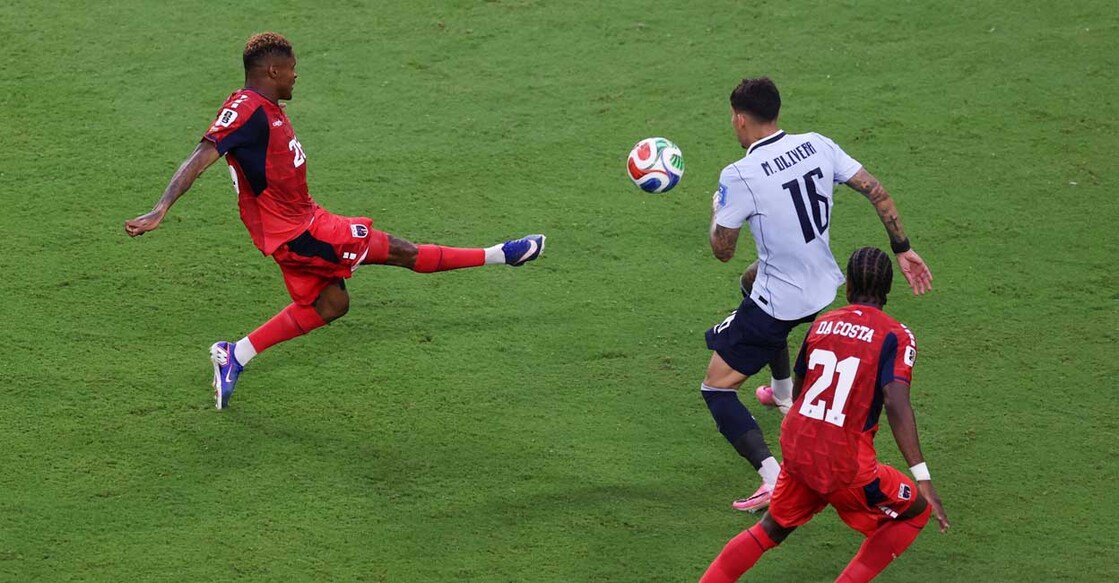
It was an eventful 90 minutes at Miami Stadium as Uruguay and Cabo Verde played out a gripping 2-2 draw. Cabo Verde proved that their draw against Spain was no fluke, fighting resolutely to earn another deserved point against two-time champions Uruguay. With Group H still wide open, the result means that both teams, along with Saudi Arabia, remain firmly in contention heading into the final matchday.
The biggest story coming into the second round of Group H fixtures was Cabo Verde’s shock 0-0 draw against Spain. While Spain dominated possession, the heroics of goalkeeper Vozinha and poor finishing from the Spanish attack allowed the African nation to secure their first-ever World Cup point.
Uruguay, meanwhile, were seeking their first victory after failing to convert their chances in the opening 1-1 draw with Saudi Arabia.
At the start of the game, another upset did not appear likely. The opening 15 minutes resembled Uruguay’s attack against Saudi Arabia, with Marcelo Bielsa’s side applying relentless pressure.
The Uruguay coach had tweaked his system, switching from a 4-4-2 to a 4-2-3-1 and replacing Darwin Nunez with Agustin Canobbio. Canobbio immediately justified his inclusion, injecting energy and urgency into Uruguay's attack.
However, the match was turned on its head in the 21st minute when Cabo Verde won a free-kick about 35 yards from goal.
As Kevin Pina stepped up, few could have anticipated the outcome. His strike pierced Uruguay’s two-man wall and beat Fernando Muslera to give Cabo Verde a historic lead.
While Pina deserves immense credit, Uruguay’s organisation was equally questionable. The wall left a sizeable gap, and Muslera reacted too late.
Whether through poor execution or overconfidence, Uruguay paid a heavy price.
Regardless, it was a landmark moment for Cabo Verde as they scored their first-ever World Cup goal and took the lead against one of football’s traditional powers.
Their advantage, however, was short-lived.
Uruguay’s dominance eventually paid off, albeit with a touch of fortune.
Just before half-time, a cross into the box ricocheted off the post and fell kindly to Maxi Araujo. Vozinha, who had moved to deal with the initial danger, was stranded, leaving Araujo with a simple header to score his second goal of the tournament.
The equaliser only intensified Uruguay’s momentum. In the sixth minute of added time, another ball into the area was headed down by Araujo for Canobbio, who calmly finished past Vozinha.
At 2-1 down, many would have expected Cabo Verde’s impressive run to come to an end.
Uruguay had dominated possession and looked dangerous every time they attacked. The second half began in similar fashion, with the champions of 1930 and 1950 determined to secure their first victory of the tournament.
Cabo Verde retreated into a defensive shape, and another goal seemed increasingly unlikely.
Instead, all they needed was one mistake from Uruguay.
In the 60th minute, Uruguay were awarded a throw-in near the halfway line. What should have been a routine passage of play quickly descended into chaos.
Mathias Olivera attempted a misplaced pass across his defence, which instead rolled into the path of substitute Helio Varela.
Uruguay’s problems only worsened when Muslera rushed out of his penalty area in an unsuccessful attempt to recover the situation.
Varela kept his composure, took the ball away from the goalkeeper and calmly rolled it into an empty net.
The goal may have been gifted to Cabo Verde, but Varela still had to display the composure to capitalise on it.
At 2-2, the game opened up again.
Every time Uruguay thought they had found space, a Cabo Verde defender seemed to appear to block a pass or shot. The Blue Sharks also remained dangerous on the counter and repeatedly caught Uruguay out of position.
One of the game’s major talking points arrived in the closing stages when Nuno da Costa dribbled past two defenders before appearing to be brought down by Rodrigo Bentancur inside the penalty area.
There were loud appeals from the crowd and commentators, although Cabo Verde themselves showed surprisingly little urgency in contesting the decision.
There was certainly an argument that Bentancur had committed a foul, but the incident went unreviewed by VAR.
At the final whistle, Cabo Verde celebrated another deserved point, while Uruguay were left to reflect on missed opportunities and costly errors.
Cabo Verde now find themselves in an excellent position to qualify for the knockout rounds in their first-ever World Cup appearance. Their final game against Saudi Arabia will be difficult, but after taking points from Spain and Uruguay, they will have every reason to believe they can secure victory.
Uruguay, meanwhile, face a daunting encounter against favourites Spain, who thrashed Saudi Arabia 4-0 earlier in the day.
This is no longer the Uruguay of Luis Suarez, Diego Forlan and Edinson Cavani, and their performances over the opening two games have exposed clear shortcomings.
All attention now turns to June 26, when Group H concludes and the battle for qualification reaches its climax.
 Add as a preferred source on Google