

Saif, Kareena visit Mumbai's historical church that survived wild incidents
Mail This Article


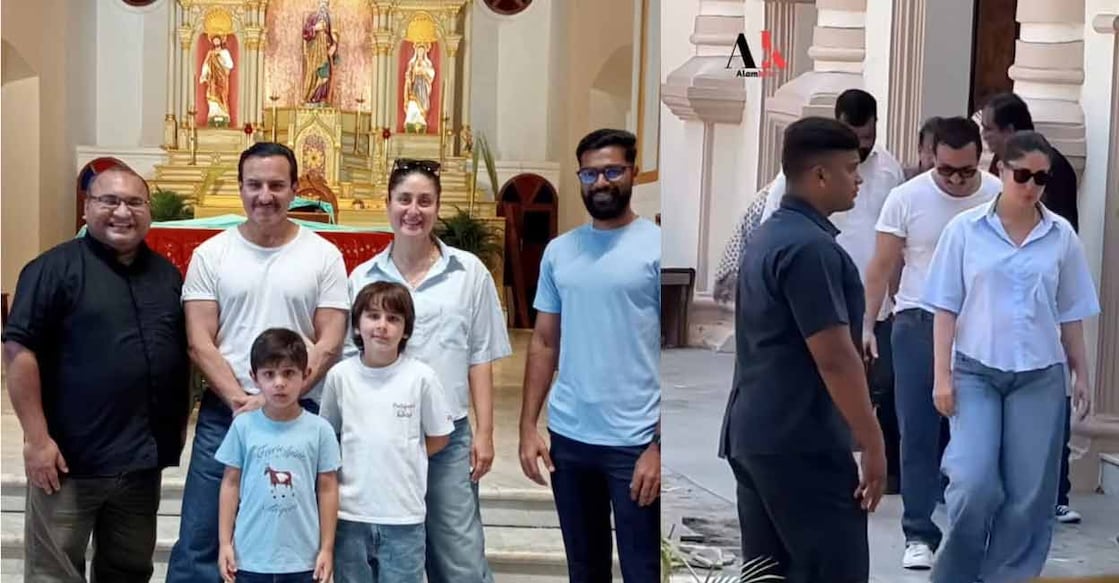
Bollywood actors Saif Ali Khan and Kareena Kapoor recently visited the iconic St. Andrew’s Church in Maharashtra's Bandra with their sons Taimur and Jeh. The stars reportedly visit the church every year at Christmas to attend the service. In various interviews, those close to the family have revealed that Kareena follows Christianity like her mom Babitha, and her kids are often curious about Jesus Christ as well. The sea-shore church, which is more than 450 years old, is one of Mumbai's oldest churches and has survived some tough times as well.
Witness of history
It's not just a place of worship; instead, the church has witnessed a scintillating history of Portuguese colonialism and Mumbai's incredible growth. St. Andrew’s Church was built by the Jesuit priests around 1575. It was the only church in Bandra serving a huge region for a long time. The stone cross in front of the church is a fascinating feature and holds deep religious significance. The monolith, carved from a single stone, bears 39 symbols depicting the Passion of Jesus Christ. The grand altar and the icons of saints crafted from timber stand as eternal proof of the incredible craftsmanship and artistry of olden times. Although the church's interiors were renovated in the 1960s, the authorities ensured the retention of the church's historical value and grace.
The famous Band Stand at Bandra is close to St. Andrew’s Church. The church is an amazing destination for those who prefer enjoying a calm atmosphere and witnessing the grand heritage of Mumbai.
When its roof flew off
In 1618, a deadly cyclone blew off the entire roof of the church! Historians say that the incident stopped the prayers and mass for a brief period. Later, the community and clergy joined hands to rebuild a stronger roof. For about ten years in the next century, the church also remained closed and abandoned due to the Maratha invasion. Although many surrounding churches were demolished by the Marathas, they spared St Andrews. Though it isn't clear from the documents why it survived while other churches were demolished, believers consider it a symbol of St Andrews' resilience.
