

Why 18 per cent GST on houseboat services?
Mail This Article


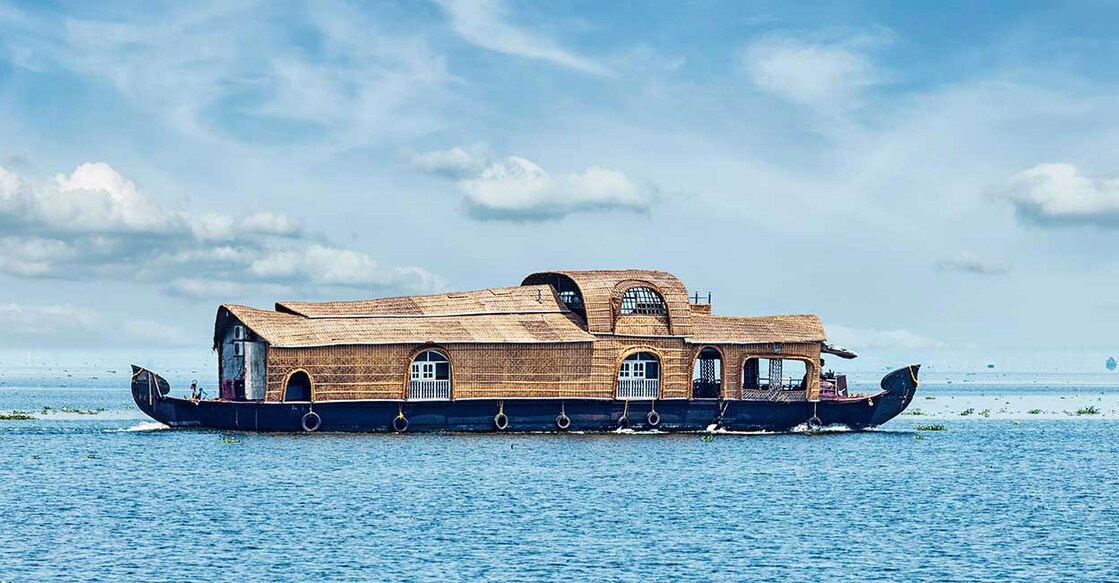
For centuries, kettuvallams (massive wooden boats) glided across Kerala’s lakes and rivers, carrying rice, coir, and other goods. Towards the end of the last century, these vessels underwent a significant transformation. Converted into houseboats, they quickly became a sensation, offering visitors an experience unlike anything else in the world.
The gentle sway of the waters, panoramic views of the backwaters and traditional Kerala cuisine on board turned them into an unmatched tourism product. Yet, the houseboat industry is battling rough tides, with a GST controversy threatening to sink its future.
As per the law, tourist boat rides attract a GST of 5 per cent. However, the GST authorities in Kerala unilaterally imposed an 18 per cent tax on houseboat operations. To make matters worse, the houseboat operators were served notices demanding back payments dating as far back as 2017, with dues ranging between Rs 5 crore and Rs 8 crore.
Why such heavy GST
The confusion stems from how GST rates are determined. Under the GST system, each activity and item is assigned an HSN code. For houseboats, the code allotted HSN 9985555 falls under `tour operators,' which carries a 5 per cent GST rate. But the state authorities replaced this with the HSN code for inland water transport, pushing the rate up to 18 per cent. Around 2022, the houseboat operators were asked to pay the full GST amount, with effect from 2017.
Why is it wrong interpretation?
No tourist boards a houseboat in Alappuzha to travel to Kochi or Kollam. These boats are used exclusively for tourism, not for point-to-point transport. In fact, when the Houseboat Association approached the Central GST authority, the Central Commissioner even clarified in writing that houseboat services fall under the 5% bracket.
The state GST department, however, has justified the higher rate by pointing out that operators could claim Input Tax Credit (ITC). But here lies another problem. ITC can only be claimed on items purchased with bills. In the houseboat industry, daily essentials like fresh fish and meat are usually sourced directly from local fishermen and markets, without bills. Authorities suggest operators buy frozen products from large processing units to claim ITC. But doing so runs contrary to the principles of responsible tourism, which encourage supporting the local community and using fresh, locally sourced produce.

The issue doesn’t end there. Alongside the 18 per cent GST, operators are being asked to pay compounded penalties and interest on arrears dating back to 2017. The sector is now surviving only because of a High Court order, which has allowed a 5 per cent GST rate to be applied. At the same time, in states like West Bengal and Odisha, river cruises continue to attract only 5 per cent GST.
The final mooring
At every international roadshow, Kerala’s tourism pitch sails in with the houseboat, touted as the ultimate symbol of the state’s allure. Houseboat rides have also become a fallback lure, offered to foreign guests in times of need. Ironically, this very product that is marketed worldwide as Kerala’s pride is now struggling for survival at home, caught in a bureaucratic tangle that threatens its future.
 Add as a preferred source on Google