Smooth ride at 159 km/h, experiencing Delhi-Meerut RRTS before official inauguration
Mail This Article


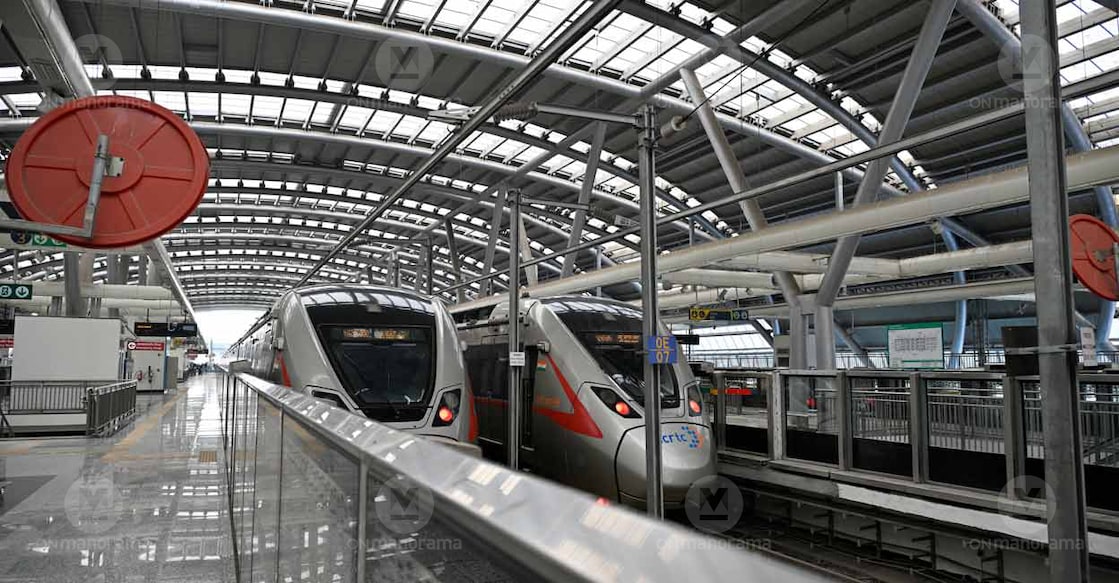
The newly inaugurated Delhi–Meerut RRTS service operates in four phases from Meerut South to New Ashok Nagar in East Delhi. The service becomes truly beneficial for Delhiites from today. Until now, it covered 55 km across 11 stations, ending at the Delhi-UP border at New Ashok Nagar. Now, it reaches the heart of Delhi: Nizamuddin.
Sarai Kale Khan: A transit hub
This isn't just a station; it’s a massive transport hub where the Hazrat Nizamuddin Railway Station, the Inter-State Bus Terminus (ISBT), and the Metro station all converge. The high-speed train now joins this ecosystem, with direct connectivity linking all these modes of transport. Since it is a high-traffic area, a spacious underground parking area has been provided beneath the station.
Yamuna and heritage bridges: A visual treat
At noon, the Namo Bharat RRTS sped off from Sarai Kale Khan with the media team. Within a minute of leaving the station, the train entered the bridge over the Yamuna River. Travelling from Meerut, the train first hit New Ashok Nagar (the previous terminus) before diving underground. After leaving Delhi and entering Ghaziabad, UP, Namo Bharat crossed a historic Indian Railways bridge. The view of this bridge, framed by towering residential complexes, is striking. As the journey continued, the landscape shifted to lush green farmland, sugarcane fields, and factories on both sides.

Racing at 159 km/h
For many, watching the digital speed display inside the coach can be a highlight. By road, the 74 km journey from Nizamuddin to Begumpul is unpredictable due to traffic blocks. On the RRTS screen, the speed climbed by the second: 90, 100, 130, 150... finally, it hit the "magic number" of 159 km/h and hovered there. Although the train is capable of reaching 180 km/h, it maintained its pace without exceeding 159 km/h. Despite the high speed, the ride was perfectly smooth. The only minor sensation was a slight pressure in the ears—similar to a flight taking off or landing—when entering or exiting the underground tunnels, which normalised within seconds.
Two classes of travel
The train features both Premium and Standard coaches. Charging points for mobiles and laptops are available in both. The main differences lie in legroom and seat quality. The Premium coach also features a vending machine for snacks and beverages. Like an aircraft, every coach is equipped with luggage racks. There are six coaches in total, including general coaches and a dedicated women's coach, similar to the Delhi Metro.
Multi-Modal Connectivity
Namo Bharat is integrated with the Delhi Metro at Sarai Kale Khan, New Ashok Nagar, and Anand Vihar. Once it enters Uttar Pradesh, it also connects with the newly established Meerut Metro. While passengers use foot overbridges to switch between RRTS and Metro in Delhi, the arrangement in Meerut is different—the Metro and Namo Bharat share the same platform.
(Malayala Manorama photographer was part of the media contingent that travelled from the Sarai Kale Khan station ahead of the official inauguration).
 Add as a preferred source on Google