
Bengaluru-Mumbai superfast train by June end: Route, facilities
Mail This Article


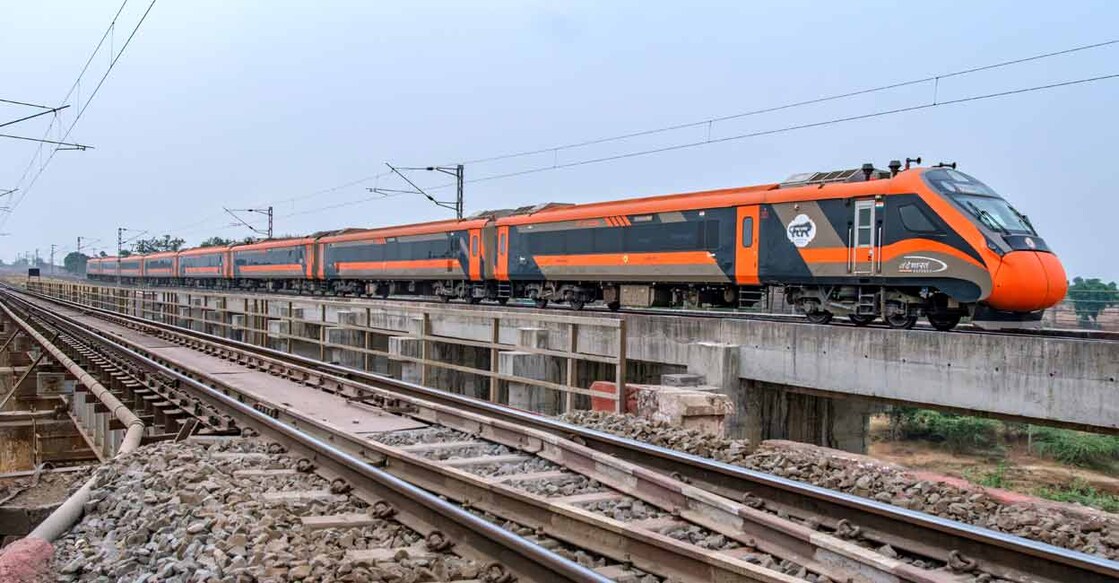
It generally takes at least 20 hours to travel from Bengaluru to Mumbai, two of India's major cities and business hubs. Udyan Express is the only direct train linking the two, and it takes nearly a day to complete the 1,136-kilometre distance. However, since the Bengaluru-Mumbai superfast train was announced in September last year, travellers have been hopeful that commuting between the cities will be easier. If reports are to be believed, the train will reduce the travel time to 14 to 16 hours. Recently, Union Food and Consumer Affairs Minister Prahlad Joshi said that Railway Minister Ashwini Vaishnaw informed him that the train service will be launched by June. In April this year, the Railway Minister Ashwini Vaishnaw had confirmed that the new train will be a Vande Bharat Sleeper. Here are the other details.
Route of the train
The Bengaluru-Mumbai superfast will take the Tumakuru-Davangere-Haveri-Hubbali-Dharwad-Belagavi route, via central Karnataka. The route minimises halts and therefore, the travel time between Bengaluru and Mumbai. Once the official notification is out, the final list of stations will be confirmed. It will also ease congestion on the Solapur route and increase access to emerging commercial hubs such as Belagavi and Hubli.
Modern facilities
The authorities are planning to redevelop the Hubbali Railway Station to provide modern facilities for commuters. Moreover, the train will have 16 modern, fully air-conditioned coaches, an 823-passenger capacity, and advanced suspension for smoother rides. The train can reach a top speed of 180 km/h. It also has ergonomically designed sleeping berths. The first sleeper train was launched on January 17 this year on the Howrah-Kamakhya route. The Bengaluru-Pune Vande Bharat sleeper train is expected to start by December this year.
