

What is the selection process for Jnanpith Award?
Mail This Article


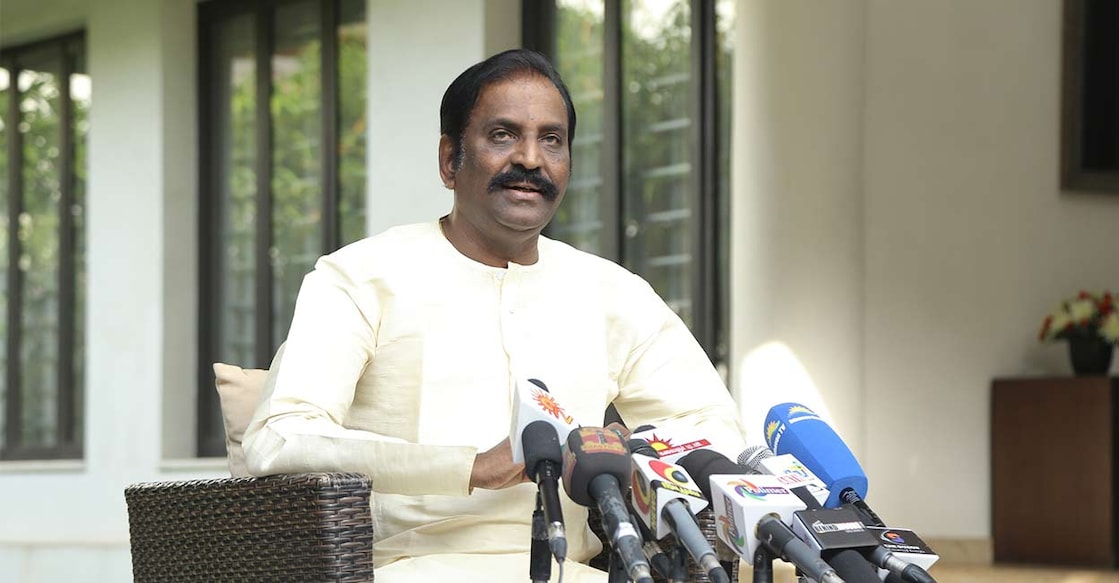
• Poet and lyricist Vairamuthu has been selected for the Jnanpith Award.
• He becomes the third Tamil writer to receive the country’s highest literary honour.
• The decision was taken by the Bharatiya Jnanpith Selection Committee chaired by Pratibha Ray.
• Vairamuthu, 72, has been selected for the award in recognition of his outstanding contributions to Tamil literature.
Who is Vairamuthu?
• Born on July 13, 1953, in Tamil Nadu, Vairamuthu is regarded as one of the most prominent voices in contemporary Tamil literature.
• He has made significant contributions across poetry, lyrics and prose.
• Vairamuthu has authored more than 37 books, including poetry collections and novels.
• Some of his acclaimed works include ‘Kallikattu Ithikasam’, ‘Karuvachi Kaaviyam’, ‘Thanneer Desam’ and ‘Moondraam Ullaga Por’ (The Third World War).
• During his career, he has received several prestigious honours, including the National Film Award for Best Lyrics on seven occasions.
• He was awarded the Padma Shri in 2003 and the Padma Bhushan in 2014.
• In the same year as the Padma Shri, he received the Sahitya Akademi Award for his novel ‘Kallikattu Ithikasam’.
• The government of Tamil Nadu has also honoured him with the Kalaimamani award for his contributions to literature and the arts.
Jnanpith Award
• Bharatiya Jnanpith is one of the premier literary organisations of India, which is nurturing literature and culture through its literary endeavors, which include awards, publication, fellowship and research for the last several decades. The organisation was established in 1944.
• Jnanpith Award is regarded as the most prestigious literary award in India, which is given every year, to an author for his/her outstanding contribution towards Indian literature through creative writing in any of the Indian languages mentioned in Schedule VIII of Indian Constitution and English.
• It was instituted in 1961.
• The first recipient of the award was Malayalam poet G. Sankara Kurup, who received the award in 1965 for his collection of poems ‘Odakkuzhal’.
The process of selection
• Only those creative writers, who are alive and are Indian citizens, can be proposed for the Award.
• The Award is to be given to an author for outstanding contribution towards literature.
• A language which receives the Award in a particular year is not eligible for consideration for the next two years.
• A writer who receives the Award once will not be considered again.
• The Award may not be given in a particular year if the Jnanpith Award Selection Board feels that there is no suitable name which comes up to the expected standard of the Award.
• The process of selection is broadly as follows: There is an advisory committee for each language, consisting of three eminent scholars and/or critics, which scans the proposals received in response to this letter. The committee is free to consider any other writer eligible in accordance with the Rules of the Award.
• In fact, a Language Advisory Committee is expected to ensure that no deserving writer of the language concerned is left out of consideration.
• Recommendations of various Language Advisory Committees are screened and evaluated by the Jnanpith Award Selection Board, consisting of eminent scholars and writers.
• Wherever necessary, selected writings of the proposed writers are translated into Hindi or English, wholly or in part. The Selection Board takes into account the totality of an author’s creative writing and its literary merit in the context of contemporary Indian writing is not restricted to committee’s recommendations.
• The Selection Board is the final authority for the selection.
 Add as a preferred source on Google