

Former Philippine President Duterte to face trial in ICC
Mail This Article


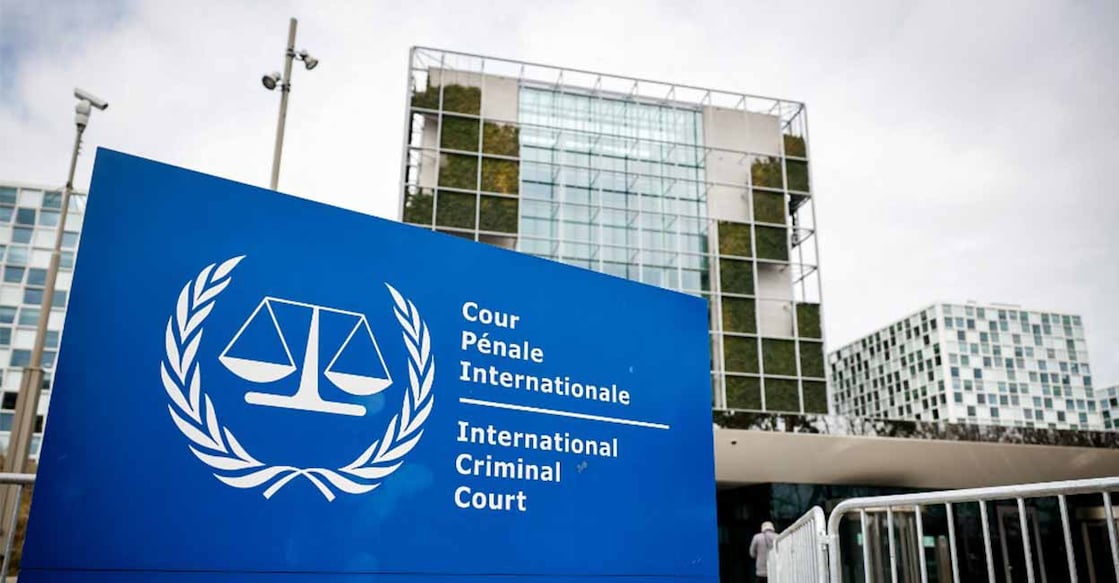
• Judges at the International Criminal Court (ICC) confirmed crimes against humanity charges against former Philippine President Rodrigo Duterte for deadly anti-drugs crackdowns he allegedly oversaw while in office.
• Duterte served as Philippine President from 2016 to 2022. He was arrested in March 2025 and flown to the Hague, where the global court is located.
• In its decision, the judges found “substantial grounds to believe” that Duterte is responsible for murder and attempted murder under Article 7 of the Rome Statute, the Court’s founding treaty.
• The alleged crimes were committed between November 2011 and March 2019 as part of a “widespread and systematic attack against a civilian population” during the country’s anti-drug campaign.
• The judges based their ruling on evidence presented during hearings in February, as well as submissions from both the prosecution and defence, and victims’ statements.
• The case will now be transferred to a Trial Chamber, which will determine the next procedural steps and set a timeline.
Duterte was nicknamed ‘The Punisher’
• Rodrigo Duterte was born in 1945 on the island of Leyte.
• Before he was elected President of the Philippines, Duterte was nicknamed “The Punisher” and “Duterte Harry” for his years-long and often violent campaign against drug offenders as mayor of his hometown of Davao.
• His political star began to rise when he was appointed Davao’s vice mayor in 1986 by Corazon Aquino, who had just led the People Power revolution that ended the dictatorship of Ferdinand Marcos.
• He won the first of seven terms as mayor in 1988, with stints in the Philippines House of Representatives in 1998 and as vice mayor in 2010 to avoid term-limit rules.
• Duterte claimed he transformed the southern city of Davao into one of the safest cities in the country by imposing curfews, enacting city-wide smoking bans and cracking down on crime.
• Critics claimed the reduction in crime was the result of vigilante killings.
• He was swept to power with 40 per cent of the vote in the 2016 presidential election.
• As a President, Duterte drew comparisons with Donald Trump and assertive populists around the globe, a provincial city mayor with a brash style but with a common touch who defeated the establishment with pledges to crush crime.
• He promised to take his take-no-prisoners style of law and order to the whole of the Philippines, and his rhetoric resonated.
• In 2019, Duterte withdrew the Philippines from the Rome Statute in a move human rights activists say was aimed at escaping accountability over the killings.
• The ICC launched an investigation into drug killings under Duterte from November 1, 2011, when he was mayor of the southern city of Davao, to March 16, 2019, as possible crimes against humanity.
• According to police, 6,200 suspects were killed during anti-drug operations under Duterte’s presidency that they say ended in shootouts. But activists say the real toll was far greater, with many thousands more slumland drug users gunned down in mysterious circumstances.
• It suspended its probe in November 2021 at the request of Manila, which said it was carrying out its own investigations.
• In the 2022 elections, Duterte was succeeded by Ferdinand Marcos Jr. as President.
• In January 2023, the ICC said it was “not satisfied that the Philippines is undertaking relevant investigations” and prosecutors resumed their inquiry.
International Criminal Court (ICC)
• The International Criminal Court (ICC) is an independent judicial body with jurisdiction over persons charged with genocide, crimes against humanity and war crimes.
• Situated in The Hague, Netherlands, the ICC is governed by the Rome Statute adopted by the UN in 1998. It entered into force in 2002 upon ratification by 60 States.
• In addition, the Rome Statute also sets new standards for victims’ representation in the courtroom, and ensures fair trials and the rights of the defence. The court seeks global cooperation to protect all people from the crimes codified in the Rome Statute.
• Currently, 125 countries are State Parties to the Rome Statute of the ICC.
• India has not signed the Rome Statute as it is not a member of the ICC.
The court’s founding treaty, called the Rome Statute, grants the ICC jurisdiction over four main crimes.
i) Crime of genocide: It is characterised by the specific intent to destroy in whole or in part a national, ethnic, racial or religious group by killing its members or by other means: causing serious bodily or mental harm to members of the group.
ii) Crimes against humanity: Serious violations committed as part of a large-scale attack against any civilian population. The 15 forms of crimes against humanity listed in the Rome Statute include offences such as murder, rape, imprisonment, enforced disappearances, enslavement - particularly of women and children — sexual slavery, torture, apartheid and deportation.
iii) War crimes: They are grave breaches of the Geneva conventions in the context of armed conflict and include, for instance, the use of child soldiers, the killing or torture of persons such as civilians or prisoners of war, intentionally directing attacks against hospitals, historic monuments, or buildings dedicated to religion, education, art, science or charitable purposes.
iv) The crime of aggression: It is the use of armed force by a state against the sovereignty, integrity or independence of another state.
Functioning of the ICC
• The ICC is composed of 18 judges, who are elected for terms of office of nine years by the Assembly of States Parties to the Rome Statute.
• As a judicial institution, the ICC does not have its own police force or enforcement body. Thus, it relies on cooperation with countries worldwide for support, particularly for making arrests, transferring arrested persons to the ICC detention centre in The Hague, freezing suspects’ assets and enforcing sentences.
• While not a UN organisation, the ICC has a cooperation agreement with the UN. When a situation is not within the court’s jurisdiction, the UN Security Council can refer the situation to the ICC granting it jurisdiction.
• The ICC actively works to build understanding and cooperation in all regions, for example, through seminars and conferences worldwide. The court cooperates with both states parties and non-states parties.
• The Court does not replace national courts. It is a court of last resort. States have the primary responsibility to investigate, try and punish the perpetrators of the most serious crimes.
• The Court will only step in if the State in which serious crimes under the Court’s jurisdiction have been committed is unwilling or unable to genuinely address those. The Court’s resources remain limited and it can only deal with a small number of cases at the same time. The Court works hand in hand with national and international tribunals.
How is ICC different from ICJ?
• The International Criminal Court (ICC) is established to investigate, prosecute and try individuals accused of committing the most serious crimes of concern to the international community.
• ICC is not part of the United Nations but they have a cooperative and complementary relationship.
• International Court of Justice (ICJ) is the principal judicial organ of the United Nations for the settlement of disputes between States.
• The International Court of Justice and the International Residual Mechanism for Criminal Tribunals also have their seats in The Hague.
