
Explained | Why rangelands matter?

Mail This Article


• The United Nations observes June 17 as World Day to Combat Desertification and Drought.
• Desertification and drought are issues of a global dimension in that they affect all regions of the world.
• This year’s theme is “Rangelands: Recognize. Respect. Restore.”
• It focuses on the role of rangelands in sustaining livelihoods, strengthening resilience to drought and supporting food systems.
• This year’s theme aligns with the ‘International Year of Rangelands and Pastoralists’, helping to underscore the need to raise awareness, encourage responsible investment and strengthen policies that safeguard rangelands and pastoralist livelihoods.
What are rangelands?
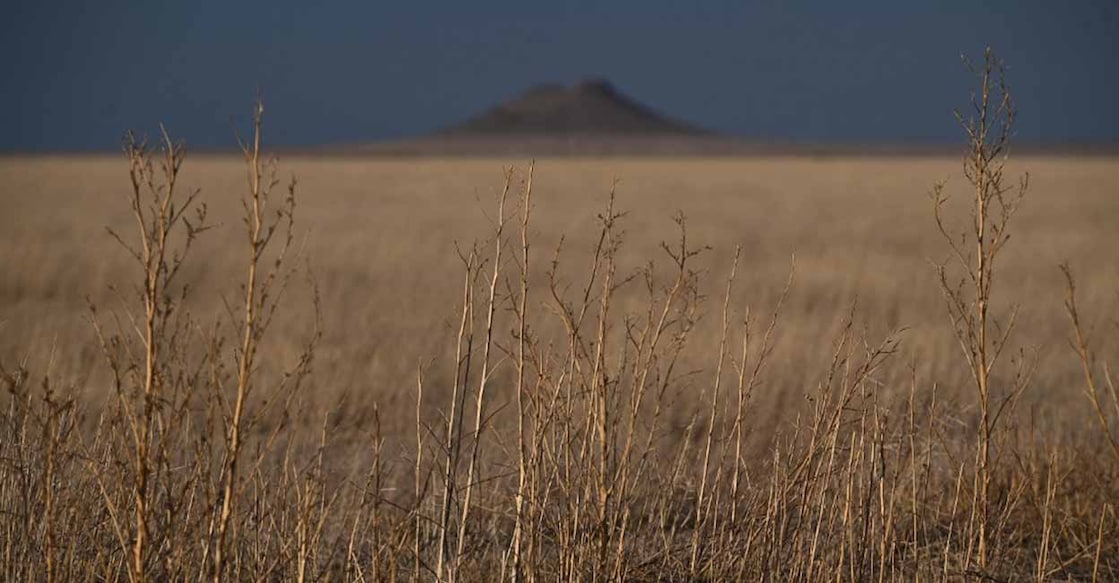
• Rangelands are among the world’s most extensive yet most overlooked ecosystems.
• Rangelands are areas of grasses, grass-like plants, forbs, shrubs and sometimes trees that are grazed or have the potential to be grazed by livestock and wildlife.
• They are diverse in their vegetation, highly influenced by rainfall, temperature and other climate phenomena, and habitat for a wide range of wildlife, many species of which are found nowhere else.
• Rangelands store vast amounts of carbon and either originate or serve as freshwater catchment areas for most of the world’s largest rivers and wetlands.

• Covering more than half of the Earth’s land surface, they play a vital role in food security, water cycles, biodiversity conservation and climate resilience.
• Rangelands provide essential goods and services — including soil and water conservation — that support the livelihoods, resilience and cultural identity of millions.
• Beyond local benefits, these landscapes contribute to global sustainability by serving as habitats for biodiversity and playing a vital role in climate change adaptation and mitigation.
• They support the lives of around two billion people worldwide, including many pastoralists and Indigenous Peoples whose knowledge and stewardship have sustained these landscapes for generations.
• Rangelands provide almost 70 per cent of livestock feed globally, making them critical to food systems.
• Up to half of the world’s rangelands are degraded or at risk, with serious consequences for food and water security, biodiversity, climate resilience and rural livelihoods.
• The economic impact is already substantial. Land degradation is costing the global economy close to $900 billion each year, while droughts are becoming more frequent and more costly, with losses of at least $300 billion annually.
• Investing in sustainable land and water management, improved drought preparedness and community-led restoration can help secure these landscapes and the people who depend on them.
International Year of Rangelands and Pastoralists
• To bring much-needed attention to these landscapes and their stewards, the United Nations has declared 2026 as the International Year of Rangelands and Pastoralists.
• Led by Mongolia and supported by a broad coalition of organisations, this initiative aims to raise awareness, encourage responsible investments and shape policies that safeguard rangelands and pastoralist livelihoods.
• Pastoralists steward livestock, safeguard local and indigenous knowledge, and support food security across many ecosystems.
• Present in more than 75 per cent of countries and managing at least one quarter of the world’s land, they herd about one billion animals worldwide.
• Their mobile way of life protects fragile landscapes, strengthens resilience and preserves cultural heritage.
• Recognising the importance of rangelands for Indigenous Peoples, local communities, women, youth and other vulnerable groups underscores the need for sustainable land and water management practices that protect their way of life and these invaluable ecosystems.
• The International Year of Rangelands and Pastoralists calls for greater recognition, responsible investment and adapted policies.
• It stresses the need to secure access to land and natural resources, support mobility and strengthen rangeland management, restoration, animal health services and fair value chains.
• By encouraging inclusive dialogue and cooperation, the Year aims to improve pastoralist livelihoods and advance sustainable rangeland management and the Sustainable Development Goals.
Rangelands in India
• Indian rangelands occupy about 121 million hectares, from the Thar Desert to the alpine meadows in the Himalayas.
• According to the UNCCD ‘Global Land Outlook Thematic Report’, the area used for grazing is estimated at around 40 per cent of the total land surface of India, including grasslands (17 per cent), and forests (23 per cent).
• Around 70 per cent of rangelands are in the temperate region, however, a large share (100 million hectares) is considered underutilised, including degraded forest lands, land unsuitable for crop production, ravines, and wastelands.
• Pastoralists inhabit all parts of India with conservative estimates suggesting that there are 13 million people belonging to 46 communities, with other estimates as high as 35 million.
• Mobile pastoralists remain important in the country, from mountains to lowlands and deserts, practicing both horizontal movement patterns in the dryland regions and vertical movement patterns in the mountains,
and engendering significant diversity in extensive livestock production systems.
• These include nomadic and seminomadic communities, transhumant, agropastoral, and agroforestry systems that help preserve their cultural heritage and sense of responsibility over their animals and the rangelands.
• Pastoralists generally rely on common lands to graze yaks, buffaloes, cattle, sheep, goats, camels, and pigs. They also use forests, fallow land, stubble and post-harvest fields.
• Pastoralists have been widely marginalised in Indian public policies and discourse, often resulting in insecure tenure rights and access to their pool of common resources.
• The Forest Rights Act of 2006 is helping pastoralist communities to secure their land rights.
 Add as a preferred source on Google