

Explained | Hubble’s 200,000 orbits and other amazing facts

Mail This Article


• NASA’s Hubble Space Telescope completed its 200,000th orbit around Earth.
Key points on Hubble Space Telescope:
• The Hubble Space Telescope was launched on April 24, 1990.
• It is a joint project of NASA and the European Space Agency (ESA).
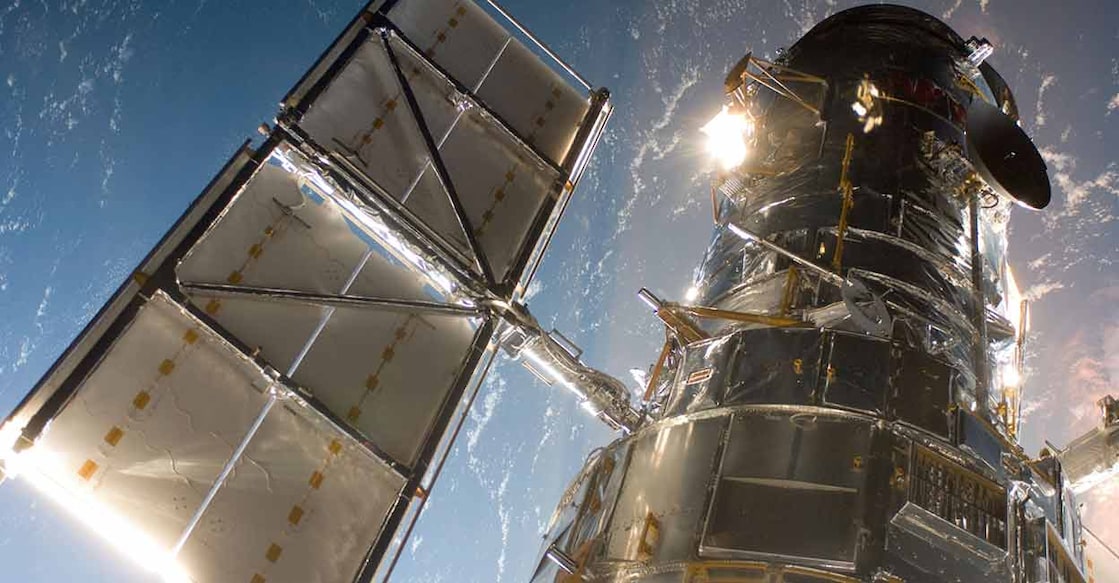
• Named in honour of the trailblazing astronomer Edwin Powell Hubble, the Hubble Space Telescope is a large, space-based observatory, which has revolutionised astronomy since its launch and deployment by the space shuttle Discovery in 1990.
• Hubble has a crystal-clear view of the universe. Scientists have used Hubble to observe some of the most distant stars and galaxies yet seen, as well as the planets in our solar system.
• Telescopes have a particular range of light that they can detect. Hubble’s domain extends from the ultraviolet through the visible (which our eyes see) and into the near-infrared.
• This range has allowed Hubble to deliver stunning images of stars, galaxies, and other astronomical objects that have inspired people around the world and changed our understanding of the universe.
• Hubble is equipped with cameras, spectrographs and fine guidance sensors. The observatory was designed to be serviced in space, allowing outdated instruments to be replaced.
• Hubble has traveled more than 5 billion miles around Earth over its 36-year lifetime, exceeding 1.7 million total observations.
• After more than 36 years in space, Hubble still is reaching new heights of scientific productivity and impact.
• Hubble’s unique ability to observe and analyse light in ultraviolet and visible wavelengths complements NASA’s James Webb and Roman Space Telescopes’ capabilities.
• As a result, demand for Hubble observing time remains high as astronomers request about seven times as much observing time as is available each year.
