

India now has 103 Ramsar Sites

Mail This Article


• Sukhna Lake in Chandigarh and Sauj Jheel in Uttar Pradesh have been included in the list of Ramsar Sites, taking India’s tally to 103.
Sukhna Wetland in Chandigarh
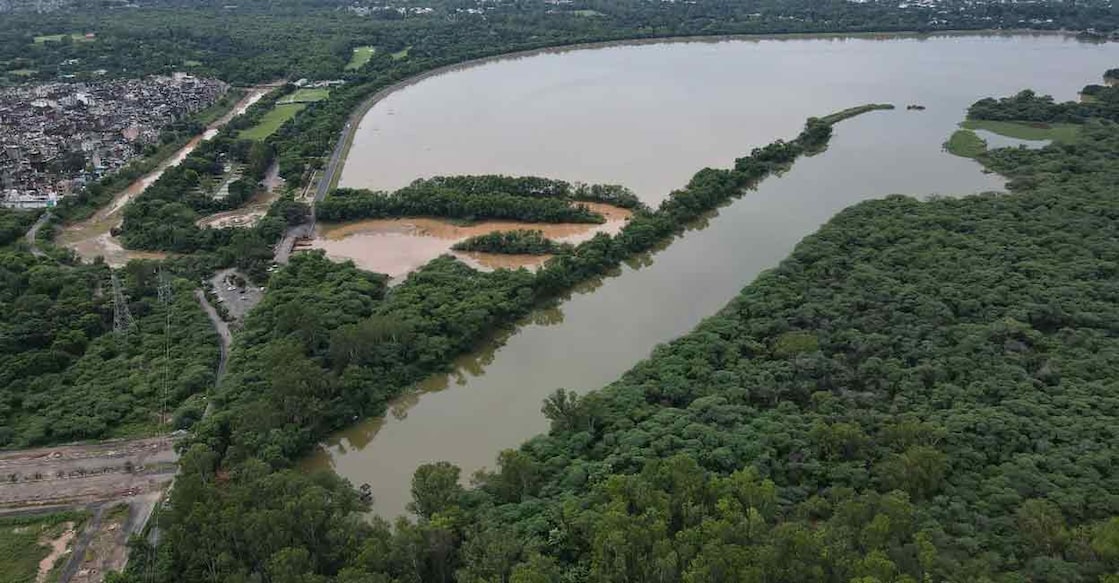
• Located at the edge of the city of Chandigarh and at the base of the Outer Himalayas, Sukhna Wetland is a peri-urban reservoir that plays an important role in regulating sediment and water flows from the surrounding catchment.
• The wetland experiences seasonal fluctuations in water levels and supports a range of habitats, from open water to littoral vegetation, scrub and forest, providing habitat for diverse species.
• The Site is particularly important for resident waterbirds and others migrating along the Central Asian Flyway, providing feeding, breeding, roosting and wintering habitats.
• Notable species include the vulnerable common pochard (Aythya ferina) and the endangered Pallas’s fish eagle (Haliaeetus leucoryphus).
• The shallow littoral habitats also support reptiles such as the endangered black pond turtle (Geoclemys hamiltonii).
• The wetland is also an important recreational and educational resource for the people of Chandigarh, providing a natural refuge adjacent to the urban landscape.
Sauj Jheel in Uttar Pradesh
• Sauj Jheel in Uttar Pradesh is a shallow lake surrounded by farmland in the floodplain of the Ganga River.
• It forms part of a larger network of wetlands, contributing to ecological connectivity in the wider landscape, and is close to Saman Bird Sanctuary.
• The lake supports diverse wetland-associated vegetation, including the sacred lotus (Nelumbo nucifera) and the wild sugarcane (Saccharum spontaneum).
• These habitats provide nesting and breeding sites, as well as shelter and food resources, for a variety of animal species.
• The Site is particularly important for waterbirds, regularly supporting more than 30,000 individuals, and has been designated as an Important Bird and Biodiversity Area (IBA) by Birdlife International.
• Notable waterbird species recorded at the Site include the vulnerable sarus crane (Grus antigone) and greater spotted eagle (Clanga clanga).
• Proposed management actions include a seasonal ban on fishing, restrictions on the use of fine-mesh fishing nets, and control of the access of cattle to the Site.
What is the Ramsar Convention?
• The Ramsar List is the world’s largest network of protected areas. There are over 2,500 Ramsar Sites, covering more than 2.5 million square kilometres.
• The Ramsar Convention is an international treaty signed by 172 countries to protect wetlands.
• It is named after the city in Iran where it was signed, and it began with 18 countries in 1971.
• The convention is one of the oldest inter-governmental accords for preserving the ecological character of wetlands. Also known as the Convention on Wetlands, it aims to develop a global network of wetlands for the conservation of biological diversity and for sustaining human life.
• It is one of the largest international agreements, after the Convention on Biological Diversity (CBD, 196 countries) and the UN climate agreement (UNFCCC, 197 countries).
• India ratified the convention on February 1, 1982.
• The first Site was the Cobourg Peninsula in Australia, designated in 1974. • The largest Sites are Rio Negro in Brazil (120,000 sq km), and Ngiri-Tumba-Maindombe in the Democratic Republic of Congo and Queen Maud Gulf in Canada. These Sites each cover over 60,000 sq km.
• The countries with the most Sites are the United Kingdom with 176 and Mexico with 144. Brazil has the largest area with 267,000 square km under the Convention protection.
