

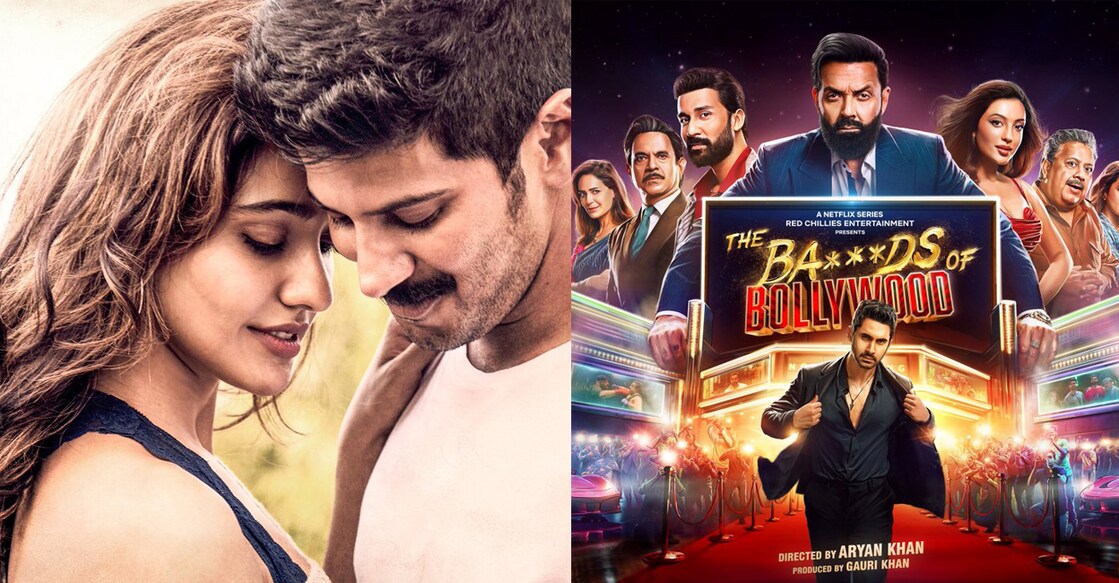
A familiar twist: The Ba***ds of Bollywood’s ending shows strong parallels with Dulquer Salmaan's ‘Solo'

Mail This Article


For many viewers of the recently released film 'The Ba***ds of Bollywood', directed by Aryan Kahn, the finale has become the talk of the week.
A shockingly audacious climax left audiences buzzing on social media, praising it for its boldness, dark humour, and sheer unpredictability. But for fans of South Indian cinema, particularly Malayalam films, the finale may have felt oddly familiar. The reason? The ending bears a striking resemblance to the climax of the 2017 experimental anthology 'Solo', starring Dulquer Salmaan.
'Solo', co-written, co-produced, and directed by Bejoy Nambiar, is an ambitious anthology that explores four different stories, each tied together by Dulquer’s performances in quadruple roles—Shekhar, Trilok, Siva, and Rudra. The sequence that mirrors The Ba**ds of Bollywood*’s ending comes from the fourth chapter, titled World of Rudra (Everything is Fair in Love and War). At the time, this particular climax was altered in the Malayalam release due to reportedly lukewarm audience reception. Many critics had found the original ending too dark, experimental, or challenging to digest.
However, Bejoy Nambiar himself was vocal about his disapproval of the change. In a now-famous tweet, he wrote: “For all those asking about the changed ending. It has been done without my knowledge and consent. Good or bad, I stand by the film I made.” Fans of Solo have often speculated about what could have been if the original ending had been retained in theatres. Now, years later, the The Ba***ds of Bollywood’s climax has inadvertently revived interest in Nambiar’s vision.
Viewers on social media, particularly Reddit and X, were reacting to the climax of ‘The Ba***ds of Bollywood’, praising its dark humour and unexpected twist. “I did not see it coming but enjoyed it thoroughly for the shock value it had,” one Reddit user commented, referring to the darkly comic turn of events in The Ba**ds of Bollywood*. Another user was struck by the nostalgic references woven into the finale: “I really loved the way they revealed it. Is that song with Bobby and Mona an actual old song they starred in? How did they look so young? It was so good.”
Film enthusiasts note that the thematic similarity between the two endings is not coincidental. Both rely on a blend of irony, audacity, and narrative subversion to shock the audience while challenging traditional storytelling norms. While 'Solo' experimented with anthology format and multiple character arcs, the essence of its fourth chapter—blurring morality, love, and revenge—resonates strongly in the Bollywood iteration, now celebrated as dark comedy.
Interestingly, what once sparked controversy in Malayalam cinema has found new life in Hindi audiences’ appreciation for cinematic risk-taking. In hindsight, Nambiar’s insistence on his original vision seems prescient. The ending that was once considered too daring for the Malayalam audience now reads as a benchmark for clever, audacious storytelling in Indian cinema.
The renewed attention has also encouraged fans to revisit 'Solo', seeking the nuances they may have missed in 2017. For Bejoy Nambiar and Dulquer Salmaan, it is a reminder that bold cinematic choices, even if initially misunderstood, can resonate across time and language, finding an appreciative audience when the context is right.
 Add as a preferred source on Google