

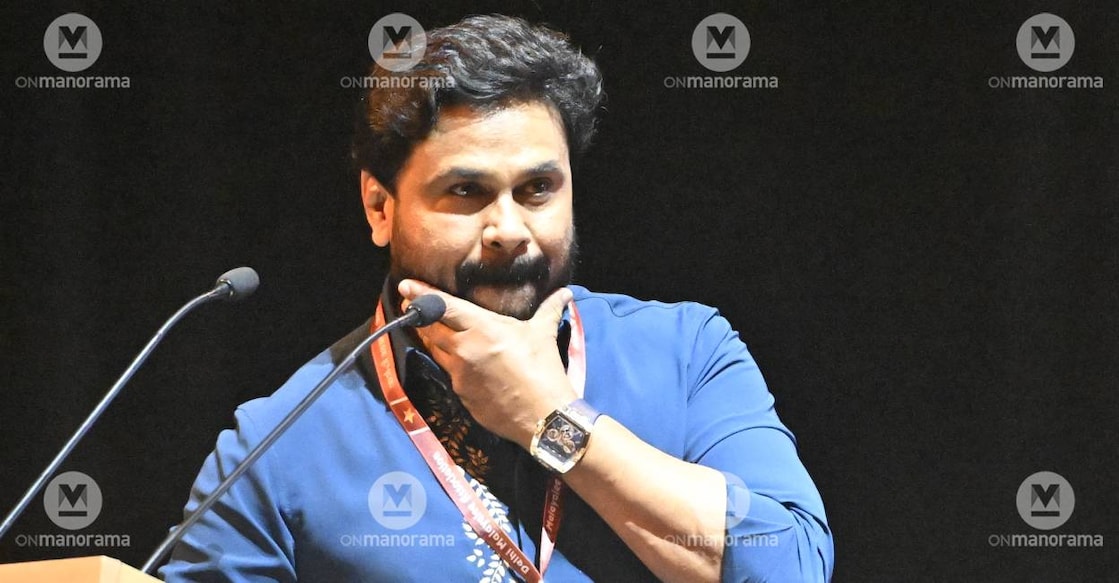
Dileep, from popular hero to fallen villain

Mail This Article


Dileep was once one of Malayalam cinema’s most adored stars, a performer who earned the affectionate title of ‘Janapriya Nayakan’, meaning the people’s favourite hero. For close to two decades, he was the face of feel-good entertainment in Kerala. From ‘CID Moosa’ and ‘Meesha Madhavan’ to ‘Kalyanaraman’, he delivered a string of hits that cemented his place as a top-tier star. For Malayali families, a festival season often meant a Dileep film at the theatre.
All of that changed in 2017.
The abduction and assault of a prominent actress in February that year sent shockwaves across Kerala. The crime, committed inside a moving vehicle, horrified the entire state. Months later, when Dileep was named the eighth accused in the case, the disbelief was immediate and overwhelming. Public outrage spread quickly, social media erupted, and the film community found itself deeply divided. By July 2017, when Dileep was arrested, the trajectory of his long-successful career took a severe and sudden turn. He spent nearly three months in jail before being released on bail, and several film organisations revoked his membership soon after.
Dileep’s rise had been anything but accidental. Born Gopalakrishnan, he started his artistic journey through mimicry at Kalabhavan, where his talent was evident even in early performances. He entered the film world assisting director Kamal and worked on titles like ‘Ulladakkam’, ‘Vishnulokam’, ‘Ghazal’ and ‘Champakulam Thachan’. Small roles followed, thanks to mentors who saw potential in him. His breakthrough arrived with Sunil’s 1994 film ‘Manathe Kottaram’, in which he played an aspiring actor named Dileep. The film’s success placed him in the public eye, and soon he became a favourite among family audiences.
Throughout the late nineties and early 2000s, Dileep shaped an empire of success. His comedies and romantic dramas often dominated holiday seasons and school vacations. His relatability, timing and ability to turn slapstick into mainstream entertainment made him a household name. As his films grew bigger, so did his influence. He held key positions in organisations like the Kerala Film Producers’ Association, the Kerala Film Exhibitors Association and FEFKA. When disagreements arose within the exhibitors’ community, he helped form FEUOK, where he became chairperson of a sixty-four-member group of theatre owners. At his peak, he was both a bankable star and a powerful industry presence.
Even after the incident, Dileep appeared calm in public spaces and expressed solidarity with the survivor. Yet rumours, accusations and counter-accusations gained momentum. Many industry members distanced themselves from him, and the case eventually led to the formation of the Women in Cinema Collective, which demanded structural reforms. A once-united industry suddenly appeared fractured.
The impact on Dileep’s career was immediate and visible. When ‘Ramaleela’ released in 2017 while he was still in custody, the atmosphere was tense. Although the film performed well, it marked the end of his strong box-office run. A significant emotional shift had taken over: many Malayalis simply stopped watching his films. Some avoided theatres, while others refused to revisit his older movies. The disconnect became evident in his later releases.
After a long break owing to the case and public sentiment, Dileep attempted a return in 2021 with ‘Keshu Ee Veedinte Nadhan’ alongside Urvashi. Though it was planned as a theatrical release, the pandemic forced it directly to OTT. In 2023, he appeared in ‘Voice of Sathyanathan’ and ‘Bandra’. Both films struggled commercially, reflecting the audience’s continuing hesitation. In 2024, he was seen in ‘Thankamani’ and ‘Pavi Caretaker’. The latter received a relatively warmer response, with some viewers feeling he was returning to a genre he understood well.
However, the performance of these films cannot be attributed solely to the case. Critics and audiences pointed out that story selection, outdated humour, and a limited connect with evolving sensibilities also played a major role. His most recent film, ‘Prince and Family’, faced notable criticism from sections of the audience who felt it promoted misogynistic themes.
These years captured how complex his trajectory had become. Dileep continued experimenting with roles, including darker, gangster-style characters, perhaps an attempt to redefine himself. His fans remained vocal in their support, but shifting public sentiment made it difficult to recreate his earlier acceptance.
Now, after eight long years, Dileep faces verdict in a case that nearly undid his career.
Online reactions highlighted the uncertainty that persisted. Comments under interviews and social media posts reflected scepticism. Some felt he appeared unaffected by the gravity of the situation, while others framed it as a question of karma and consequence.
 Add as a preferred source on Google