

How Kochi’s African slave lore propelled Rahul's ‘Kingara Kavyam’ to Animela premiere

Mail This Article


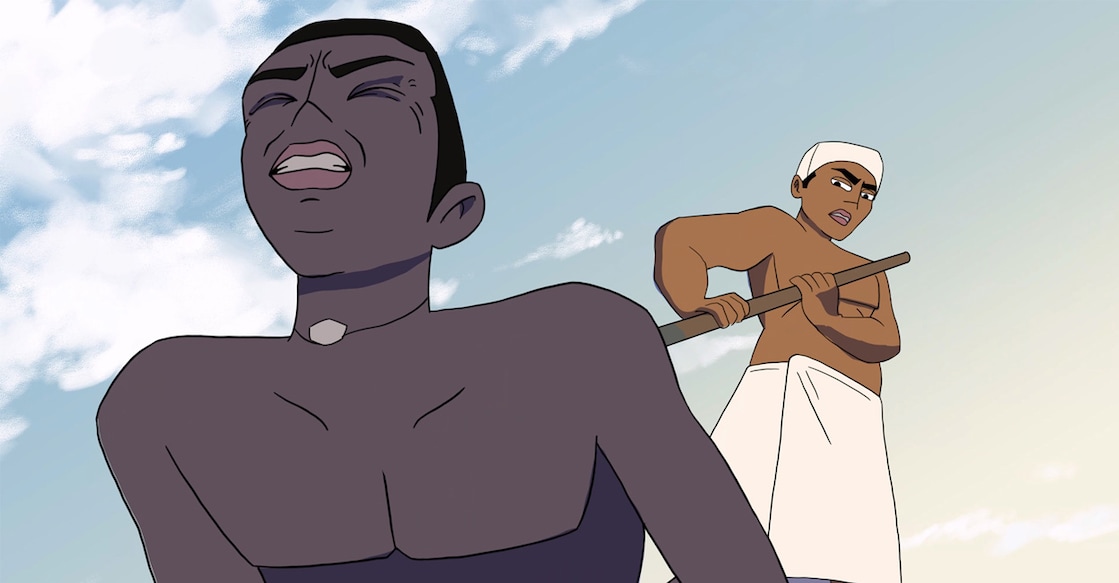
Award-winning filmmaker Rahul Riji Nair has turned to a little-known chapter of Kochi’s history for inspiration, creating a short animated film that’s been chosen for the Animela Film Festival, where it will debut on February 19. Titled ‘Kingara Kavyam’ (Poem of the Enslaved), the 13-minute short explores the poignant story of an African slave and a native woman whose lives become intertwined through shared suffering and resilience.
Rahul is best known for his independent and commercial ventures, including ‘Ottamuri,’ ‘Keedam,’ ‘Kalla Nottam’ and the series Jai Mahendran, inspired by the Hindi series Panchayat. He said the idea of venturing into animation first took root during the pandemic period. With production schedules disrupted, he began exploring new creative avenues and taught himself the fundamentals of animation through online tutorials.
The filmmaker said ‘Kingara Kavyam’ was born out of a desire to document an overlooked chapter of Kerala’s history — the African slave trade in Kochi. “While the transatlantic slave trade is widely documented, very little has been explored about the presence of African slaves in Kerala. The slave trade in Kochi is a historical fact — which is why we have enduring legends like that of Kaapiri Muthappan — yet not many people are fully aware of this narrative,” Rahul said. “I felt that creating an animated short would be an opportunity to bring this story into the mainstream.”

Beyond its historical foundation, the film also delves into a tender romantic thread between the enslaved African man and a local woman, both bound by their shared experiences of oppression and marginalisation. “What deeply moved me was the emotional and human connection between them — two individuals united by suffering, yet finding solace and strength in each other,” he added.
However, bringing ‘Kingara Kavyam’ to life proved far more challenging than expected. Rahul admitted that the animation project took nearly five years to complete. During this period, he also directed feature films and produced web series ‘Kerala Crime Files’ and ‘Jai Mahendran.’ “I had never imagined that making a short animated film would be more demanding than making feature films,” he said. “The workflow is entirely different. As someone rooted in independent and commercial cinema, this was a completely new learning curve. Financially too, animation poses significant challenges — even for a 13-minute film.”
The production required the creation of nearly 10,000 individual images, brought to life by a team of artists. Despite the rapid rise of AI tools in the creative field, Rahul chose to pursue a traditional 2D animation approach. “When I began this project, AI was still inconsistent, and more importantly, I wanted the film to retain an organic, handcrafted quality. We consciously opted for a traditional 2D style to preserve originality,” he explained.
The visual aesthetic of ‘Kingara Kavyam’ draws heavily from traditional Kerala mural art, blending historical authenticity with elements of magical realism. “Each frame is carefully composed to merge realism with surreal imagery. It took us nearly two years to finalise and refine the visual style,” Rahul said. The filmmaker said there is still no structured business ecosystem for animation in Kerala. “Looking back, I feel proud that we were able to pull this off despite there being no established commercial space for animation here.”
The short film is produced by First Print Studios, bankrolled by Rahul, in collaboration with Carmond Infinity, an award-winning Kochi-based animation studio that conceptualised the project. The animation direction is by Visakh P K. The film also features several new dubbing artists, with music composed by Sidharth Pradeep.
 Add as a preferred source on Google